Category Archives: pistols

Ruger Super Redhawk Alaskan

Big wheelguns

Powerful revolvers carry more than just a cylinder full of cartridges, they also carry some mystique. The hero of every old Western film always had a big iron to deal justice. While that may not be our purpose here today it’s nice to keep it in mind. Today we are taking a closer look at the Ruger Super Redhawk Alaskan.

Alaskan?

The Super Redhawk line of pistols from Ruger has a long history of performance, but what does the Alaskan do you might say? I suppose the Alaskan model was purpose built thinking of those who might spend time up north. Folks who prefer not to be without six doses of bear medicine. The Super Redhawk Alaskan is a stainless steel double-action revolver, a hammer forged 2.5 inch barrel. It comes with a Hogue Tamer grip to keep a good hold of the gun. You’ll need a good grip because the Alaskan’s robust cylinder has holes bored for six cartridges in only three calibers; .44 Remington mag, 454 Casull, and .480 Ruger. These powerful choices in chambering are nothing to shake a stick at as my father would say. And certainly enough to make even a brown bear reconsider you as a snack.

Loading 300 grain .454 Casull rounds

Considerable size

Despite the large chamberings for the Redhawk, the pistol isn’t so big as to be cumbersome. The short barrel makes it a reasonable gun to carry in a holster, even if you are engaged in other activities. The Alaskan would be a great choice for fisherman who anticipate potential close encounters with awnry eight hundred pound salmon fishermen. Or just someone who is out in rough country and wants to be safe.
The Alaskan is big enough to stand up to the tasks of bear country, and yet small enough to bring along on a fly fishing trip. And even if you aren’t in the cold white north, it alway gives some solace to have a good strong pistol close. I’ve spent enough time in the incredibly dark and remote forests of northern Montana and Idaho to appreciate the comfort of that heavy steel piece riding on the hip. The extra 2.75 pounds is worth having to me.

A pair of Super Redhawks, note fluted cylinder of .44 Mag model

Shooting time

Shooting the Super Redhawk Alaskan was going to be expensive in today’s market. Especially since I had both the .44 Magnum model, and the 454 Casull to feed. Both pistols are dual chambered to allow for shooting lighter loads with .44 Special and .45 Colt cartridges. But I didn’t have any of those, so it was full house power loads from Hornady to test these guns.

I have shot plenty of .44 Magnum over the years, so shooting the Redhawk wasn’t significantly new. Noticing immediately the comfortable grip, which allowed me excellent purchase to control the pistol. The 454 Casull pistol had a bit more power behind it, and you could feel it. Recoil and muzzle blast from the two are fairly comparable, with the Casull showing a bit more unsurprisingly. I was shooting 225 grain Horandy FTX ammunition in the .44 Magnum model, and in the .454 I was shooting Hornady’s 300 grain flat point.

Evaluating the Redhawks Power

Considering the purpose I initially mentioned for these pistols they shoot quite well. A dangerous game defensive pistol like this certainly needs to hit what your aiming at. I found both pistols to be easy enough to control despite the significant recoil from the heavy loads. Obviously that would change if an angry sow was charging at me. But I’d like to think I could shoot them well enough to hit a moving target at danger close distances.

The impressive power of the Super Redhawks wasn’t the only thing that stood out when shooting them. Both models felt fantastic in the hand, the soft rubber Hogue grips made them very comfortable to shoot. The quality of the operation also struck me, smooth controls and very clean breaking triggers added to the superior feeling of these pistols.

Shop all Ruger revolvers here

The adjustable sights of the Alaskan aren’t exactly huge, they come across as pretty simple and no nonsense. That said I found them to be more than adequate for the purposes of relatively close shooting. That is to say anything inside of fifty-yards or so that rivaled the size of a paper plate was bound to be perforated with a big hole.

Ammunition for this article was supplied by Gun Mag Warehouse

Pros and Cons

Pros

I have always been a fan of Ruger’s revolvers, so it should come as no surprise that I found a great many things I like about the Super Redhawk Alaskan. First of all, it’s just a plain handsome design. It has all the classic and sexy features of the hero’s gun from the old westerns we watched as kids. And yet it has just enough modern flair to make it appealing as a modern firearm as well.
The simplicity of the Alaskan’s design also makes it very quick to put into service. It’s double-action design makes it ideal for a gun that needs to be jerked from the holster and immediately fired at inbound danger. The reliable operating system rolls the next chamber full of wrath right into position to deal one blow after another of heavy hitting power.
A quality finish of the pistol also makes it built to last. The Alaskan is built from stainless steel to protect it from the rough weather you’d be sure to encounter up north. Features like the clean breaking trigger, triple locked cylinder, and modern transfer bar allow the gun to serve its power with finesse, precision and safety.

Cons

I had a really hard time coming up with cons for this pistol. It has a fairly specific purpose and it serves that purpose extremely well in my opinion. Perhaps it wouldn’t be ideal for day to day carrying in places where dangerous predators over five-hundred pounds aren’t expected. It might be a bit heavy for a purpose like that. Though I won’t deny having conceal carried one of the Redhawks on multiple occasions.
There is the obvious downside of having to feed these large and expensive cartridges to such a large pistol. But if you truly need a pistol like this I’d wager you are willing to pay quite a randsome to ensure it has plenty of ammo.

Continue reading here…

Conclusion

I have really enjoyed shooting the Ruger Super Redhawk Alaskan pistols. Despite the impressive power, they are still very fun pistols to shoot and can serve you well as a defensive firearm. Perhaps the most important aspect of the pistol is that it is pleasant enough to shoot that you won’t be afraid of it if the time ever comes that you need to use it. Having enjoyed shooting the pistol as much as I have, I think it wouldn’t be hard to gain a level of proficiency suitable for shooting it well under pressure.

If you need a defensive sidearm for dangerous animals, or if you just find yourself enchanted by the big bore of the Super Redhawks, this is a great option to buy.

-CBM

CMMG Dissent 5.56 Pistol

Introduction

I recently wrote a review of the CMMG Banshee, and I was very impressed with nearly everything about it. So I decided I wanted to try another gun from CMMG, and reached out to see if I could get my hands on one of the CMMG Dissent 5.56 pistols. After some waiting, I was happy to see the little CMMG box show up at my desk.

The CMMG Dissent

The Dissent is not your typical AR-15 type pistol, it utilizes CMMG’s buffer-less compact action. This means that it doesn’t need the bulky buffer tube that comes standard with most AR-15 patterned rifles. The compact action instead utilizes a dual spring pack that runs right above the bolt carrier itself, it carries in between the spring set a rubberized stop if the carrier should reach a full stroke to the rear. The two uneven spring guide-rods are keyed into a steel boss at the back of the upper receiver, but remain independent of the receiver itself. The front of the two springs are captured in a T-shaped housing that appears to be part of the bolt carrier itself.
From there the Dissent is almost the same as a standard AR, using what appears to be a standard bolt, cam pin and firing pin parts. I say almost because there are a few other differences.

Because the spring assembly sits where the charging handle would normally be, they had to move the charging system to the front of the action instead. There is a steel charging block that rides in a groove inside the handguard at twelve o’clock, the charging handle itself slides in from the side of the handguard and rides in its own grove from there. A claw is attached to the front of the charging handle to keep it from reciprocating, and as far as I can tell it is reversible to either side of the handguard but requiring you to purchase a right-sided charging handle. The charging block only pushes on the bolt carrier when pulled to the rear, but remains captured during the cycling of the bolt carrier.
The Dissent is available in 5.56, 300blk, and 5.7.

Initial impressions

As I pulled the gun from its packaging I have to say I was impressed. The Dissent came to me in a handsome charcoal green Cerakote sporting CMMG’s muzzle device and a pair of Pmags. The buffer tube hole at the back of the lower receiver had been covered by a vertical pic rail, to allow for a brace or stock installation should you choose to be infringed upon by the NFA.
The Dissent comes standard with a Trigger Tech AR-D two stage trigger which was crisp as the air on a December morning. I found myself triggering the gun over and over in anticipation of shooting it. Fairly standard controls, with a 45 degree safety and ambidextrous mag release buttons. I found the left side mag button to be a little close to the bolt release for my taste, it seemed like it might be too easy to drop the mag when your trying to drop the bolt. But we’ll see about that at the range.

SPECIFICATIONS

Caliber 5.56
Capacity 30 round P-Mag
Weight 4.8 lbs
Length 14.7 inches
Barrel Twist 1:7
Barrel Length 6.5 inches
Operating System Compact Action Direct impingement
Muzzle Threads ½ x 28
Trigger Trigger Tech AR-D

PROS & CONS

PROS
  • No buffer tube required
  • Picatinny rail for easy stock or arm brace installation
  • High quality upper and lower with flawless union
  • Fantastic Trigger Tech trigger from the factory
  • Very reliable functioning operating system
CONS
  • Must purchase separate charging handle to run on right side of firearm
  • Awkward shooting without a buttstock or arm brace

FIRST RANGE OUTING WITH THE DISSENT

I was excited to get the Dissent out into the open where I could shoot it. It was a beautiful winter afternoon, with temps in the teens. Not exactly a perfect day, but close to it. I did nothing to the gun as far as lubrication or anything like that. We just started loading P-mags and went to it.

My very first impression was, how am I supposed to shoot this thing? AR pistols are small enough that you can shoot them like a pistol, but it feels awkward and silly to me. So we tried several different ways of holding the gun and ended up with one hand on the pistol grip and the other on the magwell or handguard area.

I had mounted my US Optics TSR 1X red dot for a sight, and lucky for me, it was near perfectly zeroed at about fifty yards. We went through several magazines of American Eagle 55 grain ball ammunition, and the DIssent kept plugging away.

Most things inside 50 yards seemed fairly easy to hit, I’m sure it would be useful at further distances, but something was going to need to change first. It was difficult for a guy who mainly shoots precision rifles to properly steady the rifle without having a rear point to anchor to the shoulder.

This is certainly not the fault of the Dissent, just something I’m not used to. Before testing any accuracy with the gun, I wanted to get a proper brace or buttstock to shoot it right.

Even so, we had a great time shooting the little charcoal green pistol. At no time during testing did the firearm show any malfunctions or issues, and it was fun to shoot.

I decided to throw a suppressor on the gun as well, to see how it did as a host. I had my Yankee Hill Machine Turbo 556 suppressor handy and spun it on after removing the CMMG muzzle device.

The Dissent doesn’t have an adjustable gas block, but it didn’t seem to matter. It kept banging along, suppressed, which was obviously more pleasant for the user. Slightly more noticeable gas was felt for the shooter, but not something I would be too concerned about.

RELIABILITY

The Dissent showed no malfunctions during my testing. It was using P-mags, metal GI mags, and an assortment of ammunition. Besides the American Eagle 55 grain ammo, we also shot some Frontier 55 grain hollow point ammunition and a handful of others that had collected in the bottom of my range bucket.

The seven-twist barrel of the dissent also had no trouble shooting some 75-grain loads that worked without problems.

ACCURACY

The short stiff barrel of the Dissent worked great for keeping shots consistent. Once a brace was added, I found it was easy to keep groups under 2 MOA at one hundred yards.

As the Dissent is more configured as a personal defense weapon (PDW) or something of a short sporting arm, I found this level of accuracy to be perfectly acceptable.

OVERALL FEEL

The Dissent definitely feels like a quality-made firearm, as with other CMMG firearms I have shot before this one. The fit and finish are top-notch, as are the CMMG furniture and accessories that come with it.

Everything from the Cerakote finish to the engraving looks very well done and justifies the rifle’s price point.

THE BUFFERLESS OPERATING SYSTEM

The best feature of the Dissent is its bufferless operating system. It utilizes two springs and guide-rods that are housed above the bolt carrier in the upper receiver. They are captured at the rear with an aluminum block and pass through a T-shaped boss on top of the bolt carrier.

This design allows the Dissent to be more compact than its buffered competitors.

FORWARD CHARGING HANDLE

The charging handle for the Dissent is mounted in the handguard in front of the upper receiver. There is a steel charging block that slides in its own keyed slot of the handguard, and the charging handle slides in from the side. The whole assembly can be drawn to the rear by the left hand to operate the action.

The charging block isn’t attached to the bolt carrier itself. It simply pushes back on the front of the carrier. This makes the charging handle non-reciprocating, for which the engineers at CMMG added a claw capture to the front of the charging handle to keep it in place.

The forward charging handle makes a lot of sense for a gun like this; having the traditional top-rear of the upper receiver charging handle would be very awkward.

The only downside I can see is that the charging handle isn’t reversible, it can be switched to the right side of the gun, but that requires purchasing an additional right-side charging handle.

STOCK/BRACE PIC RAIL MOUNT

Since the Dissent has no buffer tube, CMMG has installed a vertical pic rail in place of the buffer tube to add either a sling mount, arm brace, or a stock.

I tried mounting an arm brace from a Sig MCX Rattler that I had, but it wouldn’t slide over the Picatinny rail section. The only option I found worked was one clamped over the pic rail.

TRIGGER

The Trigger Tech AR-D trigger was a fantastic addition to the Dissent. It had a very clean pull and crisp break. The reset felt slightly different than I expected, but I wasn’t sure if that was by design or simply my lack of familiarity with it. Regardless, it is a fantastic component of the gun.

BACK TO THE RANGE

After installing an arm brace, I wanted to further test the Dissent and see how much better I could do. Additional accuracy testing proved the rifle to be very capable of 1-2 MOA depending on ammunition type. And I felt much more comfortable with the gun, shooting it as a rifle vs. a pistol.

The very short Dissent is extremely agile when moving through a course of fire. The short length makes the rifle quick to get on target and easy to maneuver. In my opinion, the addition of a suppressor is almost a requirement, as the gun is so short that one can easily get the support hand into the extremely dangerous muzzle area. Adding a suppressor greatly reduces the likelihood of your fingers’ proximity to gas and bullets being expelled from the muzzle.

I found myself really appreciating the enlarged magazine release buttons on the Dissent. They did make it easy to perform reloads quickly. The bolt release did end up being a touch obscured for my taste. After reloading, it took a little bit more attention than normal to ensure the bolt release was depressed acutely.

I was again impressed with the trigger, as I always have been with Trigger Tech products. It made a significant improvement, in my opinion, in my ability to accurately shoot the Dissent.

Continue Reading here…

AMMO USED

The Majority of ammunition used for this review was American Eagle 55 grain ball ammo. There was a significant amount of the Frontier 55 HP and PMC X Tac ammunition. But from what I witnessed with the Dissent, I would feel confident shooting most any ammunition.

CONCLUSION

I’ve said it already, the CMMG Dissent is a great option if you are looking to SBR or quasi-SBR an AR-15 type rifle. If you enjoy shooting AR pistols then I figure you can certainly do that with this one too. The gun works perfectly either way, and it is compatible with all the best options for either direction.

For me it is an excellent option with flawless function and a well executed design. CMMG has obviously put a lot of thought into their design, and added quality accessories to go along with it. Little things like their 60/90 degree safety that allow you to adjust the throw to your liking bring great value to the Dissent and other CMMG products as well.

If you are in the market for an AR pistol, do NOT overlook the Dissent, or at minimum look at it and the other pistol offerings from CMMG as they are hard to pass up.

-CBM

Lever guns and revolvers: Perfect Pairs

Gun owners chose their firearms depending on many differing criteria. Size, looks, caliber and so on can all be the deciding reasons why someone selects one model over another. Today I wanted to go over a subject that will help narrow some of the selections and make it easier to pick out your next firearm, or pair of firearms; Lever guns and revolvers.

my Marlin 1894 chambered in 357 magnum and Ruger LCR also chambered in 357 magnum
A handsome pair the Marlin 1894 and Ruger LCR

Consistency

I have several firearms chambered in the same cartridge, if you are reading this you probably are in the same boat. Having multiple firearms chambered in the same cartridge simplifies a few things for gun owners.

The most obvious way that occurs is through uniformity. Instead of buying ammunition for each individual firearm, you can buy for two or more guns. If you have an AR-type rifle for defense training, and a bolt action varmint gun both chambered in 223 Remington its easy to feed them both from the same box.
Today I want to specifically take that thesis out of your gun room, and into the wide open spaces where your guns are likely to be used.

Paired Up

Identically chambered guns can simplify things when in the field. If you are a cowboy, or perhaps just a modern rancher you might find yourself frequently armed with both a pistol for short work, and a rifle for more significant things.

Having a pistol on your hip is a valuable tool for many of us, but it’s often not enough in big open country. Having a rifle or carbine on your horse or ATV in case a pesky coyote should give you an opportunity can be a lifesaver.

If both of these firearms are chambered in the same cartridge it will simplify and speed up your daily loadout. A .357 Magnum chambered revolver is more than enough for pistol range shots. As well a handy little lever-action rifle chambered in .357 as well is certainly enough for dispatching the occasional errant coyote.

Ammo was courtesy of GunMag Warehouse

A handy little pistol like the Ruger LCR .357 magnum is easily carried and less intrusive for someone with work on their mind. And to go with it, a short and quickly fired lever gun like the Marlin 1894 gives more range and power for things that are beyond pistol distances.

The two of them together make a great pair, giving you options without complicating things with multiple cartridges, magazines and such. Both firearms could also easily shoot .38 Special ammo, to further lighten the load for someone with a job to do.

Shop Marlin Lever Guns Here

A Bigger Set

ruger super redhawk alaskan .44 Magnum
Shooting the Super Redhawk Alaskan in 44 Magnum

Perhaps you don’t live in flat Texas ranch country though. And maybe you have bigger worries than two and four legged coyotes. Suppose you live in the cold north, where bears and wolves roam as freely as you and I. For such an outpost, I think I’d be a little more comfortable with something a bit more stout than a .357.

Keeping the theme of our first pair, I would feel much better with something like a .44 Magnum. The heavy hitting magnum loads carry more energy should you need to defend yourself. Or if you happen to get the opportunity to take a game animal unexpectedly.

I love the Ruger Super Redhawk Alaskan for this role, its short, robust and carries enough power to kill just about anything. It’s also comfortable as far as big revolvers go, which is a must if its a firearm you intend on having on you at all times.

Shop Ruger Revolvers HERE or HERE

winchester 1894 .44 magnum saddle carbine
The Saddle Carbine 1894 in .44 magnum is a blast to shoot

As a companion for the Redhawk, I chose the Winchester 1894 Saddle carbine chambered in the same 44 Magnum. The short and quickly pointed rifle is easily brought along on most any activity where you’d want a rifle. Its easily kept in a vehicle or stashed on an ATV. Whether you are guiding a river fishing trip or cutting firewood the little rifle can provide an extra measure of security. As with the .357, the .44 magnum can be downloaded, or even shot with .44 Special loads for increased economy. Continue Reading Here…

THE PERFECT PAIR

These perfect pairs don’t have to be all wheels and levers, there are other cartridges and firearms that can make a good match as well. It just depends on your specific application for your firearms.

These are just the ones that I thought of, and their convenience as it applies to things. I can see myself doing. As if you didn’t need one, it could always serve the purpose of adding another gun to your collection. With the added benefit of running on the same ammunition as guns you already have in inventory.

FINAL WORDS

If economic and convenient shooting is something you find yourself thinking about, pairing up your firearms may be an easy way to reduce costs and streamline your daily shooting logistics.

Buying fewer differing cartridges in bigger numbers is something we can all appreciate in today’s ammunition market. I suggest you put together your own perfect pair. Or perhaps even a trio of firearms to see if it improves your shooting bottom line.

-CBM

Laugo Alien 9mm Pistol

Laugo Arms

The Laugo Arms Alien pistol has been turning heads since it was first shown to the public, I myself remember working through the crowd at SHOT Show to get hands on it. My first impression was and still is impressed with the design, the odd shapes and lines are combined with some of the most familiar and comfortable pistol features that many of us crave. Today we’ll take a closer look at this Xenomorphic Czech wonder.

Laugo Arms got its start working with Česká zbrojovka (CZ) working on the Scorpion EVO. The stated focus at Laugo is to move beyond conventional designs and to innovate new and better ideas. Their first product is the Alien pistol, named I assume due to its appearance and similarity to the protagonist in the 1980’s horror sci-fi films of the same name. But does this odd pistol design actually deliver enhanced performance, or is it just another gun fit for “the company”.

The Alien pistol

From a very objective look, the Alien is a semi-automatic nine-millimeter pistol. But there is a great difference between the way the gun operates, and what you might be familiar with. If you are a bit of a CZenofile like me, the grip and angle of the pistol will feel quite familiar. The pistol frame is actually two pieces bolted together, and the feel of the grip in my hand is a perfect match. The texturing feels very good and allows better control of the pistol. The all-metal construction of the pistol makes it feel a bit heavier than most, and at 2.4 pounds you know you’ve got something significant in your hand. The 4.8 inch 9mm barrel is nested low in the frame, giving the Alien one of its innovative claims of the lowest bore axis available. The full-sized pistol uses seventeen-round standard capacity magazines, and they are fed into the magwell by a smooth and contoured flare making reloads quick and easy. Other familiar features of the pistol you may expect are quality adjustable iron sights including a fiber optic front sight, and a 1913 standard pic rail for accessories (like a flamethrower) under the front of the gun.
The features you may not know about are where it gets quite interesting. The Alien utilizes a gas-operated piston delayed blowback system, this combined with the extremely low bore axis keeps the Alien more on target during recoil than traditional pistols. In addition, the iron sights or red dot optical sight (both are included) are mounted to the non-reciprocating portion of the pistol which allows the shooter to remain focused on targeting while the Alien reloads itself.

On the Range with the Alien pistol

I’ve had a couple opportunities to shoot the Alien, and I found it to be very interesting and entertaining. The pistol comes as part of a complete kit from Laugo, a very high quality polymer case, that includes both sight rails with iron and optical sight, extra magazines, a custom holster made by Elornis Industry and a few more extras.


After loading some magazines and feeling the pistol weight in my hand, I actually felt like I liked it more. This may not be the perfect gun to carry around on a daily basis, but it feels great to have it in the hand. The grip fills the palm of the hand perfectly for me, and feels outstanding much like the high-end pistols from CZ. The next thing up for touching was the trigger, which is again all metal and utilizes a blade safety like many modern pistols. Pulling the trigger there was a short take-up and a very clean break. It felt outstanding, comparable to the guns of professionals I’ve been lucky enough to shoot. The recoil of the pistol wasn’t significantly noticeable at first, I didn’t pay a lot of attention to it. But after shooting it for a while, I began to notice a different pattern. Also while watching others shoot the gun, it certainly seemed to have less muzzle rise than comparable pistols being shot side by side and using the same ammunition.

I did notice that after much shooting, the pistol did begin to warm up perhaps a little more than I had anticipated. Likely due to the gas being captured in the gas block and building heat. But it felt so good and was so smooth shooting I didn’t notice the heat for long.
With the pop of a single captured pin at the front of the pistol, the whole sighting-rail came right off, and it was switched out for the rail-mounted red dot. Easily switching back and forth between the two took only seconds. The removal of the rail allowed the shooter to see the cunning inner workings of the Alien, much simpler than a terraforming reactor. The hammer and sear are actually mounted in the bottom of the sight-rail, and swing down instead of up. The deeply mounted barrel was under the gas block, with the piston and recoil spring assemblies positioned in the block.
The pistol shot excellent with no failures, it was as pleasant to shoot as any pistol I’ve ever shot, I could feel a desire to keep it growing inside. Accuracy from the gun was what you would expect, easily stacking shots on top of each other up close. And predictably hitting targets further out.

Continue Reading Here…

PROS AND CONS

The performance of the Alien pistol in my opinion is outstanding, but with a street price varying between $5,200 and $6,999, it certainly better perform well. Varying configurations and included accessories determine those prices. It is obviously not marketed to your average gun owner, but more towards those looking for something unique and exceptional.

I found the claims of less muzzle rise and half the recoiling angle of other pistols to be well founded, though perhaps not as significant an advantage as it’s made out to be.
The trigger is excellent, and reloads were flawless because of the angles of the magazines and the flared magwell. The slide is serrated at both the front and rear of the chamber, giving you plenty of purchase, and the sight rail gives a generous sight radius for better acquisition. The magazine release is reversible, for those left-handed shooters, but the slide release is only on the left side of the pistol.

The only downside I can find to it is the cost, which is somewhat prohibitive to many. But once you get over that part of it, it is a beautiful piece of engineering.

CONCLUSION

The interesting design and inner workings make it an artistic piece as much as a shooting tool, and perhaps it will impregnate the minds of other designers with new ideas that will mature into aggressive new firearms designs. It certainly has a “cool factor,” but its distinctive design is not just for looks.

If you like guns that incorporate more than just function but innovation and a little bit of artistry, then the Laugo Alien will likely fit right into your collection.

-CBM

Smith & Wesson 629 .44 Magnum Mountain Gun

Introduction

I grew up watching 80’s films, so revolvers’ always seemed present in my gun repertoire. My father and grandfather both shot revolvers’ whenever they had occasion to shoot a pistol. My taste’s have changed over the years but I can still appreciate a cylinder with holes bored for six.
Today’s subject is one of those classic pistol designs that seem timeless in their execution, the S&W 629 Mountain Gun chambered in the admirable 44 Remington Magnum.

The model 629

Is a more modern version of the gun that made the 44 magnum famous, the model 29. The pistol features double and single action functions, one of the most simple and easy to not screw up designs ever. The cylinder has chambers for six cartridges, and is opened by pushing the left side release actuator. The gun comes with a rubberized grip making it easy to hold onto, and an adjustable rear sight to make sure you hit whatever you are aiming at. The four inch barrel was in very good condition, almost new to the naked eye.

The .44 Magnum

I’ve been loading .44 Magnum since I got my first wheel gun over a decade ago. I’ve found it to be a relatively easy cartridge to load, and in the interests of fun I’ve also loaded up a few .44 Specials. The .44 Remington Magnum offers big bullets going real fast, at least for a pistol. With bullets in the 200 to 240 grain class, you can shoot velocities near double that of the very popular .45 ACP.
Harnessing all this power has been the job of many strong revolvers over the years, but it has also been popular in some lever gun models. Perhaps the ultimate duo, a Henry Lever action rifle in .44 magnum with a S&W revolver to match.

Ammunition

Since buying ammunition these days is still as pleasant as washing stray cats, I decided to use some of my own rolled magnums. Several comfort loads that I’m used to would do the trick. The first is my old standby, a 240 grain cast lead slug with a grease ring. Loaded with some H110 it has always been a soft and accurate shooting load, I’ve been able to reliably hit targets at deer hunting distances in the past. The next load up was some Berry’s 240 grain copper plated flat-points, loaded again with H110 which seems to be the go to powder for many of these pistol cartridges. Once I had a box of each loaded up, I headed to the mountains to see how this Mountain Gun fit in to the scenery.

On the range with the Smith & Wesson 629

One thing I appreciate about the .44 Magnum is that even though it’s just a pistol, it still has enough energy to shoot further distances than one would typically shoot pistols. Not exactly long range, but I like the idea of a strong handgun that a guy could actually use to sneak up on a deer and take a shot.
I started out shooting at paper targets at approximately fifteen-yards, hitting NRA targets at that range was easy, so much so that I began to try shooting some groups to see just how accurate the gun is.
Once I had convinced myself I could shoot no better at that range, I decided to shoot at a steel target fifty-yards away. A full size silhouette was still relatively easy to hit, and I stacked a bunch of lead on the front of that target for the next few minutes. The 629 seemed to like the lead bullets better than the plated ones, but both loads shot well enough for predictable hits.

The .44 is no slouch, you are quite aware of its presence every time it goes off. The soft rubber grip was very comfortable to hold onto, and its sticky quality made it easier to hold onto under recoil. The short four-inch barrel sure loved to climb, I probably need to work on my pistol driving skills, but I think it wasn’t just me.
Perhaps the thing that impressed me the most was the clean and perfect trigger break. It felt so good it reminded me of a good rifle, I think this also made the pistol so easy to shoot well. I only needed to line up the sights, and apply a touch of pressure and watch the impact through a small cloud of smoke.

Shop Smith and Wesson Revolvers here

There is an allure to cranking the hammer back on these heavy revolvers, like reminiscing from one of those old 70’s movies imagining a quivering villain before you as a cunning threat rolls off your lips. The heavy feel in your hand, and the impressive recoil and noise seems to command attention.

Continue Reading Here…

For me, the best parts about these pistols are easily summed up. The quality finish and slightly petite build for a .44 Magnum make this an ideal gun to have along on an Alaskan fishing trip, not too heavy to make carrying it uncomfortable but still plenty of gun. The crisp trigger and clean sights are also very nice when it comes to shooting the gun, as is the aforementioned rubber grip.

If I had to mark it down for anything, it would probably only be due to my personal preferences. I like a 7-inch barrel better than a 4-inch one. I think it would make this gun just a bit more shootable. But understanding the purpose of this gun as a light and carry-friendly option kind of counters that point, or at least reduces its validity.

Conclusion

A Smith and Wesson Model 629 Mountain Gun would be an excellent firearm to have on your side for mountain adventuring. As its name suggests, the Mountain Gun is an excellent fit for when you may need a gun out of necessity more than by choice. It’s a fisherman’s friend in grizzly country, a cougar hunter’s perfect weapon for downing a treed cat, and a backcountry adventurer’s friend when heading out for the hills.

The great quality of this pistol’s construction as well as its perfect performance in the field would give me great confidence in these activities, so check one of these out and see if your collection needs a Mountain Gun.

-CBM

Need more .44 Magnum? Follow this link to read more

Canik SFX Rival 9MM

Introduction

Canik keeps throwing out one banger after another, I have followed them somewhat closely watching eagerly to see what comes next. I bought a Canik TP9 Elite Combat (EC) a year or two ago, and I was very pleased with how it functions. The latest thing from Canik to cross my path is the new Canik SFX Rival 9mm which is the subject today.


The SFX Rival

The Rival is being marketed as an IDPA competition gun, with both its size and weight restrictions meeting the standard for most competitive circles. The Rival does this while bring all the many features from all its Canik siblings, with things like ambi-slide release, reversible and extendable magazine release, flat trigger-shoe, undercut trigger guard, magwell-flare and a picatinny accessory rail up front. In addition to these features, the Rival has deeply cut slide serrations, as well as a fluted barrel. Like many of the TP9 family it also comes optics ready, with an assortment of baseplates and sight options. All this with two custom Cerakote color schemes, mine has the Rival grey with gold accents.
As usual with Canik, the pistol came in a hard plastic case with an assortment of tools for cleaning and maintenance. It also came with a Kydex holster and spare magazine pouch, as well as a couple magazines.

First Impressions

My very first initial thoughts of the Rival were pretty flashy, it seems quite busy to the eyes. But I wanted to find out quickly though if the busy looks matched up to a busy time shooting targets.
As I expected, the Rival felt nearly identical to my TP9 in the hand. A good thing in my estimation as both of the pistols feel great filling the hand and giving a good textured grip to control with. I actually rubbed the Cerakote off of my other Canik doing draw drills, shooting and reload drills constantly. And after all that, the Rival felt like an old friend. My fingers instinctively landed on every control with perfection, and it didn’t take long to notice just a couple things.
The first thing was the ambidextrous slide release, I think perhaps the Rival uses a stronger spring because there is more felt resistance on the slide than my other guns. This translated into just enough extra effort to annoy me, but that’s all.
I also noted that the extended magwell-flare seems to be a better fit than the one on my other Canik, this made reloading even easier than I anticipated. Magazines were easilly slid into place with little to no effort.
The trigger felt fantastic, which has been my typical experience with these higher grade Canik pistols.

Continue reading here…

Once I was on the firing line with the Rival, I decided it would be a good idea to compare it to its well-known relative, the TP9 EC with a Vortex red dot. With a stack of ammo on the tailgate, we went to town. The first order of business was to adjust the Holosun red dot for proper impacts, which didn’t take very long. In less time than it took to empty the magazine, I was hitting my pop-can targets.

Going back and forth between the Rival and the Elite Combat, it didn’t take long to feel and see the differences between the two pistols. The triggers felt very comparable, as they should. It seems they are the same in everything but their colors. The grip area on the Rival was a bit more generous, allowing for more engagement with the grip.

The mag release on all of the TP9 family seem to be reliable and easy to manipulate. The Rival shared that trait, but it did feel ever so slightly stiffer than the others. This could have simply been that it was newer and not worn in. The dual slide-release levers on either side of the frame felt significantly stiffer than other TP9s I’ve shot.

Pick out your own Canik, because you deserve one

Then again, after shooting several magazines through the gun, that seemed to loosen up. One thing that I felt was a significant improvement on the Rival was its flared magwell. Blindly stabbing the magazine into the gun took nearly zero focus to get it right. I quickly became proficient at fast and smooth reloads. This was a definite improvement over the EC, and not an insignificant one.

The Rival plowed through an expensive pile of  Magtech 124-grain ammunition and Winchester 115 grain, showing no failures or malfunctions during the shooting other than an ammunition malfunction confirmed in several other pistols. The bluish-grey Canik Rival finish was losing its shine in the afternoon sun, exchanging it for a powder-burned darker shade.

Pros & Cons

The overall experience shooting the Rival was an outstanding one. It offered flawless function and very predictable, accurate hits. The quality and just plain performance of this pistol is quite evident, as good as almost any striker-fired poly-framed pistol I’ve played with over the years. The aggressive serrations of the slide as well as the engraving details bring a bit of “noise” to the gun’s image, but for me, it just works. The ease of reloading the pistol, the filled palm with a great grip, the smooth trigger, and the short reset all just make this pistol feel like it truly is an excellent Rival for others.

Buying yourself a Rival is not, however, a sure shot to becoming the next John Wick. Still, at the price, it isn’t going to kill you either. The adjustable grip backstraps, extra magazines, and extra sight mounting options are also a fantastic value. The modularity of the mag-release buttons also help the shooter perfect their fit.

The Holosun 507 was a perfect companion for this pistol. I’ve used many slide-mounted optics now, and this one seems to be a great option for not just the Rival but any pistol. The various mounting plates that come with the Rival will allow you to mount whatever optic you choose.

There are a couple of things I would change about the Rival if given the chance. First of all, it seems like a chance was missed to port the barrel to match the fancy slide cuts. Not only would that have added to the mall-ninja factor, but it would also have helped a bit with the recoil. For a full-size pistol, the Rival did seem to climb a bit more than I expected from a ported slide. Even a built-in compensator up front would help with that. The fluted barrel itself seemed fine, and I expect that friction is reduced as well in that weight loss.

Conclusion

For a pistol directed at the competitive shooter, I feel like the many features of the Rival are an absolute win. It is affordable but feels like you are getting so much more for your money. The many extras just keep coming as you get into it, and those included extras allow many gun owners to do what they love most – customize their gun.

The beauty of this pistol is that it is flashy and handsome right out of the box, and it is indeed ready to lay out one target after another with speed and comfort. I have to say, Canik continues to bring us consumers new options, and the Canik Rival is a great option to consider.

-CBM

Why Classic Sig Sauer pistols are still great

Introduction

Sig Sauer perhaps leads the market with a plethora of new firearm products every year, and of course among those many items are their always popular pistols like the Legion series and the countless models of the Sig P320. With all these hot releases and choices, it can be easy to forget some of the old standby pistols that Sig has made in the past. At the risk of sounding like the old guy trying to convince you to trade your Glock for a 1911, today I’m here to tell you about a few classic Sig pistols and why they deserve your time.

The P220

The P220 is an aluminum framed single stack pistol, chambered in the Automatic Colt Pistol caliber .45. It uses a double action (DA) trigger and an magazine with room for eight rounds. As with many of the older Sig pistols, this P220 is safety-less. The controls are extremely simple using only a trigger, slide-lock, and a de-cocking lever to safely lower the hammer. The mag release is in the traditional spot, all these controls are comprehensive and easily manipulated. It also has a low-slung accessory rail up front for installing weapon lights.

sig sauer p220 suppressed
the P220 fitted with the SilencerCo Octane 45

This P220 happens to be one of the fancy German made ones, and it also features a threaded barrel for installing a suppressor. I intended on running my Silencerco Octane 45 to see how they played together. With a few boxes of 230 grain ball ammo, the 220 and the Octane in hand I hit one of my shooting spots.
I don’t shoot much .45ACP very often, but it sure felt powerful coming out of this Sig. The full-size pistol felt perfect in my hands, its grip and angle match my natural point of aim. Hitting targets with the heavy and slow bullets was very enjoyable, even more so once I installed the suppressor. The naturally subsonic bullets of the 45 made shooting the suppressed P220 pure joy, I could have perhaps benefitted from taller sights but had no problem hitting what I aimed at.

The P220 has everything from classic firepower to the iconic looks of a service grade pistol. The trigger still feels fantastic all these years later, and the pistol’s function was flawless. The gun is obviously a little heavier than more modern pistols, and everyone but the old 1911 guy would probably like more magazine capacity. But despite those few things, I absolutely love this pistol. The heavy weight tames the movement of the gun significantly, making it smooth and deliberate in every motion.

The P239

One of the reasons that the P220 was so easy and familiar to me, was that it has the identical controls and design as my P239. I bought this pistol shortly after Y2K for those old people out there who remember phones with cords, though none of that had anything to do with my purchase. I bought the P239 because I was a freshly minted CCW carrier, and my taste then was just as good as it is now. Years later I found while reading that the P239 was frequently used as a concealable or backup pistol by agents and SEALs.

Much like the P220, the P239 is a single-stack aluminum framed DA pistol. The aforementioned identical controls are easily manipulated, and the only changes made over the last two decades has been a Hogue grip. The soft edges of the pistol and its low profile sights make it an easy option to conceal and draw.

I’ve carried the P239 for nearly half of my life, so nothing could feel more comfortable to me when shooting. And like it always does, the 239 functioned flawlessly during my latest trip afield. Shooting both 115 and 124 grain ammo, the P239 was right at home hammering targets. The eight-round magazines are solid and easily changed, and having several of them made reloads and multiple engagements quite fun. My wife who is significantly more petite than I also found the P239 to be easily handled and fun to shoot.


I typically carry this gun with the hammer down, which is easily done using these pistols. One need only pull the trigger whilst whistling Dixie. Both the 239 and 220 proved to be quite accurate, but the P239 and I have pulled off some near unbelievable shots over the years. Including the decapitation of a rodent on the first shot from sixty-nine yards, whether you believe that or not, you can certainly count on this gun shooting accurately.

The Mosquito

Before the Sig P322, there was a Mosquito. The Mosquito is a .22LR chambered pistol that basically mimics the P series of pistols. It does use a polymer frame however, with an alloy slide and this one does have a safety. Not sure why, perhaps due to the idea that it may be used by young shooters. Other than the safety, the Mosquito is again identical in its controls and function to the other two pistols mentioned here. It does feature a pic rail for adding your favorite accessories under the front. The single-stack ten-round magazine is familiar and simple, much like every other 22 pistol from that era. Continue Reading Here…

The Mosquito has been known for being finicky about ammo. I have found this to be true as well. In order to keep the little pistol popping, I always run high-velocity ammo through it. Ammo like Velocitors or other rounds that run at 1200+ fps offer reliable loading. Other than that, and the limited 10-round magazine capacity, the Mosquito is a great little pistol.

CLASSICS STICK AROUND

These are just three of the older Sig pistols that can be found all over the world. So, while you may be fawning over the latest Spectre Comp or P320X, keep in mind that there are some truly classic pistols out there that can really make you appreciate what a pistol can be.

It’s true that they sure don’t make them like they used to, so it may not be a bad idea to grab one of these older pistols while they are still relatively easy to find. Regardless, I can guarantee you that these three aren’t going anywhere soon.

-CBM

Check out more pistol content HERE

Ruger EC9 9mm pistol

Though I have been lucky to handle untold quantities of pistols over the years, I’d never consider myself an expert on the subject. I am a gun nut though, and that is the only qualification I can claim expertise in. I love a good pistol the same as the next guy, and today I’d like to present another new-to-me pistol: The Ruger EC9.

The EC9 with 7 round magazine and extended 10 round magazine

The EC9

I owned a Ruger pistol once, back in the nineties, the P89 was the first pistol I ever owned. It worked great for what I needed at the time, and it met my skill level which was none. Ruger has changed quite a bit since then, as have pistols in general. Entry level pistols akin to my old P89 are everywhere and many of them nowadays are polymer framed, as are many CCW pistols.

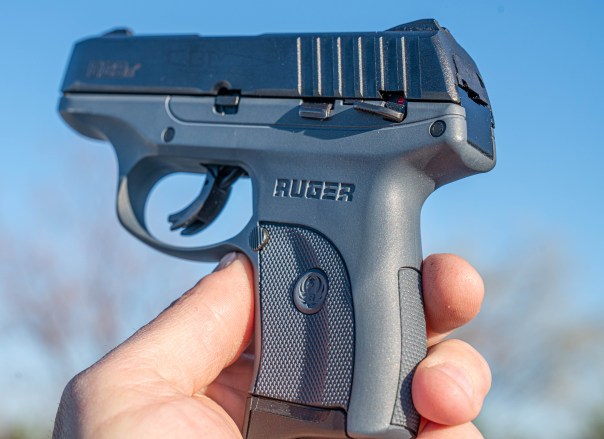
The EC9 is one of those, a striker-fired compact CCW type pistol that uses a single-stack magazine to keep it thin and easy to conceal. It utilizes a slender steel slide with rounded edges to avoid snagging on clothing. It features both a manual safety and a trigger safety, the blade type that deactivates the trigger safety when the trigger is properly pressed. The gun uses a seven round magazine.  Ruger also offers a ten round extended magazine with additional grip area added to the bottom as well.

Un-boxing

Upon receiving the EC9, I promptly opened the box eager to see what lay inside. There I found the Cobalt slate blue framed EC9. Shipped with a magazine, chamber-flag, a standard throwaway lock.  As well as a strange orange magazine that appeared to be for training or something. More on that later.
Straight into the palm of my hand went the little pistol, to see how it felt. My initial concern about the gun was it’s size; would it fit in my hand properly? It did feel a bit small, which was no surprise, but it was certainly serviceable.

I gave the pistol a vigorous course of draw and point exercises. Which quickly began to give me the feel for this gun. Drawing the slide back I familiarized myself with the controls of the EC9. I found it to be a pretty stiff little pistol, the recoil spring is quite stout in my opinion.

Controls

The slide release is located in the typical location for the thumb to operate, and behind that there is a safety. Initial inspection of the gun made it quite apparent that Ruger was aiming for the CCW crowd with this model. The trim control surfaces were very subtle to avoid snags.

The magazine release sits at the front edge of the left grip area, and again it is fairly diminutive to avoid inadvertent release of the magazine. The sights are machined into the slide, making them both robust and un-adjustable. I purchased the extra ten round magazine to utilize in this pistol review, mainly because I figured it would help me hold onto it better.

Continue Reading Here…

Pistol controls, front to back: disassembly opening, slide release, and two position safety at the rear.

GOIN’ HOT ON INITIAL RANGE THOUGHTS

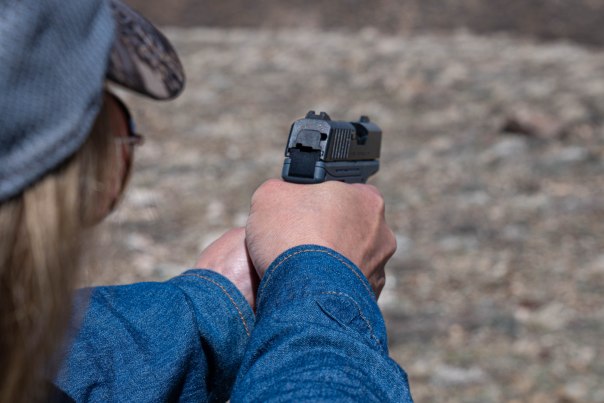
With a bucket of 115-grain FMJ ammo in hand, I headed out to the desert to see how this pistol runs. After loading the magazine, I pointed the pistol downrange at my target and started squeezing. As it often happens, we ran through a lot more ammo than I anticipated in a short amount of time. Which is a good time to point out, since with seven-round magazines you spend a lot of time loading.

The extended 10 round magazine gives more purchase for those with larger hands.

My very first impression as the little Ruger barked and how much more recoil I could feel when compared to my other pistols. Obviously, this is a 9mm, so I’m not talking about a ton of recoil, just noticeably more than what I am used to. That is to be expected though. A smaller pistol is not going to buck recoil like a heavier full-size pistol will.

Shop all the Ruger EC9 models at Palmetto State Armory

The trigger-pull seemed a smidge longer than I would have liked, but again this model is aimed at concealed carry users. The reset was also longer than I would have liked, requiring a good sweep both fore and aft to keep this little lead pump humming. I’m not a huge fan of trigger safeties, but I did find that this one was hardly noticeable.

MORE ROUNDS AND A FRESH PERSPECTIVE

We continued to bang through more ammo than we should have with the EC9s, and it didn’t take long for me to start forming a few opinions on it. But before I did, I wanted to get some additional hands on the gun. Particularly my wife’s hands. She has much more petite hands, and I wanted to see how the pistol met her stature. Just as importantly, I wanted to see how she felt about the gun. Guns are still a bit new to her, but nevertheless, I was interested in her beginner’s perspective.

She took no time in getting used to the grip of the EC9s, and she was slapping targets after some modest instruction. We did discover some challenges for smaller shooters. The grip and pull required to draw the slide was a bit of a challenge for her, as I mentioned above the gun is quite stiff. But even with her smaller hands, she was able to grip the pistol properly and run the gun effectively.

Firearms Depot also has a full selection of Ruger EC9 pistols 

WHAT I LIKE ABOUT THE EC9S

I’ll give you my pros first, of which I think there are plenty. After shooting a moderate amount of ammunition through this little gun, I was impressed with its reliability. Through all the rounds fired, I don’t think there were more than a few stoppages. All of which I am quite confident were user induced. The little Ruger just seems to shoot.

I am certainly no pistol marksman, but I found it was pretty easy to hit what I was aiming at. The same went for my wife, and what I think she perhaps enjoyed most was hitting what she aimed at.

With a price point around $280 over the counter, this little gun is easily attained. I was worried its price point would dictate much of the quality, but the handsome collection of color options and other features seem to make it worthwhile. The larger 10-round magazine made the gun much easier for me to shoot, while my better half was happy with either magazine length.

SOME STONES TO THROW

There are a few cons that I would point out, but I am ready to admit that many of them are fairly subjective. First of all, I’d address the stiffness of the pistol, it’s not very big, so there isn’t a lot to hold onto and purchase. The strong pull of the recoil spring also made it very difficult to operate the slide release, to the point that I nearly quit using it entirely and simply pulled the slide to release. Many will say that’s better anyway, so it may be a moot point for you.

I don’t really use safeties, especially on carry guns. But this safety actually took a second to figure out, the natural motion for me was to swipe at it with my thumb a la 1911. But the safety actually pivots from the front, so I had to make a conscious motion to push and pull at the rear of the safety. Not a big deal, and it’s something I could simply learn if needs be.

I spoke about the orange dummy magazine that came with the gun. Its sole purpose is to aid in disassembling the pistol. You use the magazine as part of the safe deactivation and takedown. Again, probably not a huge deal, but something worth mentioning.

I already mentioned I would have liked a shorter and lighter trigger. But I am also perfectly willing to concede that concealed carry guns are probably better off with longer and even heavier pulls. My last two gripes are perhaps the most subjective and probably due to my hand construction.

I found the mag release to be just a tad awkward to reach with my thumb. It took a very deliberate motion to release the magazine. Again, this may be by design, so you don’t drop your mag in a gunfight or while leaning against the counter at the convenience store.

Lastly, I would really prefer to have more than 10 rounds available in a carry pistol, but I also understand there are compromises.

CONCLUSION

I frequently carry a full-size pistol. Compared to that, this little pistol is a fresh breath of air and a much smaller pain in the waist. The single-stack design of the pistol and its compact size seem to square up the grip area some. This felt to me just a little less comfortable than I’d like, but these are just one person’s opinions.

All things considered, I think the EC9s is a decent choice. I like the gun more than I expected to. The price point makes it an extremely easy pistol to get into carrying. The various safeties and its small size also make it an easy choice for newcomers to the concealed carry gang. I think it punches at its price point. But you won’t want to compare it with something like a Sig P239.

Now that you’ve heard my opinion, go check one of these out. If you drive a diesel, it may cost you more to get to the gun shop than to pick up a Ruger EC9s.

-CBM

If you like this review, check out our other pistol reviews