Tag Archives: pistol

Shadow Systems DR920 9mm pistol

INTRODUCTION

When I first started showing my Shadow Systems DR920 around, lots of folks would respond with, “nice Glock sir, but this is a Wendy’s”. I know it looks like a Glock, and surely shares a lot with them, but I was determined to see it differently.

In the interests of full disclosure, I’ll give some background. I’ve been a Sig fan-boy for twenty years, and while it would be silly to deny the success of the large family of polymer-designed pistols, I just never really liked them. Friends would get one, I’d handle them at a shop, but I never felt like I needed one bad enough to spend my money on one.

Now to be fair, the Shadow Systems family of pistols (DR920, XR920, MR920) are not just Glopies of the Austrian pistol. Shadow Systems pistols utilize many interchangeable parts but are also their own, the DR model pistol is comparable to the Glock 17.

The DR920 pistol is made with law enforcement in mind and built for duty purposes. The frame features an oversized beaver tail and interchangeable grip backstrap to accommodate different-sized hands.

The grip is textured for additional grip and control while shooting, and the trigger guard is undercut to allow additional purchase for a better grip. The flat-blade trigger has a 4.5-5 lb break and feels pretty clean.

shadow systems dr920 disassembled

The DR920’s slide is aggressively cut to provide additional purchase both at the front and back of the slide. It’s also cut for optics, so you can add your favorite red dot. Most red dots can be mounted without the use of adaptor plates like many other pistols use.

After a fairly short time with the DR920, I was quite quickly enamored with it, despite my distaste for pistols of this type. But how far down the marriage aisle would I get with this polymer-framed beauty?

SHADOW SYSTEMS DR920 REVIEW

Let me backup a bit; there’s more to this story than I’d let on.

A few months prior to this event, I found myself in the freezing desert of Wyoming, shooting an assortment of pistols belonging to my baby brother. Among the many was another Shadow, a different model but close enough. I’d already explained to him that I wasn’t big on that particular type, but he was adamant that I try it.

After only a few rounds, I found myself quite surprised at how well I could shoot it, and how good it felt in my hand. So when the opportunity to get my own Shadow, I figured I better pick it up.

shadow systems dr920 hands on review in snow

The DR920 promises to bring service-grade reliability with superior quality to a 9mm polymer-framed pistol. They are marketed toward shooters needing a high-grade pistol for durable service in any condition.

While the pistol may share some features with other common pistols, it brings additional qualities which will demand a higher price. Let’s see if it’s worth it…

SPECIFICATIONS

Caliber 9mm
Capacity 17 rounds
Action Striker fired semi-auto
Length 7.75”
Height 5.25”
Trigger pull weight 4.5-5 lbs
Weight 22.4 ounces
Sights Front dot, serrated rear
Barrel Twist 1-10

PROS & CONS

PROS
  • Same size and pattern as the Glock 17
  • Huge aftermarket support
  • Optics ready
  • Adjustable backstrap grip
  • Match Grade barrel
CONS
  • I’d like a more pronounced mag release
  • I wouldn’t mind a slicker trigger (less friction)
  • I’ll add a flared magwell
shadow systems dr920 hands on review range test

FIRST IMPRESSIONS

My first trip to the range with the DR920 was a quick one, and it didn’t take long to feel it out.

Running seventeen-round Magpul magazines, I stuffed a pile of cartridges in and loaded the pistol.

Cracking the first few rounds, I went slowly just to see how everything felt. To my surprise, the pistol recoiled a little more than I had expected. It wasn’t bad or anything, just a touch more than I had anticipated.

I ran through several magazines, running them dry til the gun locked open. I smiled a crooked smile to myself there in the pistol bay, and I thought to myself; I may end up loving this gun.

Those first fifty rounds went way too quickly, so I went to get more.

After several range trips and not as much ammo as I would have loved to shoot through this gun, I have gained a shine for it.

I’ve shot nearly five-hundred rounds through the pistol so far, and it hasn’t hiccuped yet. That should come as no surprise from a pistol with this pedigree. The natural aim of the pistol in my hand lined up very well; every time I presented the pistol, the sights were already on target. This made the pistol quite easy to shoot well, in my opinion.

During a later trip, I installed a Holosun 407K to see how I liked the gun with a red dot. It came as no surprise that I enjoyed it further still, as I prefer shooting pistols with red dots.

Shooting the Shadow was very comfortable and familiar. There are a couple of things I think I might change. I would like a flared magwell, and it looks like Shadow Systems has them for sale on their website, so I might get one on the way.

Not a huge deal, but it would probably help me stab magazines a little faster. And I’m definitely going to get some more magazines for it.

shadow systems dr920 hands on review close up

RELIABILITY

The pistol functioned flawlessly for the duration of my testing, with no malfunctions or failures.

ACCURACY

The DR920 was perfectly acceptable, in my opinion, as far as accuracy is concerned. Hitting 50% IPSC targets at 25 yards was easy; I don’t shoot pistols much further than that in any case.

OVERALL FEEL

The textured grip felt great in my hand, and the grip angle was perfect as well. Trigger and other controls were easily manipulated and comfortable. The adjustable backstrap made it easy to fit the hand.

FEATURES

FLAT-BLADE TRIGGER

The flat-blade trigger was smooth and clean to break. It’s a service pistol, so I wasn’t expecting it to be super light or short. I suppose I wouldn’t mind if it was a little lighter or less friction.

shadow systems dr920 trigger and grip

OPTICS MOUNT

The Shadow slides come pre-cut for optics. With threaded holes for various optical mounting patterns.

The idea is to be able to mount a red dot without needing a mounting plate. Instead, Shadow Systems includes a set of small polymer spacers that can be used to place in front of or behind the optic to fill any voids. I had no problem mounting red dots to it.

shadow systems dr920 slide and mount

SIGHTS

When I first opened the box, I almost thought the gun came with suppressor sights, but they are just slightly taller sights than normal.

I actually quite like them as they always lined up with my target upon presentation. And once the red dot was added, they all co-witnessed, which I believe is a requirement for many LE agencies.

shadow systems dr920 mounted with red dot

ADJUSTABLE BACKSTRAP

The DR920 came with a baggie of different backstraps that are easily swapped out by simply pushing a pin out with their provided tool. The backstrap then slides down and off the frame. Then you reverse the process to install the backstrap of your choice.

shadow systems dr920 with grips

TEXTURED MAG RELEASE

The textured mag release works fine, but I wouldn’t mind a slightly taller version. It seemed just a touch more out of the way for my thumb than I would have liked.

ACCESSORY RAIL

The pistol also features a typical accessory rail under the front of the pistol, perfect for mounting a weapon light. I installed my Surefire X300 with no problem; it’s pretty hard to mess this up.

Continue reading here…

shadow systems dr920 with holosun 407k mounted and reloading

Staccato P 2011 9mm Pistol review

INTRODUCTION

The Staccato P pistol is a 2011 pistol built specifically for use as a service pistol for law enforcement, but the general shooting public has very well received it. The high quality and performance of the pistol have made it highly sought after by pistol aficionados in and out of the LE community.

The Staccato P is a 2011 model pistol. The 2011 design is a modern version of the 1911 design. Incorporating double stack magazines and chambered in 9mm has brought incredible versatility to the pistol. It comes in a custom soft case with three magazines.

STI was famous for making these pistols. They have since rebranded to the Staccato name and lead the way in the 2011 pistol market.

Being new to both 1911/2011 designs and the Staccato P, I was very excited to get familiarized with this pistol and see what all the hype was about and if it was well founded.

STACCATO P REVIEW

The Staccato P is a pistol designed for duty and anyone else who could use the features of the pistol. The manufacturer has gone to great lengths to get the pistol approved for LE service by at least 650 agencies, including the Texas Rangers.

With an MSRP of $2199.00, it is certainly not an entry-level pistol; however, to be fair to Staccato, it boasts professional-grade features to justify that price. The Staccato P has all the great benefits of the extremely popular and common 1911 design but also adds new technology and features to enhance the historical design with modern expectations. Pistol shooters who want exceptional quality and extremely smooth operation will be happy to feel the sticky Staccato stippling in their hands.

Much like buying a sports car, this pistol is not something you’d compare to the average 9mm pistol on the shelf at your local gun shop. And much like the sports car, you may want to get it purchased before the wedding and not after.

SPECIFICATIONS

Caliber 9mm
Capacity 17 rounds
Barrel length 4.4 Inches
Trigger 4-4.5 lb adjustable
Dimensions Length 8.0 X Grip Width 1.3 X Height 5.5 – Width At Safeties 1.49
Weight 33 ounces (empty)

PROS & CONS

PROS
  • Outstanding SA trigger – adjustable and crisp
  • Optics ready – to add your favorite red dot
  • Ambidextrous safety- in case you’re wrong handed
  • Picatinny accessory rail- to mount accessories
  • Flared magwell- for enhanced mag changes
  • Heavy bull barrel- for enhanced accuracy
  • Dawson custom sights – fiber optic for better sight picture
CONS
  • Short slide release – hard to reach with my thumb
  • I need another one

ON THE RANGE TESTING

I was understandably excited to get the Staccato P to the range, I had already worn in the pistol quite a bit playing with it in my office. But with a few boxes of ammunition and a few targets, I headed to my shooting spot.

After loading a few mags, I loaded the pistol and made it ready to shoot. The feeling of the slide riding forward and chambering a round is addictive, smooth as glass, and locks up tight. I’m not a big manual safety guy, but the 2011 safety is so easy to use that it immediately became second nature. It is almost automatic that as the pistol comes up, your thumb moves it from safe to fire, and back to safe as you return the pistol to the holster.

The trigger was everything I’d hoped to be, clean and crisp. The short reset seemed to allow for incredibly rapid follow-up shots, allowing a massive amount of lead to be put downrange very quickly. And the clean break of the trigger allowed for accurate shooting on targets, and the hits just kept coming.

I found the large grip of the pistol to be very comfortable in my hand. The rough texturing and the full palm gave a great deal of purchase on the grip. And being a bit heavier than your average 9mm pistol, the recoil was very easy to control with this better and bigger grip area.

Shop all Staccato products here

The bright fiber-optic front sight was quick to find and easily aligned with the rear sight. I would love this pistol even more with a red dot mounted to it, perhaps next time.

As I plowed through the ammo, I quite enjoyed doing reloads. The Staccato P features a flared magwell to aid in rapidly seating new magazines. I found myself loading two or three rounds per mag just to get more reloads in.

The frictionless slide of the magazines against the polymer grip module made seating the magazine effortless, and empty mags drop free and clear with an appropriate press of the release. I was quickly becoming a fan of everything this pistol was, and deciding if I could justify keeping it.

RELIABILITY

The reliability of the Staccato P was immaculate. During the course of firing several hundred rounds, I experienced no malfunctions. That may not sound like much, but the way it just chewed through everything smoothly and without so much of a hiccup made it feel even more reliable.

Slow shooting cadences and rapid mag dumps all resulted in the same way, a locked open slide waiting for the next magazine to be loaded.

The cycling of the slide and the chambering of cartridges all worked so flawlessly that it felt like a well-oiled machine churning away in the palm of your hand.

ACCURACY

I am not what I consider a big pistol accuracy fanatic, nor do I consider myself exceptionally talented in accurately shooting pistols. As far as I am concerned, if I can hit what I aim at within the distance I typically shoot, then it’s good enough for my purposes.

The Staccato was certainly better than I was, as I found it easy to hit everything I aimed at. I did find that the sights aligned pretty naturally with my generic pistol pointing, which may have helped my shooting significantly. I think I might have shot even better had I installed a red dot on the back of the pistol, but that’s for another time I guess.

OVERALL FEEL

The overall feel of the Staccato P is outstanding. The perfectly filled hand with the perfect fit controls and trigger was missing only one thing for me. The slide release was a bit too far forward for me to reach with my thumb, making it necessary to break my shooting grip in order to do so.

I don’t know if they make an extended version, but if they do, I would certainly buy it, as it is the only thing I could complain about this pistol.

Continue Reading here

FEATURES

HYBRID FRAME

The hybrid frame of the Staccato P uses either steel or aluminum for the upper portion of the frame to mate with the slide assembly, and the grip area of the frame consists of a polymer portion.

I actually really like this feature; it gives you the robust metallurgy you want to properly carry the slide assembly while still giving the versatile properties of polymer magwell and grip.

BULL BARREL

The Staccato barrel is quite heavy, or thick might be a better word to describe it. This extra barrel material likely makes it stiffer and a better shooter; it also adds weight to the overall firearm, which I don’t mind though others may.

DAWSON PRECISION TOOL-LESS GUIDE-ROD

The tool-less guide-rod has a spring-loaded lever built into it, which allows the guide-rod and barrel to be removed from the slide without any tools. You simply push the guide rod forward out the front of the slide, then depress the lever, which locks the spring in its compressed state.

You can then remove it from the slide, followed by the barrel. It’s a very slick system to use and goes a long way at adding value to the pistol.

staccato p dissambled

PICATINNY ACCESSORY RAIL

Under the front of the frame, you will find a Picatinny accessory rail. It’s perfect for mounting your desired weapon light. I installed my Surefire X300, and it fits perfectly.

staccato p with surefire x300 weaponlight

OPTICS READY

The Staccato P can quickly be converted to shoot with a red dot sight by removing the rear sight mounting plate. It can be replaced with a Dawson Precision RDS mounting plate. These can be ordered on Staccato’s website for various optic configurations.

staccato p dissasembly
There are many good magazine options for the Staccato’s

HOW WE TESTED

I shot the Staccato P throughout several range trips. I also carried it as my main CCW for about a month. I fired several hundred rounds through the pistol, using repetition to see if my poor 1911 skills would cause issues to surface.

Shooting steel targets at ranges from fifteen to thirty yards was very enjoyable with this pistol. Maneuvering it from shot to shot and forcing repetitive mag changes made me like it more.

I also let other friends shoot it to see if it was simply my skirt being easily blown. But as I found with everyone who picked up the Staccato, they too were quite impressed with more than just its looks.

Do you prefer the Springfield prodigy?

AMMO USED

I used two different types of Winchester ammunition during testing. Both were from Winchester, one was a 124-grain load, and the other was a 115-grain load. Both of them shot flawlessly and with comparable accuracy.

I perhaps might give the 115-grain load the nod because it seemed faster to get from target to target.

FAQS

CAN A STACCATO P SHOOT 9 MAJOR?

The Staccato P is not recommended for 9 Major ammunition, but it will shoot +P ammunition.

WHAT DOES DPO STAND FOR IN STACCATO?

DPO stands for Dawson Precision Optics mounting system for mounting red dot optical sights.

IS +P 9MM BETTER?

+P is ammunition loaded to a higher pressure for more velocity.

IS 38 SUPER +P STRONGER THAN 9MM?

38 Super is a slightly longer case; this allows it to shoot similar velocities at lower pressure. Or higher velocities at similar pressures as the 9mm Luger.

WHAT IS THE DIFFERENCE BETWEEN STACCATO C2 AND P?

The Staccato C2 is a concealed carry version of the pistol. It features a shorter barrel and grip module and uses the aluminum upper frame to save weight.

IS THE STACCATO P POLYMER?

The grip module portion of the frame is polymer.

WHICH STACCATO DID JOHN WICK USE?

In the John Wick film, he used a Taran Tactical Combat Master version of the Staccato pistol.

CONCLUSION

After spending more than a month with the Staccato P, I have been able to develop a pretty good understanding of the gun. I believe the modern 2011 design brings all the best features of the original 1911 and so much more. It also allows modern technologies, materials, and practices to be applied to the time-tested pistol design.

If the only improvement was the double-stack 9mm cartridge capability, that would be a significant improvement by itself. But the added improvements and composite frame that come incorporated in the Staccato pistols bring so much more, and they do it with sex appeal and class.

I truly enjoyed the time with this pistol. Only days after I picked it up, I decided I needed to find a way to keep it. It crosses all the T’s and dot’s all the i’s for me as far as a pistol can. It feels well built and smooth as it could be.

The trigger is outstanding, as are the other controls but for the short slide release. The heavy barrel and quality sights make it easy to shoot well, the positive grip lets you know you’ve got something fantastic in your hands, and if you know what’s good for you, you’ll keep holding onto it.

-CBM

Canik SFX Rival 9MM

Introduction

Canik keeps throwing out one banger after another, I have followed them somewhat closely watching eagerly to see what comes next. I bought a Canik TP9 Elite Combat (EC) a year or two ago, and I was very pleased with how it functions. The latest thing from Canik to cross my path is the new Canik SFX Rival 9mm which is the subject today.


The SFX Rival

The Rival is being marketed as an IDPA competition gun, with both its size and weight restrictions meeting the standard for most competitive circles. The Rival does this while bring all the many features from all its Canik siblings, with things like ambi-slide release, reversible and extendable magazine release, flat trigger-shoe, undercut trigger guard, magwell-flare and a picatinny accessory rail up front. In addition to these features, the Rival has deeply cut slide serrations, as well as a fluted barrel. Like many of the TP9 family it also comes optics ready, with an assortment of baseplates and sight options. All this with two custom Cerakote color schemes, mine has the Rival grey with gold accents.
As usual with Canik, the pistol came in a hard plastic case with an assortment of tools for cleaning and maintenance. It also came with a Kydex holster and spare magazine pouch, as well as a couple magazines.

First Impressions

My very first initial thoughts of the Rival were pretty flashy, it seems quite busy to the eyes. But I wanted to find out quickly though if the busy looks matched up to a busy time shooting targets.
As I expected, the Rival felt nearly identical to my TP9 in the hand. A good thing in my estimation as both of the pistols feel great filling the hand and giving a good textured grip to control with. I actually rubbed the Cerakote off of my other Canik doing draw drills, shooting and reload drills constantly. And after all that, the Rival felt like an old friend. My fingers instinctively landed on every control with perfection, and it didn’t take long to notice just a couple things.
The first thing was the ambidextrous slide release, I think perhaps the Rival uses a stronger spring because there is more felt resistance on the slide than my other guns. This translated into just enough extra effort to annoy me, but that’s all.
I also noted that the extended magwell-flare seems to be a better fit than the one on my other Canik, this made reloading even easier than I anticipated. Magazines were easilly slid into place with little to no effort.
The trigger felt fantastic, which has been my typical experience with these higher grade Canik pistols.

Continue reading here…

Once I was on the firing line with the Rival, I decided it would be a good idea to compare it to its well-known relative, the TP9 EC with a Vortex red dot. With a stack of ammo on the tailgate, we went to town. The first order of business was to adjust the Holosun red dot for proper impacts, which didn’t take very long. In less time than it took to empty the magazine, I was hitting my pop-can targets.

Going back and forth between the Rival and the Elite Combat, it didn’t take long to feel and see the differences between the two pistols. The triggers felt very comparable, as they should. It seems they are the same in everything but their colors. The grip area on the Rival was a bit more generous, allowing for more engagement with the grip.

The mag release on all of the TP9 family seem to be reliable and easy to manipulate. The Rival shared that trait, but it did feel ever so slightly stiffer than the others. This could have simply been that it was newer and not worn in. The dual slide-release levers on either side of the frame felt significantly stiffer than other TP9s I’ve shot.

Pick out your own Canik, because you deserve one

Then again, after shooting several magazines through the gun, that seemed to loosen up. One thing that I felt was a significant improvement on the Rival was its flared magwell. Blindly stabbing the magazine into the gun took nearly zero focus to get it right. I quickly became proficient at fast and smooth reloads. This was a definite improvement over the EC, and not an insignificant one.

The Rival plowed through an expensive pile of  Magtech 124-grain ammunition and Winchester 115 grain, showing no failures or malfunctions during the shooting other than an ammunition malfunction confirmed in several other pistols. The bluish-grey Canik Rival finish was losing its shine in the afternoon sun, exchanging it for a powder-burned darker shade.

Pros & Cons

The overall experience shooting the Rival was an outstanding one. It offered flawless function and very predictable, accurate hits. The quality and just plain performance of this pistol is quite evident, as good as almost any striker-fired poly-framed pistol I’ve played with over the years. The aggressive serrations of the slide as well as the engraving details bring a bit of “noise” to the gun’s image, but for me, it just works. The ease of reloading the pistol, the filled palm with a great grip, the smooth trigger, and the short reset all just make this pistol feel like it truly is an excellent Rival for others.

Buying yourself a Rival is not, however, a sure shot to becoming the next John Wick. Still, at the price, it isn’t going to kill you either. The adjustable grip backstraps, extra magazines, and extra sight mounting options are also a fantastic value. The modularity of the mag-release buttons also help the shooter perfect their fit.

The Holosun 507 was a perfect companion for this pistol. I’ve used many slide-mounted optics now, and this one seems to be a great option for not just the Rival but any pistol. The various mounting plates that come with the Rival will allow you to mount whatever optic you choose.

There are a couple of things I would change about the Rival if given the chance. First of all, it seems like a chance was missed to port the barrel to match the fancy slide cuts. Not only would that have added to the mall-ninja factor, but it would also have helped a bit with the recoil. For a full-size pistol, the Rival did seem to climb a bit more than I expected from a ported slide. Even a built-in compensator up front would help with that. The fluted barrel itself seemed fine, and I expect that friction is reduced as well in that weight loss.

Conclusion

For a pistol directed at the competitive shooter, I feel like the many features of the Rival are an absolute win. It is affordable but feels like you are getting so much more for your money. The many extras just keep coming as you get into it, and those included extras allow many gun owners to do what they love most – customize their gun.

The beauty of this pistol is that it is flashy and handsome right out of the box, and it is indeed ready to lay out one target after another with speed and comfort. I have to say, Canik continues to bring us consumers new options, and the Canik Rival is a great option to consider.

-CBM

sig sauer, p230, 9mm, pistol, shooting a 0mm pistol with a bright muzzle flash

Why Classic Sig Sauer pistols are still great

Introduction

Sig Sauer perhaps leads the market with a plethora of new firearm products every year, and of course among those many items are their always popular pistols like the Legion series and the countless models of the Sig P320. With all these hot releases and choices, it can be easy to forget some of the old standby pistols that Sig has made in the past. At the risk of sounding like the old guy trying to convince you to trade your Glock for a 1911, today I’m here to tell you about a few classic Sig pistols and why they deserve your time.

The P220

The P220 is an aluminum framed single stack pistol, chambered in the Automatic Colt Pistol caliber .45. It uses a double action (DA) trigger and an magazine with room for eight rounds. As with many of the older Sig pistols, this P220 is safety-less. The controls are extremely simple using only a trigger, slide-lock, and a de-cocking lever to safely lower the hammer. The mag release is in the traditional spot, all these controls are comprehensive and easily manipulated. It also has a low-slung accessory rail up front for installing weapon lights.

sig sauer p220 suppressed
the P220 fitted with the SilencerCo Octane 45

This P220 happens to be one of the fancy German made ones, and it also features a threaded barrel for installing a suppressor. I intended on running my Silencerco Octane 45 to see how they played together. With a few boxes of 230 grain ball ammo, the 220 and the Octane in hand I hit one of my shooting spots.
I don’t shoot much .45ACP very often, but it sure felt powerful coming out of this Sig. The full-size pistol felt perfect in my hands, its grip and angle match my natural point of aim. Hitting targets with the heavy and slow bullets was very enjoyable, even more so once I installed the suppressor. The naturally subsonic bullets of the 45 made shooting the suppressed P220 pure joy, I could have perhaps benefitted from taller sights but had no problem hitting what I aimed at.

The P220 has everything from classic firepower to the iconic looks of a service grade pistol. The trigger still feels fantastic all these years later, and the pistol’s function was flawless. The gun is obviously a little heavier than more modern pistols, and everyone but the old 1911 guy would probably like more magazine capacity. But despite those few things, I absolutely love this pistol. The heavy weight tames the movement of the gun significantly, making it smooth and deliberate in every motion.

The P239

One of the reasons that the P220 was so easy and familiar to me, was that it has the identical controls and design as my P239. I bought this pistol shortly after Y2K for those old people out there who remember phones with cords, though none of that had anything to do with my purchase. I bought the P239 because I was a freshly minted CCW carrier, and my taste then was just as good as it is now. Years later I found while reading that the P239 was frequently used as a concealable or backup pistol by agents and SEALs.

Much like the P220, the P239 is a single-stack aluminum framed DA pistol. The aforementioned identical controls are easily manipulated, and the only changes made over the last two decades has been a Hogue grip. The soft edges of the pistol and its low profile sights make it an easy option to conceal and draw.

I’ve carried the P239 for nearly half of my life, so nothing could feel more comfortable to me when shooting. And like it always does, the 239 functioned flawlessly during my latest trip afield. Shooting both 115 and 124 grain ammo, the P239 was right at home hammering targets. The eight-round magazines are solid and easily changed, and having several of them made reloads and multiple engagements quite fun. My wife who is significantly more petite than I also found the P239 to be easily handled and fun to shoot.


I typically carry this gun with the hammer down, which is easily done using these pistols. One need only pull the trigger whilst whistling Dixie. Both the 239 and 220 proved to be quite accurate, but the P239 and I have pulled off some near unbelievable shots over the years. Including the decapitation of a rodent on the first shot from sixty-nine yards, whether you believe that or not, you can certainly count on this gun shooting accurately.

The Mosquito

Before the Sig P322, there was a Mosquito. The Mosquito is a .22LR chambered pistol that basically mimics the P series of pistols. It does use a polymer frame however, with an alloy slide and this one does have a safety. Not sure why, perhaps due to the idea that it may be used by young shooters. Other than the safety, the Mosquito is again identical in its controls and function to the other two pistols mentioned here. It does feature a pic rail for adding your favorite accessories under the front. The single-stack ten-round magazine is familiar and simple, much like every other 22 pistol from that era. Continue Reading Here…

The Mosquito has been known for being finicky about ammo. I have found this to be true as well. In order to keep the little pistol popping, I always run high-velocity ammo through it. Ammo like Velocitors or other rounds that run at 1200+ fps offer reliable loading. Other than that, and the limited 10-round magazine capacity, the Mosquito is a great little pistol.

CLASSICS STICK AROUND

These are just three of the older Sig pistols that can be found all over the world. So, while you may be fawning over the latest Spectre Comp or P320X, keep in mind that there are some truly classic pistols out there that can really make you appreciate what a pistol can be.

It’s true that they sure don’t make them like they used to, so it may not be a bad idea to grab one of these older pistols while they are still relatively easy to find. Regardless, I can guarantee you that these three aren’t going anywhere soon.

-CBM

Check out more pistol content HERE

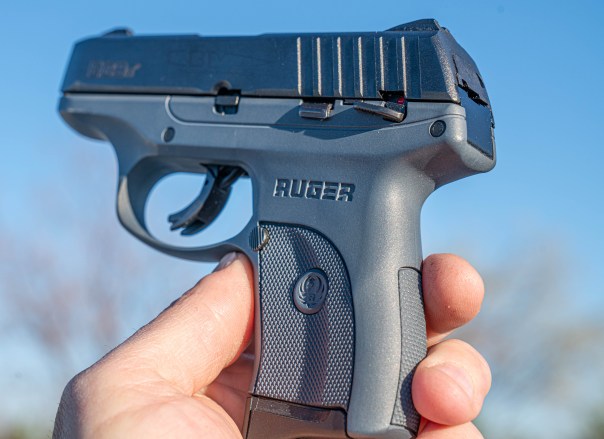
Ruger EC9 9mm pistol

Though I have been lucky to handle untold quantities of pistols over the years, I’d never consider myself an expert on the subject. I am a gun nut though, and that is the only qualification I can claim expertise in. I love a good pistol the same as the next guy, and today I’d like to present another new-to-me pistol: The Ruger EC9.

The EC9 with 7 round magazine and extended 10 round magazine

The EC9

I owned a Ruger pistol once, back in the nineties, the P89 was the first pistol I ever owned. It worked great for what I needed at the time, and it met my skill level which was none. Ruger has changed quite a bit since then, as have pistols in general. Entry level pistols akin to my old P89 are everywhere and many of them nowadays are polymer framed, as are many CCW pistols.

The EC9 is one of those, a striker-fired compact CCW type pistol that uses a single-stack magazine to keep it thin and easy to conceal. It utilizes a slender steel slide with rounded edges to avoid snagging on clothing. It features both a manual safety and a trigger safety, the blade type that deactivates the trigger safety when the trigger is properly pressed. The gun uses a seven round magazine.  Ruger also offers a ten round extended magazine with additional grip area added to the bottom as well.

Un-boxing

Upon receiving the EC9, I promptly opened the box eager to see what lay inside. There I found the Cobalt slate blue framed EC9. Shipped with a magazine, chamber-flag, a standard throwaway lock.  As well as a strange orange magazine that appeared to be for training or something. More on that later.
Straight into the palm of my hand went the little pistol, to see how it felt. My initial concern about the gun was it’s size; would it fit in my hand properly? It did feel a bit small, which was no surprise, but it was certainly serviceable.

I gave the pistol a vigorous course of draw and point exercises. Which quickly began to give me the feel for this gun. Drawing the slide back I familiarized myself with the controls of the EC9. I found it to be a pretty stiff little pistol, the recoil spring is quite stout in my opinion.

Controls

The slide release is located in the typical location for the thumb to operate, and behind that there is a safety. Initial inspection of the gun made it quite apparent that Ruger was aiming for the CCW crowd with this model. The trim control surfaces were very subtle to avoid snags.

The magazine release sits at the front edge of the left grip area, and again it is fairly diminutive to avoid inadvertent release of the magazine. The sights are machined into the slide, making them both robust and un-adjustable. I purchased the extra ten round magazine to utilize in this pistol review, mainly because I figured it would help me hold onto it better.

Continue Reading Here…

Pistol controls, front to back: disassembly opening, slide release, and two position safety at the rear.

GOIN’ HOT ON INITIAL RANGE THOUGHTS

With a bucket of 115-grain FMJ ammo in hand, I headed out to the desert to see how this pistol runs. After loading the magazine, I pointed the pistol downrange at my target and started squeezing. As it often happens, we ran through a lot more ammo than I anticipated in a short amount of time. Which is a good time to point out, since with seven-round magazines you spend a lot of time loading.

The extended 10 round magazine gives more purchase for those with larger hands.

My very first impression as the little Ruger barked and how much more recoil I could feel when compared to my other pistols. Obviously, this is a 9mm, so I’m not talking about a ton of recoil, just noticeably more than what I am used to. That is to be expected though. A smaller pistol is not going to buck recoil like a heavier full-size pistol will.

Shop all the Ruger EC9 models at Palmetto State Armory

The trigger-pull seemed a smidge longer than I would have liked, but again this model is aimed at concealed carry users. The reset was also longer than I would have liked, requiring a good sweep both fore and aft to keep this little lead pump humming. I’m not a huge fan of trigger safeties, but I did find that this one was hardly noticeable.

MORE ROUNDS AND A FRESH PERSPECTIVE

We continued to bang through more ammo than we should have with the EC9s, and it didn’t take long for me to start forming a few opinions on it. But before I did, I wanted to get some additional hands on the gun. Particularly my wife’s hands. She has much more petite hands, and I wanted to see how the pistol met her stature. Just as importantly, I wanted to see how she felt about the gun. Guns are still a bit new to her, but nevertheless, I was interested in her beginner’s perspective.

She took no time in getting used to the grip of the EC9s, and she was slapping targets after some modest instruction. We did discover some challenges for smaller shooters. The grip and pull required to draw the slide was a bit of a challenge for her, as I mentioned above the gun is quite stiff. But even with her smaller hands, she was able to grip the pistol properly and run the gun effectively.

Firearms Depot also has a full selection of Ruger EC9 pistols 

WHAT I LIKE ABOUT THE EC9S

I’ll give you my pros first, of which I think there are plenty. After shooting a moderate amount of ammunition through this little gun, I was impressed with its reliability. Through all the rounds fired, I don’t think there were more than a few stoppages. All of which I am quite confident were user induced. The little Ruger just seems to shoot.

I am certainly no pistol marksman, but I found it was pretty easy to hit what I was aiming at. The same went for my wife, and what I think she perhaps enjoyed most was hitting what she aimed at.

With a price point around $280 over the counter, this little gun is easily attained. I was worried its price point would dictate much of the quality, but the handsome collection of color options and other features seem to make it worthwhile. The larger 10-round magazine made the gun much easier for me to shoot, while my better half was happy with either magazine length.

SOME STONES TO THROW

There are a few cons that I would point out, but I am ready to admit that many of them are fairly subjective. First of all, I’d address the stiffness of the pistol, it’s not very big, so there isn’t a lot to hold onto and purchase. The strong pull of the recoil spring also made it very difficult to operate the slide release, to the point that I nearly quit using it entirely and simply pulled the slide to release. Many will say that’s better anyway, so it may be a moot point for you.

I don’t really use safeties, especially on carry guns. But this safety actually took a second to figure out, the natural motion for me was to swipe at it with my thumb a la 1911. But the safety actually pivots from the front, so I had to make a conscious motion to push and pull at the rear of the safety. Not a big deal, and it’s something I could simply learn if needs be.

I spoke about the orange dummy magazine that came with the gun. Its sole purpose is to aid in disassembling the pistol. You use the magazine as part of the safe deactivation and takedown. Again, probably not a huge deal, but something worth mentioning.

I already mentioned I would have liked a shorter and lighter trigger. But I am also perfectly willing to concede that concealed carry guns are probably better off with longer and even heavier pulls. My last two gripes are perhaps the most subjective and probably due to my hand construction.

I found the mag release to be just a tad awkward to reach with my thumb. It took a very deliberate motion to release the magazine. Again, this may be by design, so you don’t drop your mag in a gunfight or while leaning against the counter at the convenience store.

Lastly, I would really prefer to have more than 10 rounds available in a carry pistol, but I also understand there are compromises.

CONCLUSION

I frequently carry a full-size pistol. Compared to that, this little pistol is a fresh breath of air and a much smaller pain in the waist. The single-stack design of the pistol and its compact size seem to square up the grip area some. This felt to me just a little less comfortable than I’d like, but these are just one person’s opinions.

All things considered, I think the EC9s is a decent choice. I like the gun more than I expected to. The price point makes it an extremely easy pistol to get into carrying. The various safeties and its small size also make it an easy choice for newcomers to the concealed carry gang. I think it punches at its price point. But you won’t want to compare it with something like a Sig P239.

Now that you’ve heard my opinion, go check one of these out. If you drive a diesel, it may cost you more to get to the gun shop than to pick up a Ruger EC9s.

-CBM

If you like this review, check out our other pistol reviews

Three Red Dots

Pistol shooting, like most shooting disciplines has benefitted greatly from technological advancements. Incredible improvements have made todays handguns lighter, faster, more accurate, and reliable. One of these many improvement is in the sight market, pistols have long relied on the simple task of lining up a front and rear sight as you press the trigger. But today we will discuss the hot and competitive red dot sight options that are frequently replacing traditional iron sights. We’ll also look at it from the perspective of home defense use.

The three sights we will specifically look at today are the Vortex Viper Red Dot, the US Optics DRS 2.0 Enhanced, and the Riton Optics X3 Tactix PRD. To give the three sights all a fair rattling, I ran all three of them on the same pistol. The Canik TP9 EC is a poly framed pistol featuring a SAI barrel and trigger, its very accurate and its cut slide makes a perfect host for this trio of optics. To read more about the pistol click here.

The Vortex Viper MSRP $349.99

With a well known name like Vortex, I was sure I was going to like this optic. It was the first of the three in this article that I got my hands on, it wasn’t long at all before I had it mounted up and ready to shoot. The tools provided made zeroing the optic a snap, I was blown away at how quick I went from adjusting the zero, to stacking a whole magazine into a small hole.

The US Optics DRS 2.0 Enhanced MSRP $349.00

US Optics has long been part of the optics game, though they are a relative newcomer to the electronic sight realm. As soon as I opened the box, I was as impressed as ever with USO’s quality and presentation. But more importantly was the impression on the range.

I was a bit confused at first, because the DRS 2.0 didn’t appear to have a button or control to adjust the brightness as did the Viper and the Tactix X3. But in perhaps my favorite discovery of the whole project, I read the owners manual to find that the DRS 2.0 is always on, and has a built in photo-eye to automatically adjust to ambient light. Another beneficial feature I was happy to see, was the side-loaded battery compartment, which doesn’t require the user to remove the sight to change the battery as the Viper required.

As with the Vortex, the USO was easily and quickly zeroed, and in no time I was back to banging targets.

The Riton Optics X3 Tactix PRD MSRP $299.99

Riton is a relatively new company, but persistently bringing out more products. The X3 came to me before the USO and after the Vortex, it did require changing the Viper type baseplate to the RMR type, as it doesn’t share the same plate as the other two.
Similar to the Vortex, the X3 has armored up/down rubber buttons to adjust the six level brightness settings of the reticle. It also has a four hour auto shutoff. It features a 3 MOA dot for some very precise shooting, at least for red dot shooting.
It wasn’t until after I had it mounted that I noticed the X3 features a rear sight cut, something you can use in the event your reticle goes out. This is something the other two lacked, and while not likely to be used often, it is still handy. The X3 features a top loaded battery, so you wont need to remove the sight for battery changes.

All three red dots took a bit of getting used to, as the reticle appeared higher than expected as compared to the iron sights. But once I grew accustomed to the hold and sight picture, I was addicted to it. One of the many pros of using red dot pistol sights that is often mentioned is the shooter’s point of focus. When using iron sights you have to focus to some degree or another on the sights that are at arms length. Shooting with a red dot sight gives a great advantage because you never have to take your eyes off the target.
For example, if there is a threat approaching you, simply bring the pistol into the plane between you and the threat. The glowing reticle is naturally brought into place without ever having to change focus from the target. Obviously after much practice and training, it becomes second nature. That is one thing less you’ll need to focus on in a defensive situation.
And even if its not a dangerous target, shots can be made faster as can target transitions because you never have to take your eyes off the target[s].

Also, if you are shopping on a budget, UUQOptics makes some great budget pistol red dots — great value without sacrificing reliability or usability

UUQ optics, red dot sights

As it pertains to home and/or self defense, I think a red dot sight could be a valuable asset. The bright red reticle makes a very easy focal point when tension is high, and the precise nature of its aim is very useful in a life or death situation. The aforementioned point about keeping your eyes on the threat is also a strong reason, especially in a low light or no light scenario.

I was surprised by this experience, it wasn’t that I liked the USO the most, it was actually that the Vortex was at the bottom for me. After much shooting with the Viper, I found the Riton X3 to be a preferred fit for my eyes. And perhaps the finer reticle also helped. The sight picture of all three was more than satisfactory, they all got dirty and dusty just the same. But what really won this comparison for me was the reticle on the DRS 2.0, I never had to turn it on, or up or down. Every time I jerked my pistol from the holster, regardless of time of day, indoor or out, the reticle was lit, and nearly perfect brightness. I only say near perfect because it occasionally might have been a smidge dimmer than I would have set it, but surely not enough to be a concern. All three of these red dots are great pistol sights, I would feel very confident shooting any one of them in a competitive situation.

I have shot pistols without red dots for many years, so I was a bit apprehensive about trading my iron sights for a red dot. But I’m happy to say that after some practice I feel just as if not more confident with one of these three sights than the iron sights I always used before. Give one of these three a try, you will very likely be surprised how much you like it.

-CBM

Three Red Dots for your Pistol

Pistol shooting, like most shooting disciplines has benefited greatly from technological advancements. Incredible improvements have made todays handguns lighter, faster, more accurate, and reliable. One of these many improvement is in the sight market, pistols have long relied on the simple task of lining up a front and rear sight as you press the trigger. But today we will discuss the hot and competitive red dot sight options that are frequently replacing traditional iron sights. We’ll also look at it from the perspective of home defense use.

Read the whole story on Guns.com

The Canik TP9 Elite Combat 9mm Pistol

Introduction

Good friends can often be the catalyst we need to try something new. Whether it be a new activity, or way of thinking, some of our best practices are simply learned from the good people we surround ourselves with. Today we are looking at how the Canik TP9 Elite Combat and how I ended up with one due to good friends.
Im a rifle junkie, always have been. However due to the good influence of friends, I have been exposed to all kinds of additional shooting enterprises. One of them being IDPA style pistol shooting, which if you haven’t tried, you should.

Having tried it a few times, mostly as an informal competition between friends, I was immediately hooked. Steel targets, and fast reloads just seem like the best kind of practice for having a good time. But I needed a good pistol for it, being a rifle junkie, my pistol inventory was very superficial and necessity based (CCW). So I began the search for something that fit the bill.

What do we have here?

It was SHOT Show 2018 that I first noticed Canik USA firearms, they are imported by Century Arms from Turkey. My initial impression was they looked great, and I wanted to run a few mags thru one, but much time would pass before I would. A friend let me handle one, and I immediately fell in love again. It was the TP9 Elite Combat model, which draws on several aftermarket parts from Salient Arms International (SAI). The TP9 EC uses a fluted threaded barrel, trigger, +3 floor-plate, and flared mag-well from SAI. The styling and custom look only enhance the graceful lines of the TP9. The Canik is a striker fired 9mm, with double stack magazines. I purchased the pistol as a kit from Century, which included a host of additional goodies. Two magazines, one of which had the SAI +3 floor-plate boosting its capacity to 17+1. Two different grip back-straps to choose from to better fit your hand. A polymer holster to fit the pistol to your gun-belt. It also comes with the slide pre-cut for sighting devices, the kit included a Vortex Optics Viper red dot, and with several other baseplates, I believe you can mount others as well. The threaded SAI barrel is suppressor ready, mine came with 13X1 left-hand threads, but apparently the newer ones are 1/2-28 right-hand threads.

Shop all Canik products here

The EC also has a chamber indicator on the top of the slide, when a round is chambered, the red indicator is clearly visible. The chamber indicator is also tactile, you can feel it either in the dark, or while looking towards your next engagement. Also on top of the slide is the fiber optic sight (rear sights removed to install the Viper red dot). The fiber optics are interchangeable with others included in the kit.


Several other things are included in the hard-case, trigger lock, tools for assembly and cleaning, as well as different mag release height options you can customize.
I wasted no time, and literally within minutes of delivery, I was pumping magazines through the TP9.

The Vortex Viper was easy to mount, and zero. I was amazed at how accurate the gun was, I wasn’t shooting particularly far, but once zeroed, I could put a whole magazine thru a less than two inch hole at 10 yards. And if I can hold steady enough, whatever you put the red dot on within 30-40 yds, gets hit.
The trigger overall is pretty good, though I was a little bit let down, as mine wasn’t as good as the ones I had felt prior to purchase. The take-up has a bit of stickiness to it that I didn’t feel on other guns. The break and reset however is clean and very crisp. I have taken it apart several times to see if I can clean up the trigger pull, We’ll see if any of that helps.
The EC also comes with an oversized mag release, which I found to be very good for dropping the magazine. And despite its prominence, never caused an undesired mag drop.
Underneath the muzzle there is a pretty standard accessory rail, perfect for mounting lights, lasers, etc.
The magazines themselves are manufactured by Mec-gar, a well known manufacturer of great aftermarket magazines. There are several different models available including an 18 round and a 32 round stick mag.
The holster is about what you would expect from a manufacturer, nice enough to use, but leaving you wanting more. It’s serviceable, but I dont care for the release. Instead of pressure to the side releasing the pistol, you curl your trigger finger in the same action as you would to pull the trigger. This seems a little unsafe, in that once clear of the holster, if your finger continues the curling motion, it could find the trigger before your on target. This is probably just a training issue, but I didn’t care for it none the less.

Shooting the TP9

I mentioned the accuracy of the TP9,I’ll add that the functionality has also been almost perfect. I say almost perfect because I have had a couple malfunctions, nothing a tap, rack, bang wouldn’t fix. And more than likely due to the low budget ammunition I was shooting at the time.
Even so, with the cheap ammo I find it very easy to hit what I’m aiming at.
The flared mag-well made mag changes easy to feel into place, though I wish the flared part had at least two points of contact. As it sits, the mag-well flare is attached by a single screw at the rear, not a huge deal, but it has caused me to re-engineer it in my head.
I bought the gun with the plan of using the red dot on it, though I wasn’t sure I was going to like it. I figured if I didn’t, I could just run the iron sights on it and sell the Vortex. But as it turns out, I really enjoy shooting with the red dot. So much in fact that I’m considering doing the same to another pistol I love and shoot quite a bit, my Taurus TX22.

I have since run a couple other red dot optical sights on the pistol, and I settled on the US Optics DRS 2.0 Enhanced, I found it to be a superior option to the other two. One thing that I absolutely love, is the way this Canik feels in my hand. It’s a perfect fit with the larger grip back-strap, and it points so nicely and naturally. The way it draws from the holster and lines up perfectly for the shot gives me some undeserved confidence.

Suppressed

With a threaded barrel it was only a matter of time until I ran the Canik with one of my suppressors, and I was very happy with the results. I used two suppressors from Yankee Hill Machine, the first one and my favorite of the two is the Nitro N20 shown above. It is a modular can that has a short or long configuration and is built with extremely light materials. In the short configuration it is so light I barely noticed it when shooting the pistol, and the sound suppression was amazing. There was a slight uptick in the felt recoil, but I was expecting it. Not so much as to feel pressure against your hand, you could just feel the pistol cycling harder.

Conclusion

It may sound like I’m ragging a bit on the TP9 Elite Combat, but to be honest I really do like it. I’ve never been much of a gun snob, so when it comes to minor issues I tend to look right thru them. I love shooting the Canik TP9, and intend on becoming much better with it, might even take a few classes or training courses to save myself the embarrassment in public.
I think despite the little issues I’ve brought up, the gun is a great option. I may get another holster for it, and I will definitely be getting a bunch more magazines, and ammo.
-CBM