Tag Archives: QD

breek lok, suppressor, suppressor mount

Breek LOK QD Suppressor Mount

Preface

As suppressors become more and more popular with the shooting public, our options as consumers continue to grow. QD Suppressor mounts are nothing new, and I’ve used a few of them over the past decade or so. Breek Arms is adding to our options by bringing us their Breek LOK QD suppressor mount. I frequently talk about the industry moving to use the standard 1.375x 24 TPI hub system, and the Breek LOK also uses this universal pattern. This allows you to use the advantages of the Breek LOK system with a huge variety of suppressors.

breek lok, suppressor, suppressor mount
Shamelessly stolen from Breekarms.com

The Breek LOK

The Breek LOK system uses a tri-lug connecting system, which has been used with much success by other manufacturers. The hub is installed over one of their tri-lug Breek muzzle devices, and with a fairly light down pressure you twist the suppressor a couple times to lock up the hub to the muzzle device.

breek lok, suppressor, suppressor mount, muzzle brake, flash hider
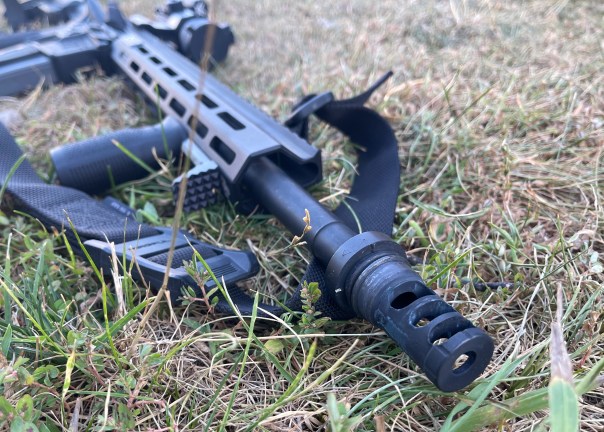
the Breek LOK flash hider fit perfectly on my Aero Precision upper

Inside the Breek LOK hub there are a few parts, including a sealing tapered surface that mates to an opposing surface on the muzzle device. Both of these surfaces are located down-range of the lugs and anchor points, preventing them from getting fouled by suppressor crud. Also inside the hub is a coil spring tensioner and a ball-detent to keep the hub lined up to install every time. The hub uses the 1.375×24 thread pattern that most suppressor manufacturers are putting at the breech end of their suppressors. This allows you to install the Breek LOK on most any modern suppressor, giving you quick detach and installation capability.

breek lok, suppressor, suppressor mount
the Breek LOK hub mounted to my Banish Meateater suppressor

Installing the Breek LOK

I installed the Breek LOK system on a variety of firearms and suppressors. Mainly 5.56 carbines and suppressors I would use with them, I’d like to get another muzzle device threaded 5/8-24 so I can use it with my larger rifles as well.

breek lok, suppressor, suppressor mount, desert tech WLVRN, Micron
a diminutive Desert Tech WLVRN Micron kitted with the Breek LOK system and a GDM 556K can

After applying a touch of anti-seize to the threads at the back of my suppressor, I threaded in the Breek LOK hub. And using the included wrench I easily tightened it down. The opposite end of the wrench is made to tighten down the muzzle device, which make it very handy and convenient while working on the combination.

breek lok, suppressor, suppressor mount, flash hider

So far I’ve installed the Breek LOK hub into a few different suppressors from various manufacturers. Notably and shown here is the YHM R9, the Banish Meateater, the Anechoic 35M, and the GDM 556K. The hub fit perfectly into all of them, and made it quick and easy to remove and install the suppressors.

breek lok, suppressor, suppressor mount
Tightening the hub with the included wrench

Breek LOK Operation

The Breek LOK hub functions by using the aforementioned tapered seal to keep gas within the suppressor. The locking lugs of the hub engage the opposing lugs of the muzzle device, and you simply push down and twist. There is only one little caveat, the lugs are timed. One of the voids between the three lugs is deeper, so you’ll need to make sure you line it up right prior to installing the suppressor. It might sound a little tedious, but once you figure it out its actually quite fast.

While applying pressure down to seat the taper of the hub, you give it a clockwise twist to secure the suppressor. It usually only takes two or so twists to secure the can to the rifle, but it comes off with a very short counter-clockwise twist.

breek lok, suppressor, suppressor mount
you can read more about the Meateater can HERE

One of the intricacies I found with the Breek LOK hub (besides the alignment to install part), was the outer sleeve of the hub and its ball detent. You can over-rotate the sleeve, causing it to not tighten down properly. If the sleeve is one turn too tight, it won’t go on, and if the sleeve is one turn too loose, it will hook onto the muzzle device but it won’t secure tightly. Causing a loose and dangerous baffle strike condition. This is obviously something you can avoid by familiarizing yourself with how the hub works. And keeping it in the right rotation using the ball detent.

As I mentioned, removing a suppressor on the Breek LOK hub is even faster than installing it. Barely a quarter turn or so will pop the can right off of the muzzle. But, I prefer to turn it a little more to ensure the sleeve stops by locking into the ball detent.

breek lok, suppressor, suppressor mount
here you can see the hub detail, mounted to an Anechoic 35 can

Consideration

I like the way the Breek LOK hub works. My biggest concern is that over time the internal parts of the hub might get crudded up causing a failure. The worst case scenario would be it getting locked up, trapping your suppressor. This should be easy to avoid by routine maintenance and cleaning. I always put fresh anti seize on my suppressor threads nearly every time I attach them or swap out hubs.

For the most part I am a direct thread kind of shooter. mainly because I shoot mostly bolt-guns or precision autoloaders. QD suppressors have never really been a huge priority for me, but I would love to have one of these Breek LOK hubs on all of my suppressors. It would make it so easy to switch back and forth from one rifle to another as well as making them easy to break down for transport. The only down-side to such a scenario might be some slightly added weight.

breek lok, suppressor, suppressor mount
My Quattro 15 rifle with the YHM R9 suppressor attached by the Breek LOK hub

The added benefit of having a bunch of matching muzzles and homogenous hubs would come at some cost though. At $200 per hub, it would make the already extravagant stamp collector dig another tax stamps worth of bills from his wallet.

All that considered, I think the Breek LOK hub system would be a slick addition to any suppressor enthusiast. Especially if you are the type to run one can on various rifles. Tell us what you think in the comment section below, what is your preferred method of mounting suppressors?

-CBM

Read about these suppressors and others in our suppressor reviews

Direct Thread or QD Suppressors?

I know I talk a lot about suppressors here. Partially because I am a sucker for suppressors, and also because everybody else is also joining the trend. Some trends are just trends, but the suppressor craze is one I can get behind fully. One of the big questions many new suppressor users ask, and one that often still perplexes those of us after decades is; should I use direct thread or QD suppressors. Hopefully by the time your done reading this, you’ll have a suitable answer.

Definitions

First lets make sure we understand the differences. Direct thread suppressors are fairly self explanatory. They have threads on the mounting end of the suppressor that are designed to directly engage with the muzzle-threads of the host firearm. Thread pitches vary depending on many factors, but mainly on the caliber of the anticipated host.

The most common sizes are 1/2-28 for rimfire and .224 caliber centerfire rifles. And 5/8-24 for rifles between 30 caliber down to 6mm. 338 sized rifles the common thread pattern is 3/4-24.

My Yankee Hill Machine Turbo 5.56 mounts to several different brakes and flash hiders. This allows me to use it on many different rifles.

Muzzle Brake or QD (as many are called) mounted suppressors attach to the muzzle device, instead of directly attached to the barrel. A muzzle device threads onto the barrel, and the suppressor attaches to the exterior.

The various muzzle devices typically seen will usually serve as a recoil reducer when not used in conjunction with the suppressor. They also frequently function as a flash hider. It varies from one manufacturer to another. Often the muzzle device can use course threads, ratcheting locks, and other features to reduce the effort and time required to install the suppressor.

Pros vs. Cons

So lets get to the meat and potatoes of the discussion; which one is better for me? The internet is filled with hatred for the person who presents the old “which one is the best” question. Only you can decide that. But with the right understanding you will be more than capable of making a good choice.

The X2 Dev Group Orion threaded directly onto a 5.56 carbine

Direct thread suppressors are often considered to be better for accuracy. Many people suggest them for precision rifles citing this as a better choice. That may have been true in the past, but in my experience direct threading suppressors are no more accurate than brake mounted cans.

This is likely due to improvements in technology and manufacturing process’. But a direct thread suppressor is simpler by design, that is for sure. Its simpler mounting system can translate into various benefits. Such as lighter weight, less expensive to manufacture, and single point connection to the host. Perhaps a downside if there is one; some direct thread cans have multiple threaded end caps. So you can change from one thread pitch to another, but if you don’t have that feature you are stuck with whatever it comes with.

Options are Nice

For many of us, this not a deal breaker, but it is nice to have options. Another issue that occasionally arises with direct cans is coming loose during strings of fire. With no mechanical lock to keep the suppressor in place, they can work their way loose which could be catastrophic.

QD muzzle devices make for quick changes between hosts

Desert Tech SRS M2
My Desert Tech SRS M2 with the YHM R9 QD suppressor

QD and brake mounted cans have their own set of advantages. The Q in QD stands for quick. So as you might imagine if your application will require lots of removal and installation of your can this could be an advantage. Another benefit is you can use as many hosts as you want. Installing the appropriate brake on each one. This makes things easy and fast to move the suppressor around on various host weapons though there is obviously additional cost. You also have the benefits of the muzzle device on the host weapon when the suppressor is not being used.

If brake mounted suppressors are your choice, you’ll want to ensure you clean them with regularity. Especially with rimfire guns that tend to foul faster than centerfire weapons. It doesn’t take much looking to find a case of a suppressor stuck to its mount from carbon or lead buildup. That is a problem you don’t want to have.

Another concern that has mostly been solved by design is the alignment issues from having multiple tolerance stacking issues. Brake mounted suppressors have at least two points of alignment that must be near perfect. Whereas direct thread cans only have one. If your host doesn’t have perfectly concentric threads this could be an issue. And again, keeping the mounting surfaces clean will go a long way towards maintaining proper engagement.

Q fix suppressed shooting
Suppressed shooting The Fix by Q is the proper way to shoot

Alignment

Alignment is as important as anything with suppressors. There is nothing worse than the dreaded baffle strike. Minimizing possibilities for misalignment should always be on your mind particularly with brake mounted suppressors. Often these brakes need to be timed, to ensure the ports are horizontal if they have them. Make sure you follow the manufacturers directions when mounting the brake.

They are typically timed using precision cut shims of assorted thickness. When the appropriate thickness of shims are collected between the brake and barrel, the brake timing will be perfect. Shims are not to be confused with crush washers, which should not be used when mounting a suppressor ever. A crush washer is just what it sounds like, a washer that is designed to “give” when tightened against. They are very useful for aligning muzzle devices as they are plentiful and cheap. But they don’t always give evenly, and can easily cause a misalignment when used with a suppressor mount.

A Dead Air Sandman K and it’s mount

Whether you check with a glance down the bore (of an open bolt firearm of course), or use an alignment rod in the bore. Its not a bad idea to check your suppressors concentricity when in place.

Modern Magic

If your just getting into the suppressor game, or even if you’ve been in the club for years there’s hardly been a better time. New technology has been flooding the market like gas into a bolt carrier. This has resulted in many improved options for suppressor consumers. Materials like titanium, stainless steel, and Inconel have improved durability and reduced the weight added to your host.

sig sauer P320 X-Five DH3 yankee hill machine nitro N2.0
The YHM Nitro N2.0 is an incredibly versatile suppressor

Innovation driven by market pressures have also resulted in manufacturers creating some wild new designs. Which for the most part have been very beneficial. Some examples of this are manufacturers using standardized thread patterns and sizes, allowing end users to customize cross-brand mounting options and host applications to whatever fits their needs or preference.

Another fantastic development has been multi-purpose suppressors. Modular cans now allow users to install the same suppressor on their 9mm pistol, 5.56 carbine, and a 308 bolt rifle and so on. Threaded end-caps on both ends, multi-staged, and a multitude of boosters and mounting options make these modular suppressors ideal for those shopping for their first can or those who own a dozen.

Taurus TX-22 Dead Air Mask suppressor
Rimfire suppressors like this Dead Air Mask should be cleaned frequently

Conclusion

Your shooting practices are best known by you, so with the information outlined here, you should be able to decide what kind of suppressor best fits your style of shooting. If you do long strings of fire through multiple auto-loading rifles, then maybe a full-auto rated QD can is the best fit. Or conversely, if you are using a suppressor on a bolt action hunting rifle, a lightweight direct thread suppressor might be just the ticket. Either way, you can add some class to your shooting practice.

-CBM

This Silencerco Harvester 300 is very lightweight, a perfect companion for a hunting rifle.

QD Suppressors or Direct Thread Suppressors?

We keep hitting on suppressors here on the blog, partially because we are suckers for suppressors, and also because everybody else is also joining the trend. Some trends are just trends, but the suppressor craze is one I can get behind fully. One of the big questions many new suppressor users ask, and one that often still perplexes those of us after decades is; should I get a direct thread can, or a brake mounted one? Hopefully by the time your done reading this, you’ll have a suitable answer. Continue Reading Here…