You probably read my last story about pronghorn antelope hunting, but if you didn’t I recommend you read Pronghorns and Prodigy Hunting after you finish this one. My wife had two doe pronghorn tags in her possession, and this is the story of one of those two. The day started out on the wrong foot, but who knew things would come back around our way.
It was September, and the cool air that covered the desert prairie was heavy with anticipation. The sun had just crested over the distant hills and as we had planned, we lay there looking over the sagebrush covered flats watching antelope roam. With her shivering hands cupping a warm drink, she smiled an eager smile. She is no stranger to the trigger, but just to make her feel extra confident, we took a few minutes to ensure she was comfortable shooting. The weapon of choice that day was the Desert Tech MDRX, ‘ol meat in the pot as its come to be known. Today the MDRX carried the newest conversion kit I had put together, with the help of ES Tactical I had fashioned a bolt and barrel in Hornady’s Six-millimeter ARC. You can read more about the caliber conversion kit here.
With the MDRX in her hands, and a magazine full of Hornady 105 BTHP ammunition, she lay down on the dusty ground. We had picked out a couple targets in the hillside opposite, where she now placed her aim. She fired a couple shots at three and four-hundred yards, all of which hit deadly close to her point of aim. With just the confidence she needed, we gathered up our gear, and set out to find a group of pronghorn we could hunt.
The MDRX with the 6mm ARC conversion kit
As the day would progress, we would face defeat after defeat. The wind never slowed down, and the jumpy antelope were ready to clear the county at the first sign of attention. But we pressed on, missing several opportunities for a kill. We made our way around the valley, trying to find a small secluded group that were tucked in somewhere. The wind would nearly peel open your eyelids on the open prairie, so we focused on the deep draws that offered some protection. We were doing great at finding antelope, but they were all nice bucks for which we didn’t have a tag. As the afternoon turned over to evening, clouds began to cover the landscape. The wind that had blown hard all day had brought us in a cold front, and with it was a bit of a calm. As rain drops began to lightly fall around us, we continued our search for a group of does.
We finally spotted a small group at the top of a steep draw, probably four or five does with a nice little buck. I had that feeling, you know the feeling when you just know its going to work out? We scrambled in the direction of a good shooting position, getting our gear out as we moved. While she got behind the rifle, I got my spotting scope up, and ranged the group. The distance was just under four-hundred and fifty yards if I remember right. While I watched the antelope feed on the hillside, she loaded the rifle and prepared for the shot. I could tell she was excited, her hands shook as she moved.
Once she was ready, we focused on the group, and picked the best target and waited for a good broadside shot. The excitement grew as the seconds passed and rainfall continued to escalate. The shot found its mark, hitting the doe and breaking the off-side shoulder. We watched as she stumbled across the hillside, startling the rest of the group who then followed her escape. She didn’t make it far, and we headed down, then up the draw to claim our prize. The Arc had done a fine job, as did the shooter, and we were going to make the best of it.
After dragging the doe to the truck, we cleaner her out and filled her with ice for the ride home. Where she would be skinned and washed before a long and cold rest until it was time to hit the butcher table.
We enjoyed every piece of that antelope, whether its steaks, roasts, or ground into burger. My wife has even taken to finding her own burger in the freezer to make into lovely dinner dishes for the family like meaty lasagna. It is truly a great way to live, sharing the experiences and the tasty prize with family. Thanks for coming along, we’ll see you on the next hunt.
Improving your skills is a way of life. Its often said you can either work on improving, or let your skills deteriorate. If you’ve ever felt that your skills have plateaued you know exactly what Im talking about. I have wanted to test my mettle for some time, and see just where I am, I enrolled in a rifle/carbine Long-Range Shooting course put on by Bruiser Industries.
Bruiser Industries
Bruiser Industries is a small company that specializes in teaching shooting tactics and techniques, specifically from the perspective of Law Enforcement and Military. Their Instructors come with backgrounds from SEAL Teams, competition shooters, and specialized law enforcement.
Education
Most of my knowledge base is self taught, I spent a lot of time reading and playing around on the internet. Listening and practicing what was available was coupled to my insatiable desire to get better, and this became my learning curve. I probably wasted a lot of ammo doing it over the years, but Im not sure I would change it after all. Lessons learned on your own sure seem to last longer, and root deeper in your mind. I wanted to compare what I had self taught, to what was being taught to professional marksmen in the Military and SWAT community. Part of me was afraid I was going to feel like some redneck with a mullet being embarrassed by a bunch of seasoned pro’s. Lucky for me though, it turned out not to be the case.
The Course
The class I was attending was four days, focusing the first two on shooting accurately with a carbine scoped with an LVPO. We discussed the technical side of it in a classroom situation for a good portion of the day, talking about ballistics, wind, rifle setup ect. This was great for me because it doesn’t matter how much you think you know, you can always benefit from someone else’s experience or perspectives. It was very nice to have something I knew and understood, explained again by someone else with their version of the same thing.
It was then time to head to the range, and get our rifles hot and dirty. The southern California heat was brutal, the sun beat down with a vengeance that could be felt right through your clothes and sunblock. The discomfort added to the learning though I believe, doing this stuff in your comfort zone makes you a comfortable shooter. But when you are trying to stabilize a rifle from a tree crawling with biting ants, and your sweaty cheek sliding around the hot rifle and razor sharp grass cutting into your knees or elbows, breathing heavy and trying to read mirage through the scope it adds another level of pressure to you as the shooter.
During the course of the first two days we spent a good deal of time engaging targets from everything EXCEPT conventional shooting positions. Barricades, barrels, trees, tripods and anything else was used to build different shooting positions. We engaged steel targets from up close out to beyond six-hundred yards, all from these non-prone and self built shooting positions. It felt like a cross between a PRS match and sneaking across a prickly Mexican border fence.
I of coursed used a Desert Tech MDRX in 223 Wylde for the carbine portion of the course, and just to be safe around the massive California LE community I ran my twenty-inch barrel, you know because 16 inch barrels are deadly. On top of the MDRX I had mounted my US Optics TS8X LVPO, it is a FFP 1-8 scope, with a drop compensating reticle built specifically for the 5.56. One of the many valuable things we learned in the class portion was to find corrected values for the so called drop compensating hold points on the reticle. Things like atmosphere and temperature change, so the drops listed are not always correct. But you can take live data from the moment, and find the correct values for these points. So while the four-hundred yard hold point may not be actually four-hundred in real time, but you can figure out what it actually is, and assign it a new value like four-hundred and twenty-seven yards. Armed with this new data point you can more accurately engage your targets.
Precision Long-guns
At the beginning of day three we were back into the classroom for additional discussion on ballistics, reticles, and more. We then headed back to the range, prepared to make our long guns fit into every uncomfortable or awkward shooting position we could make. Again the focus was to learn how to shoot from real world positions, instead of the traditional proned out on the shooting-mat.
Perhaps my favorite part of the class were these exercises of learning to build a solid shooting position using whatever you had available. Whether it was essentially lashing your rifle to a post with the sling, or using a tripod leg for rear support to make a near perfectly solid position, I picked up a lot of tricks that helped me feel more confident when making a good shot.
For the long-gun portion of the class, I brought along my latest love which is the Desert Tech SRS M2 sporting it’s brand new 6MM GT barrel. One of the latest craze cartridges to hit the competitive rifle shooting circuit. The M2 is absolutely the best rendition of the SRS to date, the optics rail is awesome for those that need it, though I rarely do. The ARCA Lock rail from Area 419 on the bottom however is a must have for anyone who shoots from a variety of positions using all the bells and whistles that go with it. I chose to run an Atlas bipod on the ARCA rail as well my favorite US Optics scope, the Foundation 25X. The internal bubble level makes for quick leveling of the rifle without ever moving from the shooting position.
We first zeroed our rifles, then moved to truing our ballistic data (cross-referencing the ballistic coefficient with velocity, then confirming against actual drop & wind). With a solid foundation to move forward from we started doing some drills on building positions in assorted places, then engaging targets at various distances. Another valuable lesson I learned at this point was a variation of one I often recommend myself. My version of the lesson is; If you don’t know why you missed or hit, you are just wasting ammo. The new lesson I learned at the Bruiser course was almost the reverse engineered version of the lesson; If you make a good hit after building a position, don’t waste ammo shooting it again. Rebuild a new position and make another shot. This was a great lesson to learn, rebuilding your shooting position and firing solution after every hit will make you an absolute monster when it comes to hitting targets in the field and on the fly.
We did an assortment of shooting drills moving around from one place to another, learning how to bracket the targets, and utilizing the whole target. This was another highlight for myself, if you know the wind and elevation estimates there is no excuse for not making use of the whole target. In plainer terms look at it like this; if you know the wind is going to blow your shot at least half a target’s width to one side, then you have no business wasting half the target by aiming center. Making full corrections is another easy mistake that many of us make, often trying to walk it in. Another lesson galvanized under the California sun was that, if it looked 1.2 Mil’s right, then correct 1.2 Mil’s! Much of making hits is analyzing the conditions, distance, and target, and evaluating where your highest probability of bullet impact is, then making sure that point is at the center of the target. The second half of that equation is the execution, a solid and steady shooting position, with a good trigger press and follow through. If you do it all right, you not only hit the target, but you’ll watch it happen in real time through your scope.
We did some long-range shooting as well, taking shots clear out to 1600 yards. The 6GT did quite well out to 1400 but the last few target made for some very difficult spotting splash. I will say this though, the GT did exceptionally well shooting against 308’s (big surprise right?) Evaluating my dope and wind holds as compared to everyone else’s did make me feel like perhaps I was cheating a bit, but the lessons were the same regardless. Most of the guys there had never shot that far before, probably never needed to either.
I also picked up on a few things I wouldn’t do by watching others. I noticed that many of the guys regardless of the range to target would zoom out to find the target, and then zoom all the way in when they’d found it. This seems like waste of motion and time for me, not to mention you don’t need 27X when shooting a man sized target at 300 yards. I also saw a lot of use of safeties, not that there is anything wrong with safeties but it again was a huge waste of time to load the rifle and engage the safety only to break your final shooting position slightly to disengage the safety seconds later. This perhaps could be just the way these guys had been instructed in the past, and everybody should use what works for them I suppose. The lesson I took away from this was to get everything ready, and make chambering a round the last thing you do. That way there is little to no use for breaking your final shooting position.
Afterthoughts
An experience like this one has been a very positive and beneficial one for me. Gaining knowledge and perspective is only part of it, having your form critiqued a little may take some humility but you’ll be better for it. I approached this course with an open mind and turned the humility up to ten, and with that attitude I was able to distill the best parts of the course I needed. Leaving your ego behind is a great way to learn.
My worries about being inadequate or under-skilled were completely unfounded. it was great to be surrounded by professionals who were also humble and eager to learn made it an overly positive experience for all. I think we all enjoyed every minute of the torture and all the hits. So if you get the opportunity, go out and train with the best, as you might imagine, I would recommend Bruiser Industries.
In my younger days, I spent a great deal of time in the duck marsh. Showing up late to my first class in high school was not unheard of, neither was disappearing from my last class. Where I come from, if the weather is right, nothing can stop a determined duck hunter from getting knee deep in cold, icy and muddy waters in hopes of a limit of birds. Today I’d like to discuss the best shotguns for duck hunting.
My swamp was on the shore of the inland sea that is Utah’s Great Salt Lake, the smelly mud-bowl surrounded by marshlands is a waterfowl’s dream come true. To this day when the wind blows out of the west, and that familiar pungent smell is carried in on a breeze, it takes me back to those early mornings and late evenings trying to ID ducks against the pale gray backdrop as the sun set.
Shotgunning was my first love affair in firearms, I was drawn to the excitement of connecting with speedy birds skimming across the water. The skill involved was as much instinct as anything. It didn’t matter if you carried a hand me down .410 single shot, or an Italian double you traded for a family sedan, the guy who got the lead right got the birds.
With all that in mind, I’d like to share a few of my best shotguns for duck hunting for a day in the marsh.
Simplicity
For many of us, shotguns are more of a utilitarian tool than anything. And its hard to get more simple and inexpensive than with perhaps the most common and widely used shotguns, the 12 gauge pump. I grew up using the Remington 870, as did millions of other duck hunters. The 870 is perhaps one of the most well known and used pump shotguns, and for good reason. It is available in a wide variety of configurations to fit nearly any use.
For duck hunting I would prefer to get the synthetic version, with a protective finish. Duck marshes can be harsh on firearms, so a well lubed and all weather shotgun is just the ticket for the salty waters we hunt in. My younger brothers chose two different but equally useful shotguns, the Mossberg 500 and the Winchester 1300. All three of these guns are a great place to start, and will take down more ducks than most people are willing to eat.
Wing-busters
Though most duck hunting is easily accomplished with the standard two and three-quarters chambering, you may want to go for something with a bit more power. Especially if geese might be in your forecast, something with at least a three-inch chamber like the Benelli Super Black Eagle 3. Or if that’s a little rich for your wallet something like the Beretta A300 might be a better choice. These wing-busting magnums might be just the ticket to getting your limit of birds, and with semi-automatic function they make those followup shots and doubles even faster. Again, if saltwater and bad weather are part of your duck hunting experience, you may want to get all-weather models. And keep those thing cleaned and oiled!
the Beretta A300 is a great choice
Pure-Flapping-Class
Do you get all tweeded up for your hunt? Are you as likely to have a cigar to your lips as a duck call when sitting in the blind? Then perhaps you may want to check out some of the classic double-barreled guns like the Browning Citori. You can feel right at home whether your in a duck blind, or striding through a soy field after pheasants. While they may provide less shooting opportunities due to their lack of a magazine, you can stand there holding your empty chambered double looking classy as feathers when you miss.
I feel much better about my poor shooting when I shoot my Fathers Rizzini over/under, the fine European craftsmanship does much to soften the blow of a missed shot. Obviously you’ll want to consider the conditions before taking a fine Italian double into the weeds, but maybe its a good enough reason to get a couple great shotguns on Guns.com.
Whatever you choose, make sure to take the time to get proficient and properly trained with it. Use it as an excuse to get some outside criticism on your shooting perhaps. Bringing home a limit of birds is great, but even better is being a responsible hunter and firearm owner. And don’t forget to bring a kid along!
-CBM
You may have noticed a trend over the past decade or so, not the gradual return of high-waisted jeans or a familiar form of music past. The trend of which I speak is at the cutting edge of much of our shooting, and it brings more than just a bold new look. Tipped bullets are quickly becoming the standard from many bullet makers.
By tipped I mean they feature a uniform front end that is typically made of some kind of polymer, but can also be another material like aluminum or something else. The purpose of the tip is to increase the bullets uniformity and efficiency, which translate into more consistent and accurate shots. As well as bullets with higher ballistic coefficients which allow them to retain their energy and reduce the effects of wind.
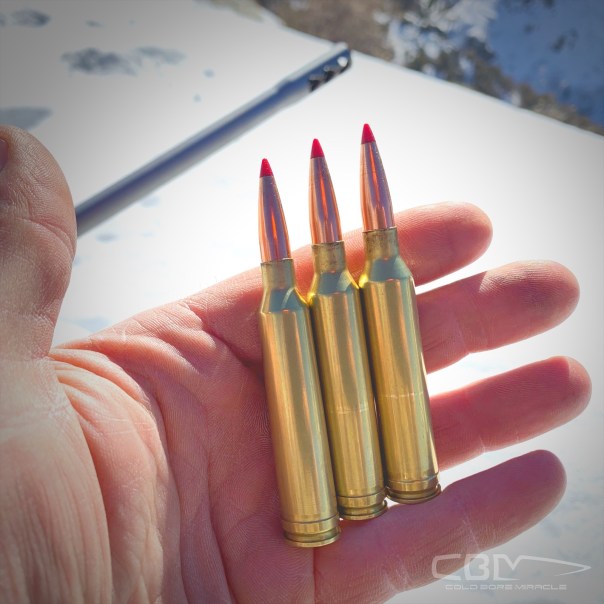
These are Hornady 162 ELDM bullets, not only do they shoot exceptionally, they have worked great on the elk we hunt
You may ask yourself what is driving this movement towards more and more differently tipped bullets? After all, man has used non-tipped bullets for centuries. Do you really need a bullet that was digitally carved by a modern aerospace Michael Angelo to knock over a deer in the next pasture?
Technology has caught up to and even surpassed what most of us consider standard shooting gear, and the bullet-tipping madness is a direct result of this ballistic renaissance. Competitive shooting, and particularly long-range competitive shooting, has driven the demand for perfection into overdrive.
People regularly shoot distances that were unheard of as little as a decade ago. I shot a distance of 2100 yards yesterday, just because it was Tuesday. The market has allowed for some very impressive enhancements in our projectiles. Among them, as you might have guessed, is our bullet-tipping subject.
another development in modern bullets are lathe turned solids like these Cayuga bullets, read more about them here
WHY TIPPED BULLETS?
The shape, weight, and profile of a bullet have everything to do with how it flies. The tip of the bullet has an especially critical impact on a bullet’s flight and its behavior upon impact. The very first projectiles were quite rudimentary, but our forefathers kept improving on the design. Each revision became better than the one before it.
If you could separate the tipped generation of bullets, the generation just before them would probably be the cup and lead-core soft-tip generation. It was a great development that is still popular today, but it is quickly being overtaken by its plastic-tipped offspring.
Many shooting enthusiasts probably don’t need a bullet with a perfect profile, but the bullet manufacturers are happy to market them to you and praise their superior performance. You could argue either way depending on the application.
If all you need is to whack a deer one or two hundred yards away, then using bullets designed 50 years ago is not going to make or break your hunt. But if you are trying to hit a target that is 1,200 yards away in a stiff wind, you would be much better served using one of today’s high-performance tipped bullets.
MATCH GRADE
These Hornady 135 A-Tip bullets feature an aluminum tip, tougher than polymer, and shoot just as good
Plastic (or other) tipped bullets have a much more uniform and consistent shape, unlike lead-tipped or hollow-point bullets. These can get dinged or damaged before you even purchase them. Because of their lightweight front end, tipped bullets also change the balance of the bullet in flight. With a more balanced center of gravity, the trajectory can be improved. For match or competition applications, these aspects of tipped bullets make them superior for accuracy and long-range shooting.
HUNTING
For hunting purposes, not only do you get the inherent ballistic advantages, but also good terminal performance. Tipped hunting bullets are designed to have the tip driven into the core of the bullet to ensure proper mushrooming of the bullet. These properties help improve all types of ammunition when tipped bullets are used.
In my experience, tipped bullets often have better results than their soft lead-tipped predecessors. They have worked well for me in every facet of shooting, whether it was paper, steel, or meat. That said, I do not shoot them exclusively. I will not be leaving my boat-tail hollow-point bullets just yet. They also have their place in my repository.
Tipped bullets can do a lot of great things. But for shots that are way out there, I trust a good hollow point with its easily ruptured tip to open up when a tipped bullet may not.
CONCLUSION
Tipped bullets are everywhere. They have filled a spot on every retailer’s shelf and in every category. There is certainly nothing wrong with this, as the performance they bring is typically superior to the alternative. Whether you have a nice buck picked out or you are trying to break a distance record, there is probably a perfect tipped bullet for you. Do not be afraid to give them a try. You may never look back.
Is there anything more soothing than a campfire surrounded by a relaxing group of hunters vigorously discussing the pros and cons of one hunting cartridge to another? How many times have we entertained each other with heroic stories of hunts past, and how “that old magnum” or something similar saved the day with an unbelievable take down on a monster buck? Well stoke up the fire folks, and draw near, as we’re about to analyze two of history’s greatest contenders.
The .300 Winchester Magnum has reigned supreme for nearly 60 years and is one of America’s most prolific cartridges. It is used by hunters, target shooters, law enforcement, and military snipers. The difference is significant between the .300 Win Mag and our other contender, the 7mm Remington Magnum. Many would be surprised to learn that even though both cartridges share ancestry from the Holland & Holland Magnum family, the 7mm Rem Mag is actually older than the .300 Win Mag. It was born from one of my favorite cartridges, the .264 Winchester Magnum, which was adapted to accept the .7mm bullet.
Colloquially known by many as the “seven em em,” it has a near-religious following among hunters. But it hasn’t enjoyed anywhere near the popularity of the .300 Win Mag. Perhaps the more common and seemingly more American .30 caliber gave the Win Mag a leg up.
RIFLE PLATFORMS
Both cartridges share a common ancestry and have identical case heads. They use the standard magnum bolt face (.532), which means that either of them can be chambered in magnum actions. The .300 Win Mag was released in the Winchester Model 70, while the 7mm Rem Mag was made for the Remington 700. These are two of the most common and widely used rifles in American. Almost every popular firearms manufacturer in the U.S. and some others offer rifles chambered in these two cartridges.
When selecting a rifle for either of these two cartridges, I would select one that has an aggressive twist rate. The way bullets are advancing technologically could bring additional heavy bullets to market, and you don’t want to be stuck with some 11- or 12-inch twist rate. For .300 magnums, I like a 9- or 10-inch twist. It’s fast enough for the heavier bullets I like to shoot. But it’s not so fast that I can’t run them hard. In the 7mm magnums, I like a twist of 7.5 to 8.5 inches for the same reasons.
AMMUNITION SELECTION
If you purchase ammunition, the popularity of the .300 Win Mag may be appealing. There are literally hundreds of different manufactures for this ammo. There are as many loads as you can think of, whether it is for hunting, match shooting, plinking, or anything else. Bullet weights range from very light 125-150 grains, all the way up to super heavy 220-240 grain. Since .30 caliber cartridges enjoy great popularity, there is a larger assortment of bullets to choose from as well.
The 7mm genre, while still quite popular, does not have quite as broad a selection. But there are more than adequate options comparable to the .300. Bullets range from 120 grains all the way up to around 197 grains. The lighter 7mm bullets are usually fired a little faster, so while the .300 Win Mag may shoot a 180-grain bullet at 2,900 fps, the 7mm Rem Mag might shoot a 160-grain bullet at 3,000 fps or more. So the energy delivered to the target is somewhat comparable.
If you twisted my arm, I’d say my first-choice factory ammunition for the .300 Win Mag would be the Hornady 195 ELD Match and HSM180 Berger VLD ammunition for the 7mm.
The slenderer 7mm offers some ballistic advantages, but there are plenty of .300 Win Mag options that deliver high performance as well
There is something to be said about the near-mystical performance of the slenderer 7mm bullet. In weight for weight comparison, 7mm bullets have a slenderer profile than .30 caliber bullets, which typically gives them a superior ballistic performance. This may be the source of the devout following it enjoys with a near-magical ability to carry energy downrange bucking wind all along the way.
The shape and angles of a bullet, combined with its weight, are what give a bullet its ballistic characteristics. The guys in lab coats have come up with a numerical grading system and called it a ballistic coefficient. The higher the number, the better it performs against wind deflection, loss of speed, and drop.
The 7mm bullet has a higher BC compared to an equally weighted .30 caliber bullet. With the recent release of a hoard of incredibly efficient bullets, it’s not difficult to load a 7mm Rem Mag into a better than typical .300 Win Mag load. But to be fair, the .300 also has some wickedly efficient bullets that will certainly overtake the 7mm Rem Mag. This, of course, comes at a cost of higher recoil.
High BCs and magnum velocities are the spice of life. But for hunting big game like deer and elk, my preference would be the 7mm Rem Mag – less powder, less recoil, and a killer flat performance with comparable energy. Bullet weights for either .30 caliber or 7mm are well within the standard range for big game. My choice as far as bullets go would be Hornady 195 BTHP for .300 Win Mag and Sierra 183 Match King or Hornady 162 ELD for the 7mm Rem Mag.
7mm Rem Mag ammunition, above, offers higher velocities than .300 Win Mag, which offers some heavier bullet options
TERMINAL PERFORMANCE
The same qualities that make these two cartridges excellent in shooting, also make them very good at killing game. Let’s look at two of my favorites: the 195 ELDM .300 Win Mag (2,930 fps) and 162 ELDM 7mm Rem Mag (3,050 fps). At 200 yards, the .300 Win Mag drops 3 inches and velocity slows down to 2,609 fps, but it still carries 2,947 pounds of energy. At the same distance, the 7mm Rem Mag drops 2.6 inches and velocity slows to 2,766 fps, and it still has 2,752 pounds of energy. Both of these sets of numbers will take down nearly any big game animal in North America.
At 500 yards, the .300 Win Mag drops 45.6 inches and the velocity is 2,165 fps, leaving 2,029 pounds of energy. The 7mm Rem Mag drops 39.8 inches with a velocity of 2,366, leaving 2,014 pounds of energy. Did you see what happened there? The 7mm Rem Mag drops almost six inches less and is 200 fps faster, with only 10 pounds less energy. If we go out a little further, it actually reverses, and the 7mm Rem Mag is ahead in drop, velocity, and energy.
Conclusion
You could switch things up and turn the tables another way. The reason I mentioned these numbers is that they are directly related to killing animals like elk and deer. While both of these cartridges will do the job, you can see why I might favor the 7mm. That’s not to say the .300 Win Mag won’t do the same things, just with higher recoil and more powder.
The year 2020 has left us with what seems like one tragedy after another, but we managed to pull one gem out of the darkness in October. An adventure hunting mule deer that would make some great memories.
We hunt as a family, and those in our hunting party who aren’t family are close enough they may as well be. Mine is a family with a long cherished practice of hunting, farming, and raising our own food. The primary origin for these handed down practices and skills comes from my Father, and his Father before him.
History
I have fond childhood memories of helping butcher sheep at my Grandfathers humble little farmhouse, where my Father and three brothers were raised. Whether it was lamb chops wrapped in thick paper with familiar handwriting on the top, or a massive head of cabbage grown carefully and pulled from a deep underground cold-storage, Grandpa always was sharing what he’d grown.
As a child I watched the interactions between my Father, his Brothers, Grandpa and the whole rest of our family. There was always something to share, whether it was a bushel of corn, or a fresh loaf of home-made bread. It was a beautiful example to behold even as a young child, and it has stuck with me my whole life thankfully.
My Grandfather circa 1940
A New Era Hunting Mule Deer
But the time that passes is no trifling thing, and every year there are fewer of the old familiar faces, and more new ones with whom to share. Memories are all I have now of my Grandparents, and I have resolved to make as many memories as I can with the generation before me, and the one after. Part of that plan involves taking my Father hunting every fall.
It brings great joy to all of us, and I feel like it gives him the same exciting rush it always has since he was a boy. Dad has hunted these exact same hills and canyons since his Father first showed them to him, and Grandpa too grew up here in these same mountains to which I feel so bound.
Grandpa and his four boys 1970
Mule Deer Season
This year, like every other, Dad came along with us on the opening day of the deer hunt. Despite being very cold, hardly any snow had touched our Wasatch Mountains. The wind that morning was out of hand, it was blowing hard up the steep canyons where we sat watching. The sun was just starting to peak from over the distant Uinta Mountain range, and the first bits of light had begun to illuminate the hills before us.
Dad was ready for action, he had been preparing as best he could for this hunt despite enduring some intense medical procedures only weeks prior. My father has always been a strong and hard hunter. But life has taken its bites out of him, and he can’t move the way he used to. So I knew we would have to find something that Dad could get to. As the sun lit up the draw before us, just such an opportunity appeared.
With the wind howling at twenty or thirty miles an hour, we set off down a trail towards our quarry. Dad, my wife and I all carefully made our way, trying to keep cover in the tall grass. We closed the distance until we had to crawl, and then we crawled carefully through the dry and yellow June grass.
An Unexpected Help
The one good thing about the wind was that we didn’t have to be quiet, nor did we have to worry about our scent. It blew from left to right, and uphill, giving us all the advantage . We finally found a spot that gave us a clear view of the hillside, and therein stood a lone young buck, feeding voraciously on the brush. It was still just after shooting light, and he must have missed the opening day memo because his guard was clearly down. But we decided to capitalize on his mistake, and we moved in for the kill.
My wife had come along to be a sort of backup-shooter. Should another buck appear, or this one try and escape. But the terrain gave room for only one shooter to get in line, so Dad was up. He lay still as he could in the ice-cold and blustery wind, waiting for the best shot to present itself. We watched through our perspective optics, as the young buck continued to feed.
The Shot
When the time was right, Dad pressed the trigger, lighting the fire of his 264 Winchester Magnum. This time it was loaded with something new, the Hornady 135 grain A-Tip which was there before you heard the shot break. It hit the buck with an impressive sound, knocking the wind right out of him, and sending him to the ground. There he struggled for a second, trying to get up, but instead he expired and rolled down the steep hill a few yards.
Dad rolled over and looked at us, a bit of a smile on his face. The wind made our eyes water, and it was even hard to breathe looking into it. But I could hear the satisfaction in Dad’s voice as he spoke. My Brother approached as we went over the details, and after a few minutes, he and I went after the buck. We’ve savored the taste of that little buck, and several others since. It seems to be so much better when paired with the memories of the day. Warmed with retelling the events that got us there. One of my earliest hunting memories was helping Dad and Grandpa drag a deer back to the truck. Hunting mule deer no more than a mile or so from where Dad dropped this little buck in the wind. I think back to that day, probably some thirty years ago. I’m initially surprised that Dad would have shot that scrawny little buck. But looking back now as both an adult and a father myself, I think I can see his reasoning. It was the only time Dad shot a deer with my Brother and I, and my Grandfather. Might not have meant much to me then, but it certainly does now. It gives me a tie to where I’m from, and where I get my love of hunting. A familiar memory of events and people long gone.
Final Thoughts
This little buck may not look like much. But twenty years from now, when we tell the story again. The size of his antlers wont matter any more than the buck we hauled out together with my Grandpa. And it gives me a great example of what to do for my kids, and the generations after me. With a future looking as grim as it can day to day, strong roots and firm foundations are just what we need to hold it together.
-CBM
Hunting Mule deer is fun, but if you prefer elk hunting, click here.
One sign that you are getting better at hunting, is when your plans start ending successfully instead of watching deer run off. Twenty-something years ago, my little Brother Spence invited me to come along on a deer hunt with some friends. It was the beginning of a crazy addiction filled with challenges and adventure, and every year since, we do it again. Several things have changed quite a bit since that fateful first hunt together, we’re both a bit rounder in the middle, and we both have less hair, but we sure have gotten better at hunting Mule deer and killing deer and elk. Todays story is about Mule deer hunting plans, and how years of hunting and hard work can turn into valuable achievement and happy memories.
My Brothers and I You may have gathered by now that I’m not much of a trophy hunter, of course I’d love to shoot a monster but I’m more about having a good time and involving loved ones and friends than anything else. To me, any animal that presents a challenge and a delicious reward that we can share is a trophy. The practice of hunting, year after year, shot after shot, and stalk after stalk, has sharpened all of us. An adventure from long ago Spence and I have shared adventures our whole lives, but today was an especially sweet one. It was the final day of the deer hunt here in our home state of Utah, and Spence still had an uncut tag, and had yet to point his gun at anything. Our plan was to take advantage of an active snow storm that had moved in overnight, the weather always brings out the deer. Experience told me we wouldn’t be able to see much of anything way up high, the thick and fluffy snow fall was building fast. So instead, we decided to hunt the foothills of the mountains.
The snow was still falling, as shooting light came and passed. We hadn’t seen more than a few tracks, but one set of tracks that we’d cut was clearly a buck and he was headed the right direction. We looked as hard as we could through binoculars, searching every crevasse and brush patch. The patience that comes with age and experience seems to let you know when to take your time, and when you need to hurry. We kept moving to avail ourselves of different angles of the mountain above us. I knew it was only a matter of time before we spotted something, and sure enough, after about 30 minutes of glassing, we finally picked two does out.
rough country like this is great for Mule deer hunting
They were working around in some very deep brush, the six-hundred yards between us made glassing them difficult through the thick snow falling all around us. I could tell there was another deer in the brush behind them, I told Spence that it had to be a buck. Spence is used to me aggressively proposing suggestions as facts, the poor kid has had to listen to me his whole life so I’m sure he has grown accustomed to just nodding in agreement as a response. But after putting my spotting scope on the third deer, I could clearly see antlers. I told Spence if he wanted a last day of the hunt deer, then this was it. The brush and snow obscured the buck from good viewing, but I could tell he had at least three points on his left side. My Brother is more of a trophy hunter than I, but I figured if he knew it wasn’t some fork from this past spring it would get him a little more excited.
He grabbed his rifle, and found a good spot to setup on the buck. But after several minutes of looking, he couldn’t find the buck in the deep snowy brush. We watched the does make their way to a thicket, and caught a glimpse of him as he followed them into what looked like a very small shelf on a very steep and rocky hillside. We continued to watch, hoping for them to come out into one of the few openings, but after twenty and then thirty minutes passed we could see one of the does bedded down. We watched patiently as the snow slowed its fall, watching fervently to see if they were going to move, or spend the day there.
It was probably near eight-o’clock by this point, and we were confident these deer were not planning on moving. So like many times before, we started to devise a plan. The terrain the deer had bedded in was extremely steep, and if it wasn’t shoulder deep thick brush, it was loose and slippery scree in long slides down the mountain. The steep slope ran north/south, and we were looking east up the precipitous grade. There was another high point about halfway to the deer on the north side of them, that would give a commanding view of the area were they lay bedded. The plan that we came up with, was for him to climb slowly and covertly to that high spot, after which I would make a wide loop far to their south. This would put the deer almost squarely between us, I could then slowly sneak close enough to them, and like every mule deer, they would smell or hear me and try to sneak away not knowing that Spence lay waiting for exactly that. We split up, after going over the plan to ensure we both had it down. I waited till he was about halfway to his new hide, and then started my climb. There was a ridge spine that ran uphill, about a hundred yards south of the deer’s thicket, I decided to stay on the other side as long as possible in order to avoid detection.
The thick brush and rock was hard to keep quiet in as I climbed, every branch I grabbed to steady myself would drop snow down my neck. But I pushed on, my plan was to actually get above the deer, so that I would have a better view of them should they bust. Experience has also showed me that if you don’t put in the work, its almost as though you disrupt the balance of nature, and success is hard-won. There was about a fifteen-minute window where I couldn’t see the thicket, or my brother. But I finally hit the elevation I wanted, and made my way north over the ridge spine, and towards a rock outcropping that would give me the perfect view. I quietly snuck to the rock, testing every step. I wasn’t sure how close I was just yet, so barely breathing and with all four points of contact I climbed onto the wet rock, the snow having melted off, and just recently stopped falling from the grey sky.
I could now see my Brother, a mere 230 yards away. He had setup behind a rock, which gave him a solid shooting rest, as well as some obscurity should the deer look his way. I sat there stinking, as hard as I could, hoping they would catch my scent on the breeze. But the wind had changed direction, and was moving uphill fast enough that they’d never catch my drift. I had snuck into inside seventy-yards from where the three deer lay on the shelf, and the steep incline of the hill made them feel even closer. So I did what every deer hunter does when things get tough and not going your way, I started rolling rocks. Small rocks, that I pitched into the trees near the deer, hoping the repetitive noise would make them uncomfortable enough to get up.
By this time, Spence was freezing in his cold and wet hiding spot. Watching me toss rocks from high above. At one point one of the does stood up, which triggered an exciting rush as perhaps it was about to go down. But it would take a few more minutes of rock rolling before the two does would finally appear, and stepped out of the thicket. My perspective wouldn’t let me see them, but Spence watched quietly through his Vortex Razor as the does slowly moved a dozen yards into the open. After about ten minutes, the buck stood up. He had been laying right next to the does but hidden from sight, but he moved slowly, in the direction of the does. He finally cleared out of the thicket, and stood quartered away, just below the thicket of trees. It was his last move, Spence had been waiting patiently with a hot chamber, and now he pressed the trigger as crosshair met ribcage.
Several hundred yards away, I stood oblivious to all the happenings below. Standing on my rock trying to stink and be conspicuous. The clouds had just begun to burn off, and the sun was peaking through. The silence of a snowy mountain was soothing, but suddenly cut short.
The report of Spence’s .260 Remington was unlike any shot I’ve ever heard, the blast suppressed by his Thunderbeast suppressor. The sound I heard was amazing, it sounded like a ricocheting 22lr mixed with a rising whistle sound, and of course, at the end was the THWAP! Sounds like a baseball bat swung hard into a wet roll of carpet. Upon hearing the sound, I perked up, and saw the two does bounding off through the steep brush south of the thicket. Just as I got my glass up, I saw the buck bounce into view, and no sooner had I seen him, he keeled over and toppled down the hill, sliding nearly a hundred yards down the steep hillside directly below me. I may have heard a victory call from down the hill, as we both quickly headed for the downed buck.
As we arrived at the buck, I couldn’t get over how handsome he looked. He actually looked like a younger version of the buck I shot the year before, perhaps his offspring. Spence sat down next to his buck, and soaked it up. The sun was now full on shining, and we sat on the steep hill digging our heels in to keep from sliding down. It was a beautiful moment, and we couldn’t have been happier with how our plan worked out.
We had a little discussion about how things seem to have worked out, and how it would have been nice to have all this experience on that first hunt long ago. But isn’t that the beauty of hunting? So much of what we learn, is taught by sacrifice, and loss.
The one that got away seems to be the toughest lesson of all. Until we eventually get to the point that we actually let one go by choice instead of him getting away unscathed because we weren’t good enough. The experiences that got us to where we stood, are in their own way a trophy, and one I love to share whether it be here in words or around a campfire waiting for the next hunt to start.
We drug the deer down the mountain towards the truck, where we took some more pictures, before heading to a champions breakfast. The only thing better than making good memories like these, is making them with loved ones. Sometimes the best planned hunt, is being with the right people. I’m thankful I got to be there, but even more thankful for that invite twenty years ago.
If you’ve followed me for very long at all, you must know by now that hunting is my greatest passion. Its become a way of life around my house, and sharing it with loved ones brings me the greatest satisfaction. That said, the hunting lifestyle doesn’t always enjoy the positive public reflection it once did. A great fear of mine is the loss of our hunting opportunities due to the growing anti-hunting sentiment around the world.
I have worked diligently over the years to effect what I think is the silver bullet to that argument; getting more new hunters addicted to this incredibly rewarding lifestyle.
Today’s story is about my latest efforts, and how patience and love created both a new hunter, and a whole new family bond.
Watch the video at the end of this article
Pre-season practice
Last year I convinced my wife to get her hunters safety, she grew up in a non-hunting family and environment which made it unnecessary. She made short work of the class, and last fall was her first time to ever go hunting with me carrying a rifle and a tag in her pocket. Unfortunately she never got a shot despite her valiant effort and hard work.
Fast forward to September 2020, and again we prepared for The hunt. This year she was lucky enough to draw a pair of Wyoming doe antelope tags, one of my favorite hunts precisely for new hunters like her.
We prepared all the gear we would need, and set out well before sunrise to get into a good position to spot animals as the sun came up.
Typically from experience, Pronghorn (their proper name) aren’t hard to find in Wyoming, they tend to begin activity after sunrise, keeping their sharp eyes on anything that moves on the wide open plains they inhabit.
After looking over several rolling brush covered valleys, we spotted a small group of antelope on the edge of the next rise. Trying to cover distance quietly and quickly can be a challenge with a new hunter, but Mrs. Coldboremiracle was keen to follow and do all the right things. We soon found ourselves on a windswept rise, looking in the direction the antelope had gone. The wind howled and gusted as we glassed the area, we quickly picked out the bright white sides of the herd. The smaller group had just joined a larger one, probably twenty-five animals. A few bucks, does, and a bunch of fawns.
We hunkered down, out of sight, even though they were nearly half a mile away they would easily spot us and sprint into the next county if we weren’t careful. We surveyed the whole area, and decided to try and put a stalk on the large group. Normally that many eyeballs is not a great choice to try and put a sneak on, but we had a line of cedar trees between us. We discussed the other options, and the idea of using the trees for concealment to get closer seemed like the best option.
The weapon of choice that day was my 257 Blackjack custom, a SAUM based wildcat shooting the Blackjack Bullets 131 grain Ace. It is a ballistic gem, providing extremely flat trajectories, and ignores the wind as much as any bullet can.
With rifle in her hands, we snuck down into a wash and towards the line of trees. Stopping to look at the herd every few steps to see if we’d been spotted yet. I breathed a sigh of relief as we finally made it behind the first tree, giving us the concealment the open prairie would not. The wind continued to gust, it felt like anywhere between 10 and 25 miles per hour. The noise of the wind gave us plenty of sound cover, all we had to do was stay out of sight within the trees as we worked towards a spot we could get a good shot.
We worked our way south, with the wind blowing hard in our faces. After about four hundred yards of sneaking, the trees began to thin, and we could see the herd slightly above us and four-hundred-fifty yards away. After confirming that we had not been detected, we crawled around to the shady side of the last small cedar that would give us cover. While I watched through the spotter, She crawled out onto her belly on the soft grey dirt behind the Blackjack. With the distance confirmed, and everything in position it was time to get noisy.
The sixth-sense that animals have must have been working hard that morning. First one, then several others looked straight at us, perhaps having seen some of our final movements. Their body language was concerned, but not spooked. So we focused our attention on a mature doe who stood out from the group. She was quickly obscured by the group however, a challenging aspect of these animals. They ball up in a group making it difficult To get a clean shot.
We ended up having to shift focus to another doe, who stepped slightly out of the group facing the opposite direction. It had only been maybe thirty or forty-seconds since we got into position, but the buck in the group began herding them towards the next rise. Clearly they knew something was up, I told Mrs. Miracle that it was now or never. The buck was moving towards her at the back of the group to push them over the hill and out of sight. So with her heart pounding and the wind whistling by, she pressed the trigger.
The 257 Blackjack runs just over 3200 feet per second, its blistering speed matches its flat trajectory. The 131 grain Ace zipped through the doe in less than half a second, with over 2300 pounds of energy, the bullet was probably still dry as it hit the powdered dirt behind her.
The whole herd scattered from the impact, but our doe had been pointed the opposite direction from the rest. She ran about fifty-yards, before she slowed down, and began to stumble. She laid down and her head swayed before keeling over in the dry prickly brush. The rest of the herd stood in the distance, apparently waiting for her to catch up.
Back at our shooting position it was all smiles and excitement, we quickly packed up and began the walk towards our prize.
The Ace had passed just behind the shoulders, perhaps a little higher than one might recommend, but it worked out to be perfect. It passed through without even touching a bone, so almost zero meat was lost from the shot, a perfect double lung shot.
We took pictures, and savored the moment before cleaning her up, and transporting her back to the truck. I remember on several occasions during the stalk, as well as in the final moment before the shot, I had to remind myself that this was a new hunter. The perspective of a new hunter is not the same as an old hand, it requires a little bit of discipline.
Keeping the moment fun, and trying to suspend the pressure as much as you can, will make the experience more fun for those that are new to it. Keeping calm is tough for me, I get wound up pretty tight in the heat of a hunt. But I found that staying calm, and ensuring that she was comfortable and ready made it a better experience for everyone.
As we returned home with her prize, we spoke about it. She is already excited for our Mule Deer hunt that starts in a few weeks, and next years antelope hunt. It is possible, that I’ve hooked her for life now, all according to my plan…


 My swamp was on the shore of the inland sea that is Utah’s Great Salt Lake, the smelly mud-bowl surrounded by marshlands is a waterfowl’s dream come true. To this day when the wind blows out of the west, and that familiar pungent smell is carried in on a breeze, it takes me back to those early mornings and late evenings trying to ID ducks against the pale gray backdrop as the sun set.
 Shotgunning was my first love affair in firearms, I was drawn to the excitement of connecting with speedy birds skimming across the water. The skill involved was as much instinct as anything. It didn’t matter if you carried a hand me down
  Though most duck hunting is easily accomplished with the standard two and three-quarters chambering, you may want to go for something with a bit more power. Especially if geese might be in your forecast, something with at least a three-inch chamber like the
 I feel much better about my poor shooting when I shoot my Fathers