Surgeon Scalpel 300 Win Mag

Introduction

The Surgeon Scalpel with a B&T Industries Atlas 5H bipod

There are many names that stand out in the extremely competitive precision rifle market, one of those big names is Surgeon Rifles. Once a fairly small custom shop, it has grown to become a very well known manufacturer and supplier of civilian precision rifles and sniper rifles. I had seen and handled many different Surgeon actions and custom rifles over the years, but I’d never had my own until today.

Unboxing

I eagerly opened up the Pelican case when it arrived, knowing what was inside. It was the Surgeon Rifles Scalpel 300 Winchester Magnum in the Cadex Dual Strike chassis. The OD Green and black rifle immediately commanded my attention, as I lifted it from the foam-lined case. My very first thought as I looked it over was the incredible amount of structural detail on the Cadex chassis, many fasteners and interlocking pieces make up this rigid structure. The impressive weight of the rifle was also immediately perceivable, the twenty-six-inch heavy-profile barrel is responsible for much of that. But the chassis itself is also no insignificant thing. I shouldered the rifle, to run the bolt and feel what kind of rifle this would be. My support-hand was opened wide to accommodate the large forearm of the rifle, and I pulled the bolt to the rear to inspect the chamber. I ran the bolt a few times, impressed with the feel so much I had to confirm it several more times.

The Cadex chassis featured a rubberized pistol-grip, also of a large size to fill the palm of your hand. The soft exterior of the grip is necessary to firmly grasp and control a rifle this long and heavy. The rifle is available with a Trigger Tech or Jewel trigger, this one came with the Jewell trigger. Something I wanted to get a feel for right after running the smooth bolt. The trigger broke as clean as one could ask for, with no perceivable movement at all. Also included with the rifle were five Accurate Magazines. The Dual Strike Cadex chassis is a folding model, with a small lever on the right side that allows the buttstock to be folded over the bolt side of the rifle. This folding motion protects the bolt and significantly shortens the length of the rifle for more compact transportation. It also locks in the folded position, preventing unwanted opening of the rifle when manipulating.
After familiarizing myself with the adjustments of the Cadex chassis, I put the rifle back into its case as I impatiently waited for a chance to shoot it.

Continue Reading Here…


PREPPING FOR THE RANGE

As soon as I got the rifle to my bench, I started preparations to get it on the firing line. I mounted up a Kahles 318i rifle scope on top of the 20-MOA scope rail. The Scalpel incorporates the Cadex scope mounting rail to its own scope rail, increasing rigidity.

With my scope firmly mounted and torqued into position, I turned my attention to the trigger. The Jewell trigger is adjustable, so I wanted to tweak it to a pull weight more along my taste. Some of the Jewell triggers can be adjusted to as little as 1.5 ounces, but I was going nowhere near that light. Once I was happy with the weight of the trigger pull, which was extremely simple to set and required no disassembly, I decided to add a few accessories to the rifle that I thought I would use.

A shooter uses the Surgeon Scalpel .300 Winchester Magnum rifle
The rifle is a precision shooter, and it’s easy to customize it to your shooting needs

I first added an Area 419 Arcalock rail to the forearm of the chassis. The rifle came with a Harris bipod, and it worked fine, but I wanted to be able to use something a bit more robust with this heavy-hitting rifle. Installing the Arcalock rail would allow me to use a variety of bipod and tripod mounting solutions that are quickly interchanged.

Five magazines came with the rifle and an assortment of Cadex Pic rail sections of various lengths. This is almost a requirement, as the Cadex chassis does not use M-lok slots. While many may find this to be an issue, it was a small one to me, especially since the chassis came with a good selection of accessories that are easily installed and moved on the chassis forearm.

QD sling attachments were also included with the chassis and can be moved around to fit the shooters needs. All that was left was ammunition procurement and a quick and dirty bore-sight job. Then I would be ready to hit the range and see what this beast of a rifle could do.

ON THE FIRING LINE

A target shot with a Surgeon Scalpel .300 Winchester Magnum rifle

My first chance to shoot the Scalpel was a brief one. With paper targets set up at 100 yards, I loaded a few of the magazines to get the rifle zeroed. My initial impressions were very positive. The muzzle brake that came with the rifle is very effective at reducing recoil. Though the shooters to my sides would like a word with the engineers of it. The solid feel of the rifle made it very pleasant to shoot, watching bullets impact at 400 and 800 yards was easy.

For my second outing, I decided to install a suppressor to the rifle to see how it shot. With Barnes Bullets 190-grain long-range ammunition, the rifle was shooting predictable 1-inch five-shot groups. The easy cycling of rounds from the magazines into the chamber was very effective. I noticed that the rifle had come with both bolt-stopping magazines as well as traditional ones. With the bolt-stop magazines, your bolt locks to the rear when the mag goes empty, which could come in handy in a high-volume shooting scenario. Mag changes were easily accomplished by pushing the release with my trigger finger and swapping mags with my left hand.

Additional testing of other ammunition provided superior accuracy performance. Hornady 195-grain Match loads rendered half-MOA groups and could easily print groups with sub-half MOA after a little tuning. Shooting the rifle with a Desert Tech suppressor made it even more pleasant.

PROS VS. CONS

A shooter fires the Surgeon Scalpel .300 Winchester Magnum rifle
The rifle is neither light nor short, but that can be used to your advantage

Obviously, one must look at this rifle from the perspective of the professional shooter. It was not made for the deer hunter or the average weekend plinking enthusiast. So let’s keep this in mind as we go over the pros and cons.

First of all, this rifle is a tank. Depending on the professional application, this could be good or bad. If you are a sniper that must pack this thing to the top of an office tower stairwell, that might be a little bit of a hindrance. But once you are in position, I consider the mass of this rifle to be a strong asset. The powerful .300 Winchester cartridge has both impressive range and recoil, and the Scalpel/Cadex platform is an outstandingly stable platform to launch it from.

My tastes in rifles lean towards the shorter lengths, so it should come as no surprise that I found the Scalpel to be a bit longer than I would have liked. With a suppressor installed, it felt like carrying around a boat oar made from steel. This, again, may not be an issue if your job is overwatching a valley from a static position and vehicle transport. The folding feature of the chassis does help in combating this issue. The .300 cartridge does see better performance from long barrels like this 26-incher, so the above-mentioned scenario makes it a perfect choice.

The Cadex chassis did increase the height of the optic over the bore, which is not a deal-breaker by any means, but it is something that needs to be accounted for. That’s all I can think of as far as negative marks for this rifle, so let’s get to what I like about it.

The heart of this rifle is the Surgeon action. It is incredibly smooth and functions like a Swiss watch. Running the straight bolt handle feels therapeutic to me. In conjunction with the Cadex chassis, it feeds rounds from the magazines with ease and finesse. The supplied Jewell trigger has its own well-known reputation that gives the shooter perfect control of the shot and placement. The adjustments of the Cadex chassis make it easy to fit to a particular shooter, regardless of the clothing or protective gear being worn. The various adjustments are quickly and easily done without tools.

The folding mechanism on the chassis is very robust and introduces effectively zero play in the rifle’s function while allowing the shooter to reduce the carry size of the rifle. The chassis attachment points would benefit from adding M-Lok, but they are still very customizable.

A Surgeon Scalpel .300 Winchester Magnum rifle on rocks
The Scalpel runs like a Swiss watch, regardless of the handful of small complaints I can find to level against it

CONCLUSION

Overall, I would give the Surgeon Scalpel all high marks. It is exactly what it has been marketed as, a high-quality professional-grade precision rifle. I think anyone who would purchase such a rifle would be very happy with its performance. It brings sledgehammer-like power and the precision of a custom-built rifle.

-CBM

Western Rivers Mantis Pro-400 Electronic Call

Electronic calls have become very popular over the last decade or so, hunters of all types have found value in the ease and convenience of simply pressing a button. Of course there are die-hard’s that must use mouth calls or something more natural, and there is certainly some additional skill and finesse with that approach. But for those of us who live fast and hunt hard, there is something to be said for the modern convenience of an e-call.

I have a somewhat perplexing past when it comes to hunting coyotes, I’ve tried my hand a calling them, ambushing them, and even downright chasing them. There seems to be a kryptonite like shield between me and coyotes, I usually miss ten for every one I do shoot. So I was intrigued with the opportunity to try out a new tool in my efforts to land another.

The ability to drum up any animal call you want on demand has obvious advantages when hunting. But would a device that claims to do just that for hunters actually work in the field? Or is it just a fancy gimmick? I decided to give it a try with the compact, remote-controlled Mantis Pro 400, which I recently tested in the field on some actual hunts.

The Western Rivers MP-400
The Mantis Pro is a compact remote controlled call. The remote controller fits easily into the palm of your hand, when it is not snapped into the main housing of the call. The Mantis Pro boasts quite few features that I hadn’t expected to see, but the more I found out about it the more I liked it. It can be powered by AA batteries, or plugged into an alternate 12v power source, And it can also be plugged into other call units or external speakers to give multiple sound emittance. In addition to the sounds that come pre-installed on the MP-400, you can add your favorite sounds using an SD memory card. The sounds on the card can be arranged and edited via a micro USB port, and if that wasn’t enough, you can also bluetooth connect the MP-400 to your phone and play whatever sounds you might have stored there. The MP-400 also has a port for a decoy (sold separately). Continue reading here…

Browning X-Bolt 6 Creedmoor

Introduction

Even though I’m a bit of a rifle junkie, the Browning X-Bolt is a bit of a stranger to me. I’ve shot a few of them over the years, and even had good luck loading ammo for them for friends. That said, I’ve never owned one myself. Browning is a common name down our way, the man himself was born just a few miles north of where I sit as I write this.

The X-Bolt rifle has plenty of clout in the rifle world, so I knew not to underestimate it as I prepared myself for this project. I was giddy with excitement to get my hands on this one.

The Browning X-bolt Target

The Target model of the Browning X-bolt comes in a McMillan A3-5 stock with an adjustable comb, as well a a match grade heavy profile fluted barrel. The muzzle is threaded 5/8-24 to attach any muzzle devices. In addition to those add-ons, the X-bolt receiver has an extended bolt handle, and a 20 MOA pic rail mounted on top.

There are a few other little extras as well, such as QD sling swivel studs, and a bipod pic rail mount. I pulled the rifle from the black Browning box, and was instantly in love. The fit and finish of this rifle were superb, and as soon as I put the Pachmayr Decelerator recoil pad to my shoulder I knew it was going to be a good match. I adjusted the cheek piece to fit my hold, and ran the bolt and trigger a few times.

I love the 60-degree bolt throw, it is shorter and faster than the alternative. And the smooth bolt stroke on the X-bolt feels much like a nice custom. The Trigger in this rifle is as good as any factory trigger I’ve felt, The Feather Trigger as Browning calls it, is adjustable from three to five pounds, and has a tang mounted safety. The detachable box magazine is Browning’s own design, it is an all polymer rotary magazine that holds four rounds. It fits flush with the bottom of the McMillan stock.

The Warne Skyline bipod made an excellent addition to the rifle

SETUP

After familiarizing myself with the rifle, it was time to get it ready for the range. I mounted a Trijicon Tenmile 5-50×56 scope on top of the receiver in a set of 34mm rings, perhaps a little more scope than normally needed but a great option for testing the performance of this rifle. I added a muzzle brake to the end of the barrel, with intentions of also shooting the rifle suppressed later. I then installed a bipod to the front of the gun. The only thing left to do on the rifle was boresight it and gather some ammunition.

Browning X-Bolt rifle on a bipod with scope
I adjusted the cheek rest to my liking and added a Trijicon scope and bipod before going to zero the rifle. 

Under normal circumstances, finding 6mm Creedmoor ammunition would not be a difficult task. But times being what they are, I had to make do with what was available. I fashioned several boxes of handloads featuring Berger 105 Hybrids, which is pretty common on the firing lines this rifle would normally sit on. Once I had enough ammo to get a good shooting session in, I loaded up the truck and went into the hills.

ON THE FIRING LINE

With my rifle freshly bore-sighted and a clean target hung at 100 yards, I set to zeroing the X-Bolt. In just a couple shots, I had established a consistent zero and began shooting some groups. The smooth stroke of the bolt even when stripping loaded rounds from the magazine was very pleasing.

The all-polymer magazine has a slippery feel to it, surely this aids in the smooth feeding of cartridges. One complaint about the magazine is that it only holds four rounds, for a rifle that plays in the competition realm with the big boys, this is almost a deal breaker. A 10-round or even 12-round magazine would be much better suited for this rifle. But it shot so smooth I could hardly put it down.

The easily operated bolt made loading and reloading the rifle very fast, and I noticed another one of Browning’s very intuitive designs while running it. When the safety is engaged, the bolt is automatically locked. But there is a small button on top of the base of the bolt handle. This button pops up when the safety is engaged. You can depress the button to open or close the bolt while on safe, and the button drops out of the way and the bolt runs with zero inhibition when the safety is in the firing position. This may not be the most fascinating feature of the rifle, but I found it to be very ingenious.

Another engineering bonus I found on the X-Bolt was the mounting of the optics rail. Instead of using four screws (two in the front, and two in the back) like on typical optics rails, the X-Bolt uses eight screws. There are four in the front, and four in the back, giving the X-Bolt a very solid mounting point for your riflescope. Again, this may not be a revolutionary thing, but I can certainly appreciate the engineer’s thinking.

Sum-MOA group at 100 yards
The rifle is easily capable of sub-MOA groups. 

The X-Bolt shoots just as good as it looks, and sub-MOA groups were easy with zero load workup. Half MOA accuracy was easily achieved with proper shooting techniques. I have no doubt that with additional load development this rifle would shoot better than half MOA.

The 6mm Creedmoor cartridge is an excellent round for target and long-range shooting. It has little recoil and is very efficient at escaping the winds effects downrange. This allows the shooter to see the bullet in flight and even spot his or her own hits and misses.

CONCLUSION

Browning X-Bolt with suppressor at the range

The Browning X-Bolt Target rifle is an immaculate gun. It’s well thought out and near perfectly executed. My only gripe is the previously mentioned magazine capacity, though it could probably be switched out for a different magazine system. But despite that, I think this rifle would make an excellent addition to almost any rifle collection. There are so many amazing competition rifles available today from manufacturers, and it’s nice to see Browning show up with their own.

-CBM

Continue Reading Here…

Marlin 1894 357 Magnum

Lever Action Attraction

What seems like forever ago, my little brother snagged a Model 94 Winchester from the local gun shop. It was chambered in .44 Magnum, and lets just say we all fell in love with that short and sassy little lever-gun. Ever since then I have been dying to get something similar for myself, but life has a way of dictating your gun purchases doesn’t it?
So when the opportunity to get a Marlin 1894 in .357 Magnum came my way, I was not going to let my dream go unlived. But would it be everything I had hoped for?

The Marlin 1894

Since the late nineteenth century, Marlin has been manufacturing leverguns and other firearms for the American public. It has seen several ownership transfers over the past decade or two, and the latest one will hopefully be a good and final one. The 1894 is perhaps one of Marlin’s most popular models over the years, but there are many others that have also graced the shooting public. The 1894 is like many of Marlin’s firearms, a lever action repeater. Probably the most distinguishing feature of the model is it’s side ejecting receiver. This has made Marlin leverguns very popular with users of riflescopes, as it allows a more generous mounting area. The rifle has an eight round tube magazine that loads from the side of the receiver through a loading chute.

OPENING THE BOX

When I received the rifle, I set straight to fiddling with it. It’s practically impossible to pick up a lever gun and not jack open the action. The gun seemed just a bit stiff, which I’m sure was more about it being brand new than anything else. A few hundred rounds would surely loosen it and make it run like warm butter.

The rifle featured handsome checkering on both grip areas on the walnut stock. On the breach end of the barrel, there is the traditional buckhorn rear sight. A hooded front post sits at the tip of the barrel. I like the old lever guns without the modern safeties, but this one is at least minimal and doesn’t stick out terribly. Plus, the gun still has the half-cock safety.

THE AMMO SITUATION

I am lucky to have prepared for the ammunition crisis years ago, and my storage has plenty of components to make dang near anything I need. With a good stash of .357 and .38 special brass and bullets, I knew I wouldn’t have to get gouged at the local gun shop.

In just a few hours, I had built up a nice supply of .38 special ammo loaded with soft-shooting 160-grain wadcutters as well as a small pile of .357 Magnum cases that I loaded with a warmer charge underneath 125-grain Hornady XTP bullets. Both of these loads worked great in the little Marlin and made for hours of plinking fun.

A man reloads his Marin 1894 lever-action rifle
Loading the tubular magazine is quick and easy

TO THE RANGE!

The 1894 is obviously meant for up-close business, making shots beyond 100 yards more about luck than focused effort. The accuracy of the 1894 was still very useful, and it proved enough for squirrels at 60 yards anyway. In just a few minutes, I had gotten quite accustomed to loading and shooting the rifle. Much like shooting .22s, this became quite addicting. Hitting targets the size of soda cans under 60 yards became a quick game for us, and it was even more fun when we stretched it out to 100 yards or so.

A man shoots the Marlin 1894 lever-action rifle at the range

The report of the rifle was surprisingly soft, as was the recoil. I wouldn’t recommend shooting it without hearing protection, but it barely felt like you needed it out in the open country. The recoil was soft enough that only the youngest of shooters would shy away from it. This also made follow-up shots easy and fast.

The Marlin 1894 is in my mind the perfect little camp rifle. Whether it is used for kids plinking at cans or for the serious hunting of deer-sized animals, the rifle is more than adequate for the task. This little gun would be a perfect companion for a hike through the forest. Its petite size and light weight make it ideal for walking. With the ability to shoot light loads like the .38 Special or hard-hitting loads like the powerful .357 Magnums, you can use whichever ammo best suits your purpose.

ACCURACY AND ACTION

I wish I could have gotten a scope mount for this story. I think it would have been a valuable addition. But I found it very easy to hit what you are aiming at within the range of this rifle even using the factory iron sights. Accuracy with the provided sights allowed me to obtain 1.5-inch groups at 50 yards, which I consider acceptable for the purposes that fit this rifle. I’d imagine that I could probably tighten that up a bit more if I had a scope mounted to the rifle.

The flawless function of the 1894’s action attests to the reason these rifles became so popular in the first place. Positive feeding and extraction from shot to shot could be felt in your loading hand, and stuffing the stubby little cartridges into the feeding chute made you feel like you were in a John Wayne film.

Continue Reading Here…

A man shoots the Marlin 1894 lever-action rifle at the range
The lever-action design allows you to feel the mechanical action of the gun while shooting. The 1894 is also soft shooting and great for plinking

CONCLUSION

I suppose you could say that the Marlin 1894 fits perfectly into the space I dreamed up for it. It’s a solid-functioning rifle with easy and soft-shooting characteristics and relatively inexpensive ammunition that can be as powerful or soft as you want it to be.

Unlike gas-operated semi autos, lever guns rely on the input of the shooter to cycle cartridges. So, shooting subsonic ammunition or the full-power stuff will not affect its function, making these rifles very useful for any number of shooting tasks. I think Marlin has enjoyed its reputation for very good reason, and hopefully they keep making these beautiful rifles for another hundred years.

-CBM

Yankee Hill Machine R9 Suppressor :A great first or fifth can

Introduction to suppressors

One of the biggest questions when buying a suppressor, is selecting one out of the hundreds of options. I’ve been through a bunch at this point in my life, so let me shed some light on the subject for you. What caliber? what configuration? Today we will take a look at the Yankee Hill Machine R9 suppressor.

Many other questions you’ll be asking yourself. With so many options how can you pick one that is best for your purposes? The right answer is that there are always too many good choices to pick only one.  Today we are going to look at the subject as a first time suppressor buyer, and a suppressor that might just cover all your bases.

The Yankee hill machine R9 suppressor mounted to the Browning X-bolt McMillan chambered in 6 creedmoor and trijicon ten-mile 5-50 riflescope
The YHM R9 mounted direct on a Browning X-bolt 6 Creedmoor

Why the YHM R9?

What makes the YHM R9 a perfect can for an NFA Greenhorn? I’ll get right into it. Todays gun owners come from every walk of life. Our modern world has given them overwhelming opportunities for firearms and accessories.

That said, there’s a good chance that most firearm enthusiasts looking into a suppressor probably have an Modern Sporting Rifle (MSR) of one kind or another. That rifle is probably chambered in the extremely popular 5.56.  Or one of the other calibers that are growing in popularity like 300blk, 6.5G, 6 ARC, etc.

The R9 from YHM is ideal for using with any of these calibers. It can suppress large frame cartridges too, like the 6.5 Creedmoor and 308 Winchester. It is rated to suppress pretty much anything under 308 Winchester really, even with limited amounts of full auto. But Wait! There’s more! The R9 is also a perfect fit for a 9mm pistol or carbine. It’s stainless construction is more than enough to retain pressures generated by the cartridge, and other 9mm rifle cartridges like the 350 Legend.

As I see it, it is pretty damn likely that your apprentice level prospective suppressor purchaser would benefit greatly with an R9. One could swap it back and forth from various rifles. Or install a booster and run it on their Glock  or other handgun as well.

The R9 is ideal for the Desert Tech MDRX and its assorted calibers

Adaptation

YHM is one of many manufacturers that has embraced the uniformity of threads. The threaded rear end of the R9 can be fitted with a direct thread cap (1/2-28 or 5/8-24). It can also fit a Nielsen booster assembly and run with one of various piston manufacturers. It doesn’t end there, it can also use YHM’s Phantom QD system. The system allows rapid swapping of the suppressor from various YHM muzzle devices.

Further still, the can uses the same threads as other major manufacturers like Dead Air and SilencerCo, so you could also install those devices.  All three options are used for my R9, I have both thread caps that I use when shooting the R9 on my precision guns.  I also have the QD mount so I can swap it back and forth on my carbines as well. I run a Rugged suppressors piston inside my Nielson Booster assembly, which makes my Canik TP9 quiet and smooth as ever I could ask.

Yankee Hill Machine’s R9 is only threaded on the breach end, the rest of it’s construction is solid baffles welded together making it simple and no non-sense. All the provided tools allow the user to tighten down the various assorted mounting options.  Or perhaps more importantly disassemble them after being used.

Shooting with the YHM R9

Some of the very first shots I fired through the R9 were with my pistol. It was the first mounting adaptor in my possession so I went straight to the range to try it out.
The R9 tamed all the sounds produced by my pistol, adding of course its due weight and a bit of added backpressure. But the heavier muzzle sure made the pistol smooth and even more controllable. Shooting the pistol in closed quarters was very tolerable. Sound reduction was everything I’d hoped for, and the function was flawless.

The R9 seen mounted direct on my SRS M2 6mm GT

Shortly thereafter I received the 5/8-24 direct thread adaptor, and the R9 went straight to my Desert Tech SRS M2 chambered in 6mm GT. There it stayed for quite some time, hundreds of rounds sent through the R9 from fifty to seventeen-hundred yards. Accuracy of the rifle was if anything enhanced by the presence of the R9, this is typical in my experience. Cartridges like the 6mm GT were easily suppressed by the R9, making precision even more pleasant.

Using the QD mount for the R9 is perfect for running the suppressor back and forth between rifles. I ran the Phantom flash hider on my 308 carbine threaded 5/8-24. and on my 5.56 chambered carbine I use the Phantom Turbo 556 muzzle brake. Which made it easy to swap the R9 back and forth between the two rifles, both of which sounded great when suppressed with the R9. With the gas turned down a notch on both rifles, they functioned perfectly without gassing me out at the breach.

Carbines like this 350 Legend are a perfect host

First or Fifth suppressor?

Ya, I said first or fifth. The reason I put it that way is because even though I have a dozen or so cans at any given time, the R9 is still an excellent addition to my collection. A modular suppressor like this is very useful on better than half of my gun collection. With an MSRP of only $494.00 it is pretty economical compared to many other cans.
I’m at a point in life where I seldom go places without a rifle, and much of the time I have two or three rifles. Having an additional suppressor that will fit most of my rifles makes it an easy choice for me.

Conclusion

If my positivity is hasn’t been obvious enough about my feelings about this little suppressor, let me make it clear; I think this is the perfect suppressor for a first time NFA victim. It has everything most people need, multi-caliber, adaptable, tough as nails, and all at a very reasonable price. If I had to say something about the R9 that I dislike, you’d really have to force it out of me. The only issue I’ve ever had was keeping the thread caps tight, this was almost certainly due to me not tightening them on using the supplied tools as I’m a lazy ass. But I wouldn’t put that at the feet of the boys over at YHM.

So there you have it, the R9 is nearly a flawless purchase in my opinion. Short from needing magnum capabilities or a bunch of machine guns you need to suppress, this is an excellent suppressor for your typical firearms consumer. Best get yourself one.

-CBM

Ammunition Prepping

Preface

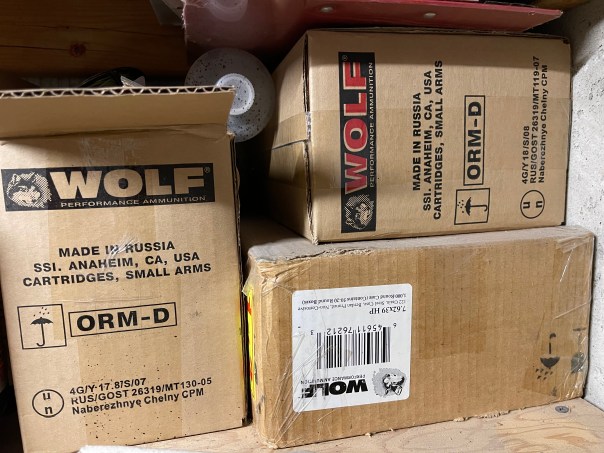
Just a few days ago, the fools in our government once again took another bite out of our ability to enjoy our rights as firearm owners. Curtailing the imports of modest priced (if there is such a thing) ammunition will only further drive up the demand and price of the ammunition that we can buy. Today’s subject is Ammunition Prepping, and how preparing for ammo shortages can keep you safe.
I’d like to think of myself as a pretty prepared person, I keep the Scout motto somewhere near the forefront of my mind. So as soon as I was old enough to reason (probably about 25) I decided it wouldn’t be a bad idea to start my career as a prepper. It wasn’t food stuffs, MRE’s, and cans of beans, though there have been a few of each stashed under my roof over the years. No, my focus was directed at something far more valuable than bagged Vietnam era pork with rice in BBQ sauce. I had enough foresight, and knew myself well enough that I would need lots of ammo in the future. Precious metals like lead and copper have an incredible value on a stressed market, and if things get bad enough that I find myself tearing open that brown bag of pork, I image the value will quadruple overnight.

old cases of ammo, stored carefully for a rainy day

I’m sure every one of us has thought about building a time machine, and traveling back to the nineties and filling a U-Haul truck with $80 cases of 7.62X39. I still find myself wanting for the good old days like that. But the secret to living well, and by that I mean plenty of ammo, doesn’t involve time machines or wishes, It’s all about action.

Guns without ammunition are useless, with that in mind I present my first rule of Ammo Prepping.

Buy When You Can, Not When in Need

The middle of an ammo crunch is the worst time to buy, if you find yourself searching for stores for your favorite ammo, you’ve already lost. Buy ammo when it’s cheap and plentiful, I remember when ammo was everywhere I would swing by the ammo counter anytime I went in a Walmart. Typically I’d score a brick of .22 or something similar, but there is also the occasional pound of powder there or something.
There are also lots of smaller outlets like small town hardware stores and such. In my former job I did a lot of traveling, and I’d take advantage to swing by every little sporting goods store out in the country. I got quite a few deals on old bullets, and other things that they would have in stock because nobody bought it there.

Make what you cant buy

When I cant buy ammo, I buy components. Handloading is an incredible value to those of us who do it, every good prepper should know how and have the means to make his own ammo. I apply the same rules here as I did to ammo, buy it when you can. Ammunition components are everywhere, and it never hurts to stock up on whatever you can. There is only so much of the stuff, and it will never be worth nothing.

Become the range troll that picks up all the brass, I have done quite a bit of trading and come out ahead every time. I have a huge spectrum of components, dies, brass, and other things for firearms I don’t even own. This works out really nice because I can trade for things I can use, or help out friends when they are in a pinch. You can never have too much.

Buy in bulk

It’s probably been over a decade since I bought a standard box of twenty rifle cartridges, and even that was likely an anomaly. Same thing with buying components, I try not to buy boxes of a hundred. When I buy a box of bullets its usually by 500 or more.

Of course you might be thinking; anybody can do that if you have enough money, which is true. I always try to set aside a little ammo fund so that when the occasional good deal pops up, I can splurge where it counts, in bulk. You’d be surprised how far your money will go when its spent in the right places.
Whether it be a yard sale with a case of primers innocently underpriced, or a wholesale opportunity, or some other opportunity, be prepared.

Make sure you keep mainstream

By this I mean make sure you have mainstream chambered firearms. If you’ve followed me for long you are probably aware of all the bastard wildcats and oddities I shoot. But I also have several rifles in the commonest of cartridges, I’ve got two precision 223 Remington’s, and of course my MDRX that also shoots 223 like a house on fire. Not only that, if I had to survive the rest of my life using only 223 chambered rifles, I certainly could. And the same goes for 308 Winchester, I’ve got several precision rifles as well as semi-autos that shoot this extremely common cartridge.


And it never hurts to have multiple rifles in these common chamberings. I purchased two rifles back in the good ol’ days, chambered in 7.62×39, one is an AK variant, and the other an SKS. At the time, I paid just over $400 dollars for the pair, which is amazing by todays standards. But what I wouldn’t give to go back and buy more ammo for them, luckily the Coldboremiracle of the past was smart enough to buy several thousand rounds for each of them.

Get preppin

Hopefully you’ve learned your lesson during this last ammo crunch. Start making preparations for the next one, because it will surely come. Learn how to handload, find alternative suppliers, create a pool of ammo that could see you and your family through the apocalypse. That’s been my goal, if the world as we know it ended today and I had to live the rest of my life with what I have on hand, for the next forty years I could shoot a couple deer every day, a whole den of marmots, and a dozen or so zombies if they lined up just right, and still have a couple left over for blue-helmets if needed.

-CBM

Winchester Model 70 Target

Introduction

As time passes, both our guns and our tastes evolve. Perhaps our shooting styles change a bit and a gun we were once giddy over has fallen to the back rack of the safe, perhaps never to come back out except to be sold. Or maybe that favorite rifle got tuned up with a new barrel and scope, maybe a dashing Cerakote paint job and a better trigger. Either way, the firearms of days past seem to lose their luster as new ones are brought to market. But a rare few seem to hold on to a charming and nostalgic following, today we are talking about one of those.

The Model 70


The Winchester Model 70 has been perhaps America’s most prolific bolt action rifle. Generations of hunters and other marksmen have put the various configurations of the Model 70 through countless trials.
The ninety-degree bolt action of the Model 70 has been used in too many configurations to mention here. Both long and short actions are made, featuring a bolt-shroud three position safety. And a simple and robust trigger that is well known for immaculate breaks.

The Target Model


The Model 70 Target was available in an assortment of calibers but they had the same features. A high quality heavy profile barrel, and a wide and flat-bottomed walnut stock. The rifle also came drilled and tapped for a variety of sighting options, you could either mount a scope like the Unertl scopes that were often seen on these rifles in the past, or aperture sights that were mounted to the receiver and muzzle. I believe the military version of the rifle as used by legendary shooters like Hathcock, was very similar in construction, using a more streamlined and less obtrusive stock.

FIRST IMPRESSIONS

The box this rifle comes in instantly speaks to its vintage, with old print and packaging from days long gone. I pulled the rifle out of the box and inspected every inch of it. Despite its obvious age, the rifle was in immaculate condition. The barrel was stamped with all the Winchester information, as well as the caliber marking .30-06 Springfield. I would find it odd for it to be genuinely unfired, but it certainly could be. The walnut stock, while not anything particularly handsome, was of obvious quality wood. The finish still maintains its factory shine, and the conspicuous well-coated metal reminded me of the good ol’ days when things were made better. I ran the bolt a few times to experience that familiar Model 70 feel. Even the trigger felt smooth and broke clean as I’ve come to expect from the Model 70s of the past. I was excited to see what this old rifle could do, but I set out to do it my way.

Since I obviously didn’t have access to one of the Unertl scopes, I installed a set of scope bases to the receiver so I could mount one of my standby rifle scopes. Once the bases were installed, I put a Nikon 4-16×50 rifle scope mounted in Warne rings onto the receiver, taking care to avoid the obstruction of the factory scope mount on the rear of the barrel. I also rigged up a Pic rail to the front of the stock so I could use a bipod for supported shooting. 

All that was left was to find ammunition to feed the rifle. I had a box or two of some Remington factory ammunition, which would certainly work. But I wanted to see if this rifle would shoot like a target rifle should. For that, I would need some match-grade ammo. I turned to my loading bench. I still have my father’s old Speer loading manual from back in the late 60s. I figured the load data from the same era as the rifle itself would be a good starting point. I loaded up some Sierra 175-grain Tipped Match Kings and some Hornady 178-grain ELDM bullets, using a pretty standard load for the time.

30-06 springfield cartridges and group
a typical group from the old Winchester

TO THE RANGE

Shooter with model 70 rifle on a Warne bipod in a field
I used the Warne Skyline bipod for testing
 

I set a target at 100 yards. After some quick field bore sighting of the scope, I set to zeroing the rifle. After a few sighters, I was in business. I am used to shooting heavier guns and often in much smaller calibers. So, the recoil of this rifle was a little more than I normally experience, but that just reminded me to focus on the fundamentals. In no time at all, the Model 70 and I were working in harmony. 

The rifle seemed to like both of my match loads, though there may have been a slightly better pattern using the Hornady bullets. I think this rifle is easily capable of half-MOA accuracy when rifle, ammo, and shooter are inline. I also stretched the rifle out a bit just to see what kind of range it was comfortable with.

Shooting at 400, 500, and 600 yards was easy. However, it was quite apparent that the large and slow bullets were affected by the distance much more than today’s typical match cartridge and bullet combinations. But that was fine by me, I actually quite enjoyed the nostalgic trip with this old rifle.

Everything functioned flawlessly for my range trip, as I would expect from an old hand like the Model 70. It offered smooth feeding and ejection with a very crisp and clean trigger, and it was every bit the accurate sharpshooter I expected it to be.

vintage Winchester ammo next to rifle on grass
some vintage ammunition from the same era

TIME TESTED RESULTS


A typical group from the Model 70 Target using standard hunting ammo was about 1 inch for three shots. But when shooting better bullets that were handloaded to fit the rifle, it would easily print 1/2-inch groups. I imagine it’s possible you could do even better with further load development and some additional practice at the range. I was very pleased with the rifle’s performance. It felt good to use this piece of American history. Continue Reading Here…
 

CONCLUSION


If you are looking for a specific piece of nostalgic target shooting equipment, or if you are just looking for a great rifle to enjoy on the range, this old Winchester would certainly fit the bill. There are still quite a few of these rifles out there today. So if you’d like to feel the quality of traditional American manufacturing, don’t hesitate to snatch one of these beauties up when you get the chance.

-CBM

And if you like old Winchesters, here is another one.

WHAT GEAR DO I NEED FOR AN ELK HUNT?

Elk Hunting

Elk hunting is a dream hunt for many of us and I am lucky enough to have had the chance over and over throughout the years. If an elk hunt is on your list of must-do hunts, I have put together my thoughts on the gear you won’t want to be without when you go. Of course, a good gun and the right ammo are always the right start, but there’s other gear you’ll also want to have on hand.

The Rocky Mountains are a bountiful and impressive place to hunt, whether you are after monster mulies, elk, or one of the other beautiful species herein, it can be quite a job. Today we’ll speak specifically about the elk hunting side of it and the differences you should know between elk hunting and smaller animals like deer.

THE BUGLE OF A BULL

Hunters with elk

Elk calling might not be easy but when it works, nothing beats the rush

Contrary to what you see on all the hunting shows, calling elk is not as simple as it appears. Elk are most vocal during the rut, which is usually in September. During the rut, they can be hormone-driven fools, that come in fast looking for a fight. If you are hunting outside of their rutting schedule though, your bugling tube and all your practice might be nearly useless. If it is a general season hunt or any hunt where there will likely be people present, adding hunting pressure, elk tend to shut up. So, keep in mind when your hunt is and the kind of pressure they will be under. Elk are quite smart, and a call under the wrong circumstances may send them charging off into oblivion.

Cow calls and other noises can be useful depending on the general mood on the mountain. I’ve brought in several bulls just raking the trees with a broken branch. If a big bull is what you are after, you have to play to his attitude.

Whether you are after a bull or a cow, you will want to keep an eye out for the cows. There are lots of eyes and ears in a herd of elk and the ladies are usually the ones to bust you. Minimal sounds and calls may be all you need to find them and get into place for a shot. If you are hunting active herds, make sure you bring your a-game — a good bugle can bring in a monster on a string.

BOOTS OF HERMES

Hunters with elk

Trekking through the wild requires proper footwear to ensure a successful hunt

Elk hunting will drive you right to the edge of sanity. Plodding through soft mountain soil and chasing towards a ridgeline in pouring rain or snow, your legs and feet will take punishment like never before. Wearing a good pair of boots is essential — even better, have more than one pair. Sometimes you’ll sneak through dense forest while other times you’ll claw up a loose rock pile or chute. Good boots, and perhaps several different pairs for differing terrains, may keep you fresh.

Lightweight is a must but the weather dictates the rest. If it’s cold and snowy then you want insulating boots to retain heat. If it’s wet and raining, you’ll want waterproof footwear to keep from getting soggy and cold. The best practice is to have several good options, that way your feet get a pleasant change from day to day and hike to hike.

Also, make sure you have good comfy shoes waiting for you back at camp as well with clean fresh socks. You’ll want to take good care of your feet to prevent problems down the line.

EXTRACTION: ROPE AND A PLAN

Downed elk

Elk are much larger than they seem

Elk look like large deer from a distance — until you walk up on a downed one. As soon as you lay hands on your prize, you will realize just how big these beasts are. Even with a buddy just turning a large elk around is hard enough, so one of the most important things you can have before leaving camp is a plan to extract the animal. That could be quartering it and packing it out or hauling it away in one big piece. Whether you use horses, ATVs, or just some good backpack frames, make sure you have everything in place beforehand.

Continue Reading here…

I’ve been party to several different types of elk recoveries but bringing it in whole is by far my favorite. For that, you need enough rope to reach the animal with either a vehicle or a team of mules. We’ve pulled elk nearly half a mile up steep canyons with enough rope, other times we have carried quarters from a pole carried by two. The most ingenious plan we concocted was to build a sled from fallen trees and use it to drag an entirely butchered elk up a steep hill to the truck.

There are hundreds of ways to do it so research the area you intend to hunt and see what kind of work it will take to get your prey back to camp. Sometimes, if you are lucky, you can drive an ATV or truck right up to them. Of course, those stories don’t sound as adventuresome.

BAG IT

Bagging and tagging

As I mentioned, elk are very large animals, and handling a fallen animal the size of a horse can be a lot of work. If you are lucky enough to get it out whole, you will need to get it cooled down and skinned ASAP. If you end up having to pack it out, likely in large pieces, nothing beats high-quality game bags to store those pieces. Make sure you have enough game bags to protect your meat from contaminants and insects. It will make it that much better to eat and butcher once you get back home.

I butcher my own meat with Outdoor Edge knives

It’s also a good idea to have twine or paracord to tie-up open ends or hang it from. Many times, we’ve made multiple trips to pack out an elk and sometimes overnight. Paracord is great for hanging up those pieces left behind to keep out of reach of foraging animals while also keeping the meat clean and elevated so the air can keep it cool and as fresh as possible.

Elk meat

You can choose to haul the elk back whole or carve it up and place it in game bags.

ETERNAL OPTIMISM

Elk hunting can be feast or famine, days can pass with little to no sign of elk. Elk hunting requires a good attitude and, coupled with diligence, you can be successful. Study the area, know where the animals go when spooked, get a feel for their safe zone and unless it’s a last-ditch effort do not push them out of their safe zone. You’re better off waiting for them to come back out on their own, lest they spook and run for 30 miles without looking back.

In my experience, you don’t get the prize without putting in the effort. Only after your hopes are broken and your body pushed to the edge does that magical moment happen when stars and sights align on elk.

-CBM