Tag Archives: ruger

Black rain Ordnance, custom 10/22, ruger 10/22, .22lr, primary arms GLX, 3-18

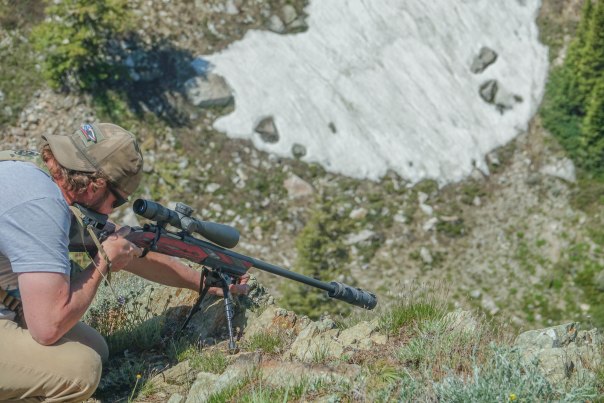
Building a custom 10/22

Preface

Perhaps the granddaddy of all training rifles is the lowly .22 long rifle, and today we are going to dive into one of the most iconic and successful rifles ever to be chambered thus. Sturm Ruger released the 10/22 over sixty years ago, and it has been a steady flow of production ever since. Because of its popularity the 10/22 has been improved, altered, shortened, and folded a dozen different ways. And its huge popularity continues to make it an excellent choice today, which is what bring us together today; I’m building a custom 10/22, and it looks like you’re coming along with me.

custom 10/22, ruger 10/22, .22lr,

Why a Custom 10/22?

With so many models available from both Ruger, and other manufacturers like Bergara, Magnum Research, and many others, you might ask why make your own? Well because this is America, and we often like to do things that are challenging if only to bask in the success. People have been tinkering with 10/22’s for decades, much like the extremely popular AR15. The simplicity of configuring the rifle to exactly your liking seems to be something gun owners take great pride in.

custom 10/22, ruger 10/22, .22lr, primary arms GLX, 3-18

Let me also clarify; “building” a custom 10/22 is a little bit of a misnomer. Lots of folks like to refer to their custom rifle as a “build” when in fact they’ve only assembled a variety of parts using no more than a few Allen wrenches or a screwdriver. A true build in my opinion included machining, cutting, bonding, coating etc. But for todays purpose, we’ll run with it.

Many folks are deep into 22’s for other reasons. For example, if all you can afford to shoot is a .22LR, then you’ve got to roll with it. Other folks have legal restrictions because of tyrannical despots with brain rot (yes I’m talking about you California). Those folks often dive deep into rimfires because it might be their only choice for a fun and configurable firearm.

Lastly I’ll bring up those who find great joy in the challenge. Whether it be the diminutive .22LR cartridge, or the application of it in marksmanship. Many rimfire enthusiasts enjoy the inexpensive challenge of competing against others, to play the marksman game at an abbreviated cost.

custom 10/22, ruger 10/22, .22lr,
all the components coming together

My Custom 10/22

I don’t suppose I fit into any of those purposes for my custom 10/22. Today I am putting this rifle together simply because I can, and I enjoy shooting. And despite my immersion in the gun world, I have yet to own a 10/22. And I decided it was time to change that.

custom 10/22, ruger 10/22, .22lr, Athlon Optics, helos,

I started out with a list of various components, that would eventually come together as a complete rifle.

Steal His Look with the Parts Listed Below

Rifle ComponentWhere to purchase (click)
ReceiverBRO -22 Action
Trigger BRO-22 Trigger assembly
BarrelSummit Precision 16” Black Carbon
ChassisKRG Bravo 10/22
MagazinesRuger BX magazines
Rifle ScopeAthlon Helos 2-12Primary Arms GLX 3-18
Scope mountPrimary Arms    —     Area 419 
Arca RailArea 419 ARCA Lock
Bipod MDT Grnd bipod
SuppressorYHM Phantom 22

Receiver

There are countless good 10/22 receiver options from a variety of manufacturers. For this project I decided to use the BRO 10/22 action from Black Rain Ordnance. This action had some great features like an integral sight rail machined into it’s billet 6061 Aluminum structure. I picked up a BRO trigger as well, which is also has a billet aluminum structure instead of the plastic one many 10/22’s have.

custom 10/22, ruger 10/22, .22lr,

Since I already had a partially filled cart with them, I also opted to try the BRO extended magazine release. This outstanding addition puts a simple push lever on the trigger guard much like the big precision rifles use.

custom 10/22, ruger 10/22, .22lr, trigger
All the pins had more than enough friction to keep them securely in place

One of the great things I really appreciated about the BRO action, is how tight the pins fit. The 10/22 trigger group is held in place by a few pins, that notoriously fall out anytime the action is outside of the stock. But the BRO pins fit so tight that they need to be tapped in with a little pressure. This results in an incredibly solid fit, unlike some other models. I’ve never liked how wobbly the extended magazines are on standard 10/22 rifles.

Barrel

For the barrel I went with a Summit Precision carbon fiber wrapped sixteen-inch barrel. Not that I’m worried so much about weight with this gun, I just like the look and quality. I also like supporting local businesses too. The flashy barrel also has a threaded muzzle which is a requirement for all my firearms now, since I refuse to shoot without a suppressor. The barrel dropped right into place, and was held there by the two V-block screws.

custom 10/22, ruger 10/22, .22lr, summit precision, carbon fiber

Chassis

Mounting the barreled action in a chassis was my next step, for that I chose the KRG Bravo chassis for the 10/22. I’ve got other KRG Bravo stocks, and I always love their ergonomics and the way they accept all kinds of customization.

The Bravo chassis fit the BRO action so snug I probably didn’t even need to tighten the action screw. It actually took me a sec to perfectly set the action pins so there was zero protrusion. Otherwise I could not get the action to seat in the chassis. The fit was as perfect as I could imagine. The Bravo has polymer ribs to add stability to the 10/22 magazine, resulting in a much stronger mating of the two parts.

custom 10/22, ruger 10/22, .22lr, KRG Bravo

Additionally, and why I chose the KRG Bravo, there are plenty of spaces to add accessories to the chassis. I added one of my favorite accessories, the Area 419 ARCA Lock rail. this allows you to quickly attach and adjust the location of bipods, bags, and other accessories. After installing the ARCA Lock rail, I attached an MDT Grnd bipod for supported shooting.

Sight Options

Initially I installed an Athlon Optics Helos BTR 2.5-12X42. I mounted the scope using a Primary Arms 30mm scope mount, which ended up being a little higher than I would like but it was serviceable.

custom 10/22, ruger 10/22, .22lr, Athlon Optics, helos, 2.5-12x42

I also swapped out the Athlon scope for another one of my favorites. The Primary Arms GLX 3-18 I have used on I don’t know how many rifles now. The 34mm tube of the scope actually sat a little lower because of the Area 419 Scope Mount so I liked the fit a little better. Both of these scopes were a reasonable fit for the type of shooting I would do with this rifle. For a rimfire rifle like this, I like having the ability to zoom out to lower magnifications like 2.5 or 3X. My other .22 rifles have 3-15X scopes on them, I think its a pretty good variable range for useful little rifles like this.

custom 10/22, ruger 10/22, .22lr, primary arms GLX, 3-18
You can read about both the Primary Arms GLX 3-18 and Area 419 Scope mount here

Shooting my Custom 10/22

Accuracy

Accuracy is very dependent on ammunition, and with .22LR its very easy to find low quality ammunition. I had fairly low expectations mainly because I have no interest in buying the more expensive 22 ammo. All I wanted was a gun that I could hit squirrels a hundred yards away with cheap ammunition like you’d find on sale at the hardware store.

Considering that, I think this rifle turned out pretty reasonable. Depending on the ammo it will shoot around one-inch groups at 50 yards, but with its preferred ammo it will do a little better still.

Black rain ordnance, custom 10/22, ruger 10/22, .22lr, primary arms GLX, 3-18
some typical groups shooting at 50 yards

Reliability

Some of the things I noticed while shooting the rifle were it took just a few rounds to get broken in, but within the first magazine it was humming along perfectly. It came as no surprise to me that this rifle ran flawlessly after that, as a sixty-year-old design I think they’ve worked out the bugs. Even with my tinkering and using different parts it all basically came together perfectly.

Primary arms

The controls of the BRO action are quite nice. The knurled and oversized charging handle gives good purchase for running the bolt, and the bolt-lock-back feature is hugely improved over the original Ruger design. No more fiddling with the bolt-catch to get it to close, simply pull it back and let it slam. There’s even a slight cutout of the improved mag catch to allow better engagement with the bolt catch. And the mag release itself is fantastic to operate from any position.

black rain ordnance, custom 10/22, ruger 10/22, .22lr, primary arms GLX, 3-18

Ergonomics

The ergonomics of the KRG Bravo chassis are outstanding. I love the grip angle, and the way it presents the trigger to your finger at a right angle. The length of pull is a tiny bit short as it came, but it also came with a spacer to increase the LOP so its not an issue. I left it in its factory configuration because my kids would be shooting it often.

You can also remove a section of the lower part of the buttstock to expose a nice butt-hook. I found it mostly unnecessary as the rifle was plenty easy enough to manipulate as it was. You can also add things like a picatinny rail to the back should you wish to add a monopod or something. QD-cups can also be added to the buttstock for sling attachment, and at the front of the handguard on either side there are M-Lok slots to add other connection points.

custom 10/22, ruger 10/22, .22lr, aerea 419 arca lock rail
the Area 419 ARCA Lock rail and MDT Bipod worked perfectly together

My high mounted scope was easily adjusted for because of the adjustable comb height on the Bravo. And should I end up using a different scope or mounting system, it will also be quick to adjust.

Suppressor Host

I mentioned I would be shooting mostly suppressed with this rifle, that is my general practice. For this purpose I would use my YHM Phantom 22 suppressor, the Phantom is a great match to the rifle. As with nearly all semi-autos, you can expect the 10/22 to run dirtier when suppressed. In fact rimfire rifles seem to be even dirtier than centerfire rifles when suppressed, that would mean lot’s of cleaning is in the future for this rifle.

custom 10/22, ruger 10/22, .22lr, bolt
doesn’t take long to get dirty when shooting suppressed

I don’t regret anything though, as the quiet pop of the rifle is very pleasant while shooting, even without ear protection. Another side effect of shooting suppressed is the additional gas coming from the action. It’s no big deal if you are shooting outside which I always do.

custom 10/22, ruger 10/22, .22lr, krg bravo, yankee hill machine phantom 22 suppressor
this suppressor is one of my favorites, you can read why in my review of the YHM Phantom 22

Value

Most of the time you talk about custom rifles, value and cost goes out the window. With that said, I think 22’s can be a little easier on the billfold. This project easily tipped the scales around $1200, but when putting together what you want I think most of us aren’t as concerned with the nickels and dimes so much as the end result. But if you are the kind of guy who shoots 22’s because they are cheap, you may want to stick to a less expensive factory 10/22.

Pros and Cons

The cons of this project are fairly minimal and predictable. I’ve already mentioned that it is not inexpensive, but most people who start down the custom rifle path know that before starting. I also mentioned the filthiness of suppressed shooting, but again that comes with the territory.

The pros of building a rifle like this however are bountiful. With a massive supply of parts and aftermarket support, there are untold combinations you can explore. And because it has been done countless times by so many, you can always find some hairy redneck like me who has already tried what you are thinking and build from their experience.

custom 10/22, ruger 10/22, .22lr, primary arms GLX, 3-18

The 10/22 has remained so popular for many reasons, it is simply too much fun to shoot. And the fastest way to burn through a brick of ammo and have a good time doing it. The predictable function is reassuring, the modularity of the KRG Bravo made it easily adaptable to various purposes. The accuracy and balance of the Summit carbon barrel made it deadly and comfortable. A great trigger pull matched by an equally sharp look made this whole project a joy.

Black rain Ordnance, custom 10/22, ruger 10/22, .22lr, primary arms GLX, 3-18
the Area 419 ARCA Lock rail made for excellent tripod shooting

Final Conclusion

Building a custom rifle might be intimidating the first time, but it will become an addiction just like hunting or casting a line. You might have assembled this gun a little differently than I have, heck, I might do it differently again just to see another way. Picking your parts and making your own custom rifle is an incredible learning experience and brings great satisfaction. Let me know what you think of this project, and how you would have done it differently.

-CBM

Like 22’s? Here’s another one you might like: the Ruger Precision Rifle .22lr

ruger RXM, 9mm, vortex Defender, tlr8

Ruger RXM 9mm Pistol

Preface

I keep coming back to Glock clone pistols, which is quite the 180 turn for me. Today I am taking a look at another something new, this time from one of America’s best known manufacturers and in part by another. Today I bring a you a review of the Ruger RXM 9mm pistol. The RXM is a recoil operated 9mm pistol that is fed by Magpul magazines in the very popular Glock pattern. Like many other pistol on the market today, the RXM is a clone of the extremely successful Glock. But it also has a whole new trick up it’s sleeve, and it’s sleeve is also made by Magpul.

Ruger RXM, Vortex Defender CCW, surefire X300
the classic underbite of the Surefire X300, for dark places and flashes

It is hard to deny the success of the popular design of these kind of pistols, and the incredible aftermarket support already available makes it even more appealing. Not only do you get the famous reliability, but you can use the same holsters, and others accessories that you probably already have.

What is the Ruger RXM

For those who’ve been hiding under a rock (or behind a 1911), Glock clones have become extremely popular. Following the pattern of the Gen 3 striker fired poly-framed pistols has been very successful for quite a few manufacturers now. Ruger has partnered with Magpul to make the polymer frame for the RXM, while Ruger made the rest. There is a secret within the frame though, in a similar idea to the incredibly popular Sig Sauer P320 the Ruger RXM has a removable Fire Control Insert (FCI). The FCI is the trigger and serialized portion of the firearm.

Ruger, RXM, FCI, fire control, trigger
the removeable FCI, captured at the rear, and held in place by two pins at the front

This allows you as the user to swap from one grip frame to another. And with a partner like Magpul in this endeavor, I expect we will see an unprecedented flow of grip frame options come to market in the future.

Ruger RXM disassembly, streamlight TLR8, Apex Optics Atom red dot,
Visualization of the pistol broken down, note Apex Atom red dot and the Streamlight TLR8

So if you are wondering what makes the RXM so special, I can sum it up like this; it’s as though two of the most successful pistols of the past decades had a baby blessed by Magpul.

Ruger RXM Features

Caliber9mm
Overall Length7.15 inches
Height5.31 inches
Barrel Length4 inches
Slide Width1 inch
Grooves6
Twist1:10 right hand
Weight23.2 ounces
Optics Readyyes
Front SightTritium co-witness height
Rear SightSteel drift adjustable
Manual SafetyNo
Barrel & Slide MaterialAlloy steel
Capacity15 + 1
Steel FinishBlack FNC Nitride
Grip FrameMagpul enhanced grip
MagazinesTwo 15 round PMAGs included
MSRP$499.00

I was very pleased that the design team took the time to think this pistol through. It is apparent that they wanted to incorporate some of the better features in this pistol. Things like an optics cut slide and the tritium sights are definitely better than many standard features. Even my son noticed and mentioned the convenient load indicator slot so you can easily identify a hot chamber. And of course the Magpul frame that can be interchanged by swapping the FCI.

ruger rxm, 9mm, chamber indicator
Note loaded chamber indicator

I was even more impressed when I pulled the optics plate off to see the semi-universal optics footprint. The RXM can take the RMR, Delta Point Pro, and RMSc optics, which covers a huge variety of optics. The footprint area of the RXM slide has various holes to accept screws but also comes with configurable pins to allow proper securing of your red dot.

ruger RXM, 9mm, vortex Defender, installation
mounting the red dot was easy using the provided alignment pins

The grip frame features Magpul’s TSP grip texture, and also has a pretty covert magwell flare. As well as an undercut trigger guard which is nice.

Unboxing the Ruger RXM

I’m always excited when I open a new gun, I’d already handled the RXM at SHOT Show 2025 but I was still excited to take it home. The hard plastic case carried the RXM and 2 fifteen round Magpul PMAGS, as well as the typical gun lock and other accessories. I will say that the case is bigger than it needs to be, allowing additional accessories and mags to be stored for transport. The box also has a cutout for an optic, whether for a user added optic or a later model including an optic is yet to be seen. You’ll also see room for a threaded barrel, giving away future options Ruger?

ruger RXM, 9mm,
factory fresh

I lifted the RXM from its case, and felt that same familiar grip of the clones. It felt good and only got better as I played with the pistol further. All the controls felt just as you would expect, the trigger is crisp. The front and rear slide serrations make for easy gripping to pull against the stout spring. The sights line up nicely with my hold, and the front tritium pops against the dull winter overcast sky.

I ran the slide a few times against the empty magazine, and was pleased with how smooth and easy it was to actuate everything. The mag release is extended a bit, and at first I thought it might be too forward. But after all of my shooting it seemed it was perfect.

ruger RXM, 9mm, vortex Defender, tlr8
drawing the RXM from a holster helped illustrate its soft edges

I did a quick field strip to see the curious FCI and how it was secured into the frame by a couple push pins. The whole thing looked very nice, with a great finish and quality look.

Ruger RXM Setup

I was anxious to get this pistol shooting, so I wasted no time getting it ready for a range trip. I dug through my selection of red dots, and decided to grab the Vortex Defender CCW. It was a good fit for the RXM, and would be easy to mount as well using the supplied fasteners.

Including anchor pins to secure the red dot gives the RXM another leg up, by allowing you to configure the footprint to match the red dot. Instead of forcing you to change to a dot that fits the footprint.

Because I’d planned on carrying the pistol for a while, I decided to also install my Streamlight TLR8. It’s a handy light laser combo for CCW pistols and it fits perfectly on the Ruger RXM. And the whole conglomeration fit nicely into my Hidden Hybrid IWB holster.

ruger RXM, 9mm, vortex Defender, tlr8, hidden hybrid holster
The RXM fit in all my holsters

On the Range

All that was left was to head to the range and shoot this small wonder, I grabbed a few boxes of 115 grain ammo from MWLP for some initial testing. My first range trip would be a typical trip into the snowy Rocky Mountains, and both my son and I would enjoy the afternoon plinking away with the Ruger RXM.

ruger RXM, 9mm, vortex Defender, tlr8

I took the opportunity to try a bunch of different things like drawing from the holster, reloading after single shots and such. It didn’t take long to get comfortable with the RXM. The Defender red dot made it quick to bear and make clean shots on my targets.

I was very impressed with how easy reloads went with the gun. I am used to big guns with flared magwells, this little Ruger does have a flare but it’s hardly noticeable unless you look under the gun. It came very easy to me to stab the magazine even without looking, it felt much easier than other similar guns I’ve shot in the past.

ruger RXM, 9mm, vortex Defender, tlr8

Shootability

As you might imagine, a pistol modeled after one of the most successful pistols ever shoots very well. The RXM grip is very comfortable, and the angle lines up quite naturally with my aim. Recoil from the RXM is quite modest and keeping on target is akin to other similar pistols. Its also nice to be able to use a red dot, pushing your focus to the target.

The controls of the RXM are great. The trigger is a little longer than I would have expected but it is very smooth and breaks nicely. This allowed for great shot placement particularly when coupled with the fine aimpoint of the Defender.

At first, I did find one thing that bothered me. During the first few mags my thumb would push slightly up on the slide release causing the RXM to lock open between rounds. This was easily corrected once I realized it was just my thumb crowding the area. Even my kids had a good time shooting the RXM.

ruger RXM, 9mm, vortex Defender,
the kids had a great time learning to shoot the RXM

Ergonomics

Again, as a clone its hard to beat the time tested successful design. The grip angle is just right and feels natural. Slide cuts provide just the right amount of grip without being abrasive. The mag release is a touch further forward than expected but certainly caused zero problems during my reloads. The trigger blade safety isn’t even noticeable during shooting, which is the way it should be.

My hands are neither small nor large, and the grip area was just right for them. If I had larger hands I could see it getting a bit crowded, but I also anticipate that there will be additional grips available from Magpul in the near future that will solve that issue.

Ruger, RXM, 9mm, streamlight TLR8, apex optics atom,
A little custom paint made the RXM even better looking

Accuracy

I’m a bit of an accuracy nerd when it comes to rifles. But when it comes to handguns I don’t consider myself anything but average, and I had no issues hitting what I aimed at. I don’t suspect this gun is currently going to be used for competition shooting (at least not yet), but more likely it will be used for typical semi-compact 9mm purposes. CCW use and general shooting are more likely in its future, and for that the accuracy was perfectly adequate.

Ruger RXM, accuracy, target, groups,
A typical supported group at 7 yards with 115 grain Trailforger ammunition

Hitting paper plate sized targets from a quick draw was easy to do even at fifteen to twenty yards. I carried the pistol as my CCW for several days quite confident that should I need to use it I would be able to hit my target.

Reliability

I mentioned the occasional locking back caused by my imposing thumb, that was the only thing I could call a failure that we experienced while shooting the Ruger RXM. It has cycled through hundreds of rounds and many boxes of 115 and 124 grain ammunition now without any failures.

ruger RXM, 9mm, ccw, 1791 gunleather
The RXM fit perfectly into my 1791 Gunleather holster

Value

The Glock clone market is getting steep with competition. Many companies have brought some very affordable models to market to compete with this Ruger RXM, and this has brought the prices down. The RXM is more affordable than most of the original Austrian polymer pistols, depending on which generation you are looking at. And even among its clone peers the RXM is still quite competitive with street prices just under $400.

Ruger RXM, Zro Delta FKS 9, PSA Dagger, comparison
these clones are stacking up

For comparison, my ZRO Delta FKS9 can be had for around $350 but it will cost more than the RXM if you want the optics ready slide. I also have a PSA Dagger that is very comparable to the RXM, but again if you want an optics ready slide it’s price goes up to within a carton of eggs price of the RXM. So there’s plenty of competition from other good products.

BUT, we haven’t addressed some of the RXM’s advantages. Not only is the RXM optics ready, its configurable footprint will take most optics. Additionally its removable FCI allows you to swap grip frame modules, none of the other clones do that at this price. I cannot fathom that Ruger and Magpul haven’t thought this through for years to come. I expect we will see a massive and steady release of RXM variants with various sizes, slides and barrels. Time will surely tell, but with all that in mind I think the Ruger RXM is a fantastic value, with a bright future.

ruger rxm, 9mm, safariland,
the Ruger RXM also fit perfectly in my Safariland ALS holster as well

Pros and Cons

I’ve kind of already gone over all the pros of this pistol. Its a comfortable shooter with clean lines and a nice fit. The customization and potential for future modification make it stand out against its competition. I was even impressed with how seamless and tight fitting the FCI fits into the grip module, at a glance you wouldn’t even think it was removeable. The edges of the RXM aren’t as hard as they could be, making it less likely to snag while drawing.

I’ve also thought quite a bit about what I would change on the Ruger RXM. And to be completely candid I could hardly come up with something to pick at, I’d almost have to put myself in the shoes of another to find something. For example, the RXM isn’t built for lefties. That doesn’t bother me, but it might turn off some left-handed shooters. Though I’d imagine they are used to it by now. Also, perhaps you’re a Gen 3 critic, and would prefer clones copied a different version of Gaston Glock’s family. But you’re diggin’ really deep if you want to call these liabilities to the Ruger RXM.

ruger RXM, 9mm, vortex Defender, tlr8
the Streamlight TLR8 and Vortex Defender CCW were great accessories

Again, if I was reaching real hard I could say I wish the magazine was a touch more snug in the frame. But who am I to question Magpul’s design, perhaps it works best that way.

Preferred Ammunition

Besides the MWLP ammo, I also shot a few boxes of AAC 124 grain ammo. Both of which functioned flawlessly through the Ruger. For carry ammo I would use something predictable like Hornady Critical Duty 124 grain defense ammo.

Ruger RXM 9mm, trailforger 9mm ammunition, surefire x300, vortex defender ccw

Accessory Options

The Vortex Defender red dot worked out great for the RXM, I had no reason to dislike it. But I also like the US Optics RISE red dot as it is a bit larger window and more refined dot on the glass. The beauty of the RXM is that just about any popular sight will drop on to the Ruger RXM.

The Streamlight TLR8 was also a great choice for a weapon light, particularly for CCW use. An obvious choice would have also been the Surefire X300, though it is a bit bigger and more cumbersome for a carry gun.

My hidden Hybrid Holster fit the Ruger RXM well, but as objective as holsters can be you might want to pick your own. I also carried the RXM in a 1791 Gunleather holster that was also pretty comfortable.

MWLP
Ruger RXM, streamlight tlr8, apex optics atom, 9mm
Coming from two big names like Ruger and Magpul it’s no surprise this went well

Last Thoughts

My initial thoughts on the Ruger RXM turned out to be pretty dead on. I have always liked Ruger’s firearms, they seem to be optimized for the average American gun owner. And providing them with a pleasant and affordable experience.

ruger RXM, 9mm, vortex Defender, tlr8

I was quite surprised just how much I liked the RXM and how well thought out it was. It is a step above your average Glock clone, with some great added value and features. I expect this gun has a vibrant future ahead, much like the P320 is currently living. And not unlike the Dagger’s explosive popularity. Perhaps someday in the future there will be a compensated competition long-slide version and micro compact CCW versions as well, all with interchangeability. Great job and a tip of the hat to the collaborative teams at Ruger and Magpul.

-CBM

2025 Update:

After nearly a year of shooting the RXM, I have yet to come up with a down side. I have swapped half a dozen red dots across the slide cut, and used every kind of magazine I can get hands on. Magpul recently released additional frames for it, and I intend on trying at least one more size out. I have carried the RXM many different ways almost every week since I got it. I still feel it is an excellent value, and worth your consideration.

Ruger American Gen 2 308 win, 6.5 Creedmoor, maven optics

Ruger American Gen 2

Preface

I guess you could say I’ve always been a Ruger fan, the very first centerfire rifles I bought were from the 75 year old manufacturer. Back then, I couldn’t have known how many Ruger rifles would come my way. And in the many years since I have found many virtues in Ruger’s firearms. Today we are taking a look at the new Ruger American Gen 2, a modestly priced rifle made for the American shooting public. The Gen 2 Ruger American builds on the reputation of the incredibly popular Ruger American, which has become a mainstay with firearms enthusiasts and gun shops.

Ruger American Gen 2 suppressor, silencer, Banish Backcountry, maven Optics RS3
all kitted out for big country

I bring you this review today, because I quite enjoyed the Gen 1 Ruger American. So I purchased the new Gen 2 to see how they compare, and if the upgrade is worth your time. Some of this review will be comparing the rifle to its predecessor, as well as comparing it to other competitors rifles. The market that the Ruger American is after, is incredibly competitive. Price is a big factor, as is performance and reliability. Let’s start down the bore…

Ruger American Gen 2

Specifications

Caliber308 Winchester
Barrel Length 20 Inches
Barrel Twist1:10
StockGen 2 American Gray Splatter polymer
Overall Length41.25 inches
Length of Pull 12-13.75 inches
Capacity3 Round included
MagazineAICS pattern
Barrel 5 Groove Spiral Fluted
Weight 6.2 pounds
MaterialAlloy Steel
Finish Gun metal gray Cerakote
Sight optionPicatinny scope rail
Muzzle thread⅝-24 threaded with radial brake
MSRP$729.00
Ruger American Gen 2 action
the bolt-stop does double-duty serving as a timing guide for the bolt assembly

The Ruger American Gen 2 rifle is based on the American action, a steel action with a three-lug bolt. The oversized bolt-body in my opinion gives the action its smooth stroke, and it is guided by the bolt stop which does double duty keeping the bolt clocked properly. Its bolt-handle is oversized and threaded 5/16-24 to allow changing it should you desire. The large round bolt-knob gives great purchase while running the bolt.

ruger American Gen II bolt

For a trigger, the American uses Ruger’s Marksman trigger which can be adjusted from 3 to 5 pounds. As usual, there is a blade safety on the trigger, something I am not particularly fond of. On the action-tang, there is a three position safety. With a bolt-lock safe position, as well as safe with bolt operation, and the firing position.

ruger american generation 2, maven optics
note trigger blade safety and AICS magazine release

Caliber Options

One of the many appealing options of this rifle is the spectrum of caliber options. Nearly any sized cartridge can be put into the American action. According to Ruger’s website, these are the current options:

22 ARC.243 Win.270 Winchester
6mm ARC6mm Creedmoor30-06 Springfield
6.5 Grendel6.5 Creedmoor6.5 PRC
223 Remington308 Winchester7mm PRC
204 Ruger7mm-08 Remington300 Win. Magnum
350 Legend450 Bushmaster400 Legend

There are three distinct Gen 2 American models, the Standard we have here, the Ranch model that uses shorter barrels and a Cobalt Cerakote/FDE color, and the Predator model that uses a longer barrel and Bronze Cerakote on green color.

All the above options made it challenging to pick one, as several of them are my fave’s. But I ended up going 308 Winchester simply because it’s such an easy choice and quickly comparable to other rifles.

ruger American gen 2 rifle, muzzle brake
the radial muzzle brake of the Gen 2 American, nice flats made removal easy

All models of the Gen 2 American rifle come with the spiral fluted barrel, and comes with a threaded muzzle should you wish to change the muzzle device. I would certainly take advantage of this feature to see how the rifle shot suppressed. Getting the brake off was easy with provided flats, and I appreciated that it hadn’t been torqued on by the same guy who did my Gen 1.

The polymer stock feels like an upgrade from the Gen 1. It feels a bit harder and less flexible, which was one of my complaints about the Gen 1. While there is still some flex in the stock, at a price point like this it’s tough to ask for more. Interestingly, the magwell area of the stock is interchangeable. This allows the same basic stock to be used, and simply change out the magwell depending on the cartridge feeding needs.

Ruger American Generation II magazine well
a look at the magwell and its detail

Apart from the handsome finish, the stock also features an elevated comb. This was very welcome, as it allowed perfect alignment of my eye with the scope once mounted. At the tail-end, you find a very soft rubber recoil-pad. I imagine this is very nice on the larger long-actions, as well as the short-action’s like mine. I also like the way they set the rear sling-stud at an angle, the natural angle it would pull from on the sling.

Ruger American Gen 2 Setup

As a hunter at heart, I wanted to set this rifle up the same way I would to hunt these wild Rocky Mountains. The Gen 2 American would be a great rifle for the kind of hunting I do, so I picked out some great accessories for it.

A Riflescope

A good hunting rifle needs a good scope. The wide open mountains where I hunt and shoot definitely need something suitable for long-range shooting. I like semi-compact scopes like 3-12X or 3-18X for my hunting rifles. But because I could, I picked a higher magnification scope. The Maven Optics RS3 is a 30mm scope with a 5-30X magnification spread, and it fit the space on the Ruger American perfectly. I used a set of Warne scope rings that set the height perfectly on the pic rail of the receiver.

ruger American gen 2, Maven optics RS 3

A Suppressor

The radial brake on the muzzle of the Ruger American rifles works well to reduce recoil. But there are a few things I don’t like about it; for starters its way too damn loud. Aside from the noise, radial brakes often kick up dirt and debris when you shoot. Both of these issues can be addressed by adding a suppressor, and it will make you more popular among your shooting friends and women of culture.

Ruger American Gen 2 rifle, suppressor, silencer, Maven Optics
the Ruger American makes a great suppressor host

Because the Ruger American Gen 2 rifles are pretty light, I wanted to add a suppressor that would keep it that way. For that purpose I installed my Banish Backcountry suppressor, it’s lightweight titanium construction and compact size matched the Ruger handsomely.

Additional Accessories

I prefer to shoot from a supported position, so most of my rifles have a bipod installed. And this little Ruger would get the same treatment. For simplicity I installed one of my Harris 3-9 bipods, its a well-known option that I use frequently so it was an easy choice.

Because I like to shoot extensively, I also figured I would get some extra magazines for the rifle. Since Ruger did me the favor of making the American Gen 2 accept AICS magazines, I could select from a variety of options from 3 to 10 round capacity.

Ruger American Gen 2 magazine, MDT, AICS

Other than a good sling, this rifle was ready for field shooting. By pure luck I happened to visit a public range that day, something I prefer to avoid. But it gave me an easy opportunity to boresight the rifle using my tool-less method, and zeroing the rifle with just a couple shots.

Ruger American Gen 2 Rifle on the Range

With targets hung at one hundred yards, I snuggled-up behind the rifle and settled my eye through the scope. I’d already loaded the magazine with a fine selection of Hornady Precision Hunter 178 grain ammunition. I touched off the first few rounds, and made a scope adjustment to bring my impact and aim-points together. After a few more rounds, and shooting a few groups, I felt it was close enough to call for now.

ruger american gen 2, 308 winchester

First Impressions: Running the bolt on the Ruger American Gen 2 felt great, but I did notice that the very first few rounds I really had to run the bolt like I meant it. Whether it was the ejector tension or something else, it seemed to not like being pussy-footed into battery. This issue went away with additional shooting. I also found that the magazine fit quite tight, which is good for a hunting rifle, but bad when your trying to hurry up the next magazine into place. I’m sure with practice this will get better. The trigger felt great, whatever the factory setting is works just fine for my shooting needs.

ruger american gen 2, 308 winchester, ruger American generation II accuracy
one of the better groups from my testing

From there, we would venture into the high country where I spend most of my time. The snow covered mountains where deer, elk and moose wander is the best place to practice in my opinion. Practicing where I hunt helps familiarize with real world shooting, and better preps us for hunting season. And that is where we would put the little Ruger American through its testing.

Shooting long-range with the Ruger American was fantastic. Hitting 1 MOA sized targets at distances like 730 yards was easily repeatable, and brought a smile to my face. Using a drop chart I’d calculated prior allowed me to make deadly accurate shots at various real-world long-range hunting distances. From 450 yards and in, it seemed we couldn’t miss while shooting the DTM match ammunition.

Shootability

I already mentioned the little issue I had closing the bolt too slow, that issue seemed to be mostly related to break-in. The three-lug bolt of the American has a shorter bolt throw than some of its competitors, which makes it easier to run. I really liked the round bolt-knob and saw no reason to change it to something different, but it’s nice to know you can.

The new three position safety worked great, though I don’t often use them. I did think that there is a good positive click between settings, though it was also easy to think you un-safed the rifle and still have one more click to go.

Ruger American generation II, gen 2, maven optics
extraction and cartridge cycling was flawless

Ruger’s Marksman trigger felt just like I expected it to, and for a rifle at this price point I wouldn’t complain. I mentioned I don’t like blade safeties, mainly because of aesthetics, but I found this trigger and I immediately got along. It felt crisp and predictable, allowing me to shoot some pretty good groups.

The stock has a nice feel to it, the texture is nice for gripping it. And yet it seems the stock is thin enough in all the right places to get a good grip even with smaller hands. My kids were all quite comfortable behind the rifle, which is an easy test metric.

I did notice that my MDT 10 Round magazine seemed to rub the bottom of the bolt while reloading. It never interfered with operation, but perhaps another 10-round option wouldn’t rub.

Ruger American second gen, maven optics, silencer, suppressor

Reliability

It seems the second generation Ruger American continues the reliable operation established by the first generation rifle. During our testing, the rifle never malfunctioned. It fed flawlessly from the factory magazine as well as from several aftermarket mags. Cycling a variety of ammunition types without issue, with clean and smooth ejection.

I expect that long-term testing of this rifle will show continued reliability. With a rifle priced around $600 or less, you can expect there will be some plastic parts which some of us feel are less durable. However it feels like the Ruger American Gen 2 rifle has a healthy balance of good materials where it matters. And I expect this rifle will last me a long time.

Ruger American Gen 2, Maven Optics,

Ergonomics

Ruger engineers really got it right when designing this stock. The grip angle is comfortable making the rifle easily manipulated. The grooves in the fore-end are great for holding onto the rifle, and one-handed carrying. The bolt-throw and controls of the rifle are all easily accessible and function smoothly. I couldn’t find anything I didn’t like about the ergonomics.

Gen 2 Ruger American rifle, maven optics, long-range

Accuracy

Hornady 178 gr PHHornady Black 155 grDTM 175 gr Match
0.923 MOA Average0.944 MOA Average0.597 MOA Average

Only accurate rifles interest me, and in my experience I’ve had some very accurate Ruger rifles. You can read more about my other Ruger experiences here. The Ruger American Gen 2 fit in with my excellent past experiences, the rifle performed very well right out of the box.

The above accuracy results are a pretty good average, though there were plenty of better than average groups. I’d expect if you handloaded for this rifle it would be easy to tune them to what this rifle likes. And doing so, I wouldn’t be surprised at all if this rifle shot 1/2 MOA groups regularly.

Value Proposition

I often mention my secret fascination for inexpensive rifles that shoot like very expensive rifles. This little Ruger definitely gives me those vibes, much like other Ruger rifles this one seems to punch above its weight.

You’ll have a hard time escaping the feel of a six-hundred dollar gun, but as the hits keep coming you won’t care. You really get a great functioning and sweet shooting rifle for that price. Ruger has done well in this realm of firearms, and it seems the American Gen 2 rifle has upped their game a little bit more.

With new features like the safety and trigger, the Gen 2 may or may not be worth upgrading for you. If your Gen 1 shoots good, roll with it. I do prefer the handsome looks of the second generation myself.

Recommendations

I mentioned this rifle market is incredibly competitive, for just a little more you can get some nice rifles. And there are certainly cheaper options as well. There are some great Bergara rifles that are around the same price, and bring Remington 700 compatibility which is very nice. Mossberg and Savage both make cheaper rifles that can perform well, but based on my experience with them I would choose the American over those even at their lower price. And for a hundred or two more dollars you can get into a Tikka T3, which is also a fantastic rifle.

If the cost dictates your choice then go the way you must. The Gen 1 American’s can often be had for less, as can the other brands I mentioned. If you’ve got your sights set on this rifle I can strongly recommend it.

ruger american gen 2, 308 winchester

Conclusion

The Ruger American Gen 2 rifle turned out to be exactly what I thought it would be. A great little hunting rifle with features and price that appeal to the heartland hunters of America. There are few things you’d need a bolt-action rifle for that this rifle wouldn’t do quite well. I would feel more than comfortable taking this rifle on a backcountry elk hunt here in these mountains. And that is what matters most to me; would I take it hunting.

Thanks for reading along this far, make sure to follow us for more information on this and other great firearms.

-CBM

If you like new Ruger firearms, check out this one
Ruger RXM, Vortex Defender CCW, surefire X300

Ruger Precision Rifle’s

Introduction

If you’ve ever built or configured a precision rifle, you may be familiar with an undiagnosed condition that has afflicted me for some time. The symptoms are broad but almost invariably it is the feverish desire to build another rifle. And it begins to foment as soon as the previous one is broken in.
One way I have managed to regulate this terrible disorder of mine is to embrace rifle systems over individual rifles. It may sound a bit like a weak defense, but let me explain. Rifle systems with similar chassis and features are easier to become proficient. They can be easier on your bank account depending on what you choose. Today our topic is regarding a series of rifles that much like a system keep many features in common; the Ruger Precision Rifle family.

Just a Ruger?

You may have read my article about the Ruger RPR 22Lr, or the piece I wrote about the 6.5 Creedmoor RPR. And in both of those pieces I mentioned the phenomenon that was the arrival of the RPR to the precision rifle world. Until Ruger introduced their rifle, the precision rifle world was dominated by custom built rifles. The cost of admittance was high, usually to the tune of three or four thousand dollars just for the rifle itself.
Ruger managed to squeeze right into the vacant market of less-expensive production precision rifles at what seemed like the beginning of the PRS craze. And in a cunning move they swept up a massive share of the market which continues to grow like wildfire. The RPR has changed the way the PRS community looks at production rifles from mainstream manufacturers. What once was looked down upon is now commonplace even at the podium.

Start Small

The NRL 22 matches have proven that the precision shooting craze isn’t limited to centerfire rifles. Whether you are an adult or a youth shooter there is much that can be learned from rimfire shooting. The RPR 22LR is the smallest of the RPR family, and an excellent place to learn the basics of marksmanship. It is a bolt action box fed rifle, built into a chassis system just like the entire RPR family. As with every member of the family it features a fully adjustable buttstock. And it’s modular chassis is made to be accessorized. Great controls that are well thought round out these rifles as excellent for training or for competition.

Shop 22 LR ammo for your RPR

The RPR 22LR can be used as a tool to perfect your processes and techniques if you plan on competing. And if you just like shooting it can provide a lifetime of inexpensive plinking fun for both children and adults.
One of my kids just recently used the RPR 22LR to pass his hunter safety program here in our state. He even managed to get an honorable mention for marksmanship. The easily customized rifle was a perfect fit for what he needed, and he continues to shoot it still. And should he choose to keep with it, his experience from the wee 22 will carry right over to the next rifle.

The OG

The original RPR came out as a short action chambered in 308 and 6.5cm.  It is probably still the most popular RPR of the whole family.
Utilizing SR25 patterned magazines and compatible components already available in the flooded AR market made the rifle both appealing and familiar to the AR crowd. The controls my kids learned on the rimfire RPR will have them pre-familiarized with this larger version of the rifle.
The medium to long-range capabilities that came with the RPR opened the long-range shooting craze to folks who before then couldn’t or wouldn’t spend the money for a custom. The RPR produces incredible accuracy patterns, it punches above its weight I guess you could say.

Shop Ruger Precision Rifles

Another appealing benefit is the similarities of the RPR to America’s favorite rifle, the AR 15. It doesn’t just feel similar, it also looks like one. And as much as we often pretend looks are secondary, the similar looks and aesthetics to the AR have certainly affected the RPR’s popularity. The RPR created a space, that quickly started getting crowded with other manufacturer options like Savage, Howa, and even Mossberg.

All Grown Up

The RPR has even been produced in the larger calibers, like 300 PRC, Winchester Magnum, and 338 Lapua Magnum. With chamberings such as those, there are few things out of reasonable distance for the RPR family. I’ve shot a few Lapua’s in my day, and I was impressed with the way the Ruger performed. Just like it’s smaller siblings, the rifle flat out performed. Making hits beyond one-thousand yards was like shooting five hundred yards with a 308. Running the longer bolt and magazines were flawless. And the massive muzzle brake tamed the 338 to be quite manageable.

As I mentioned at the beginning, a series of rifle systems can add value to your purchase. Learning to shoot long-range on the 6.5 Creedmoor RPR makes it an easy step up to the magnum version of the rifle for even more distance. And if you want to train on the cheap for a competition, the little rimfire RPR can help you work out the kinks in your game without spending as much.

The RPR is still a production rifle, and you can tell the difference between a custom built competition gun and the humble RPR. But once the timer starts it depends a lot more on the nut behind the trigger than comparing the price tags of the rifles being shot.

Conclusion

Both young and old can benefit from the Ruger Precision Rifle family. Graduating from one rifle to the next can increase familiarity and comfort for all. And the modularity of the rifles can allow everyone to customize the rifle to their own purposes whether that be competitive or otherwise.

The obvious popularity of the RPR family could be a result of some brilliant marketing over at Ruger. But I think thousands of happy and religiously loyal RPR owners cant be wrong. I think it’s more a combination of a good product. Marketed well to a customer-base that was ripe with desire for just such a product. If you are looking into the precision shooting game, you’d be well served by looking at the RPR family.

-CBM

Ruger M77 Overhaul: Turning 50 aint so bad

Introduction

Everybody loves a good comeback story, and today I’ve got a good one for you. Many great things came from the American 1970’s. No I’m not talking about the Carter administration but as a product of the 70’s myself I can assure you there was some good stuff back in the day.       Shortly before I met my father, a committed hunter and shooting enthusiast. He purchased one of the many guns he managed to collect during early life. It was a Ruger M77 Mark 1 chambered in the popular at the time 220 Swift.

I remember as a youth fawning over Dad’s guns, thinking they must be the coolest thing ever. Nothing got me more excited than when Dad would take me shooting.

My Father, he also grew up hunting these same mountains with Grandpa

The Ruger M77

Sturm Ruger introduced the model 77 in the late 1960’s, so by the time today’s subject was manufactured years later they surely had it dialed in. The original MKI used a tang mounted safety. Like many other rifle actions it borrowed a great deal from the Mauser model 98 . The M77 uses a claw extractor and a two-lug bolt, fed by an internal box magazine. To this day even modern M77’s utilizes the original angled action screw that pulls the action down and back into the stock. This curious design has been arguably beneficial as well as irritating for owners and gunsmiths alike.

Modern M77’s, which come with the MKII designation use a bolt shroud mounted safety vs. the original tang mounted one. A plethora of different models of M77 have been made over the years, in too many calibers to list here.

Rest assured if you want an M77 in a specific caliber, they probably made it at one time. The rifle we are talking about today came with a twenty-six inch heavy barrel featuring a one in fourteen-inch twist, it was blued with a glossy finish and a traditional walnut stock.

History

My father is a man of few shots, sort of a quality over quantity kind of marksman. During the many outings where I accompanied my Dad, I don’t remember him ever firing many shots, sometimes only a single shot was ever fired. But that was enough to bring home the venison at our house.

My siblings and I enjoying one of Dad’s deer, thats me in the middle

The 220 Swift is nearly a hundred years old already, it was a very popular cartridge a generation ago. It gained fame as one of the fastest cartridges around, and it is still a very fast cartridge today. This rifle shoots the same .224 caliber bullets you will find in a .223 Remington, but it shoots them MUCH faster.

Shooting Hornady 55 grain hollow-points yielded velocities near 3900 FPS, and the Hornady 75 Grain ELDM leaves the muzzle at 3400 fps. Both of these loads seemed quite mild, with room for additional speed.

the claw extractor of the M77

An Impressive Memory

I remember a specific occurrence, when as a young man I learned exactly why Dad shot sparingly. And at the same time I learned a LOT about why he chose the Swift.
It was a rabbit hunt in the dry deserts of Utah. We would push the brushy draws hoping to drive a rabbit or two up the other side in hopes of claiming one.

As a youth, it was my responsibility to push through the worst of the terrain to give others a shot. One of the many jackrabbits ran up the hillside in front of me, I followed him through the brush with my sights. As he cleared the top of the hill before me, I was beginning to press the trigger when the rabbit suddenly disappeared. In its place there was a cloud of hair drifting on the dry breeze.

In the distance I heard the report of a rifle that surely wasn’t a rimfire. I turned and saw Dad standing way back on the other end of the draw still looking through the Leupold 3.5-10 scope mounted on the Swift. As I neared the spot where the rabbit disappeared, I was immediately educated on several things. First was the impressive performance of the Swift and its exemplary demonstration of the destructive power of rifle rounds. Second was the entire anatomy of the jackrabbit scattered across the weeds.

That was at least thirty something years ago, and that old Swift became legendary in our family. But with that speed it also has an appetite for barrels, and more recently its blistering speed has consumed its accuracy with bore erosion.

Few things have ever escaped the Swift, before or after the overhaul

A New Life

There was no way that I was going to let this gun that I had idolized my whole life disappear into inaccurate mediocrity. I made a plan to overhaul the old Ruger and build it into a “Super Swift”.

Dad doesn’t get out as often, and varmint hunting seems as appealing as ever. So turning his Swift into an even better version of itself would be ideal for varmint hunting.


I started with the barrel, a replacement match grade blank from K&P was ordered. To be finished at the same 26-inches but this time with a 1-8 twist, a significantly aggressive twist rate for a cartridge like this. For this I sent it to my good friend Eric at ES-Tactical. My plan was to still shoot the 50-55 grain bullets at Mach 3+. But also have the ability to shoot the Hornady 75 grain ELDM bullets for things that are out there a ways.

refinished bottom-metal and floorplate

The new barrel would be threaded for suppressors because this isn’t 1974 anymore. And the old walnut stock would also be swapped out for something that better fit in with the rest of our guns.

ruger m77 220 swift
Suppressed is the only way to shoot

For that I looked to Boyds Gunstocks, and selected a model had Dad would like. The At One model with adjustable butt and cheek-riser, and a vertical style grip. Installing the new heavy barrel of the rifle would require opening the barrel channel somewhat to make enough room to float it.us optics

But despite being a 50-year-old design, the stock’s fit was perfect. To ensure consistency I glass-bedded the recoil lug area of the action into the stock, after which it fit so well you almost didn’t need screws.

Refinished

While I had it apart, I completely disassembled the action and bead blasted the old finish off, in preparation for fresh Cerakote. Since the trigger was apart, I stone polished the mating surfaces to improve the trigger which was already good, but now feels incredible. The stock featured dual front sling studs for bipod mounting, as well as a QD cup at the rear to add a QD sling swivel.

One thing some might call a drawback to the M77 is the scope mounting options. I don’t mind the Ruger scope ring design and mount, but you are limited to using what is offered. Lucky for me I found a set of Leupold high rings in 34mm to mount the US Optics FDN17X scope to the old MKI. Which would make an excellent match to the rifle.

The beautiful tungsten Cerakote match made the whole thing look sharp. Now it was time to get the legendary Swift back out where it belonged, scattering varmints across the countryside.

If you like this rebuild, you’ll also like Rebuilding a Hunter

Swift Vengeance

With the completely rebuilt rifle in hand, as well as some fresh 75 grain handloads, my father, brother and I headed into the high Rockies to put it to the test. Not only did the rifle shoot the 75-grain bullet very well, but it still craved the twenty-year-old hand-loaded 52 grain Match Kings I loaded once upon a time.

220 Swift shown next to a 223 Remington

With the rifle zeroed, and after installing a Yankee Hill Machine Nitro N20 suppressor, it was time to exact the Swift vengeance it is so famous for.

We hunt Marmots all spring and summer long, and today would be an exceptional day of chuckin’. The blistering speed of the Swift had returned with incredible accuracy, allowing surgical pinpoint accuracy. We were all stunned at how fast the bullets arrived at their furry little targets. I can’t help but think that the aggressive 1-8 twist also greatly increases the rotational energy of the bullets making them even more explosive than before.

Continue reading here

Find your own Ruger rifle here

Conclusion

After renovating this old rifle, I am quite confident in the upgrades. This rifle will surely continue terrorizing varmints for the next generation. The match-grade barrel produces incredible accuracy, the new twist allows for a much broader selection of bullets to be used. And threaded for a suppressor will make doubling and tripling up on coyotes a possibility.father, son, ruger m77, 220 swift, us optics fdn17x

The new stock, besides being incredibly handsome, offers a great deal of modularity. Its polymer parts are in all the right places to avoid scratching the wood on the landscape.

The new scope vastly increases the rifles potential for shooting long-range. We’ve already shot it beyond 1100 yards, something near impossible with standard 220 Swift rifles. The further distance capability is also enhanced by the improved trigger.

The M77 with its new look and Cole -TAC suppressor cover

If you have an old Ruger M77 laying around, don’t be afraid to dive deep into a custom like this. Despite the fifty-year-old design, they still make a great rifle. I’m glad this project turned out to be such a fantastic result, that even eclipses the legendary performance it had before.

The unbelievable power of the 220 Swift shooting 75 gr ELDM’s

If your old M77 has passed its prime, do yourself a favor and breathe some new life into it. They could be a great performer for you as they are. Or serve as the base of your next project that may become its own legendary family heirloom.

-CBM

Me, Dad, Brad, and Spence. You can see the action in Major League Chuckers 9

Ruger Super Redhawk Alaskan

Big wheelguns

Powerful revolvers carry more than just a cylinder full of cartridges, they also carry some mystique. The hero of every old Western film always had a big iron to deal justice. While that may not be our purpose here today it’s nice to keep it in mind. Today we are taking a closer look at the Ruger Super Redhawk Alaskan.

Alaskan?

The Super Redhawk line of pistols from Ruger has a long history of performance, but what does the Alaskan do you might say? I suppose the Alaskan model was purpose built thinking of those who might spend time up north. Folks who prefer not to be without six doses of bear medicine. The Super Redhawk Alaskan is a stainless steel double-action revolver, a hammer forged 2.5 inch barrel. It comes with a Hogue Tamer grip to keep a good hold of the gun. You’ll need a good grip because the Alaskan’s robust cylinder has holes bored for six cartridges in only three calibers; .44 Remington mag, 454 Casull, and .480 Ruger. These powerful choices in chambering are nothing to shake a stick at as my father would say. And certainly enough to make even a brown bear reconsider you as a snack.

Loading 300 grain .454 Casull rounds

Considerable size

Despite the large chamberings for the Redhawk, the pistol isn’t so big as to be cumbersome. The short barrel makes it a reasonable gun to carry in a holster, even if you are engaged in other activities. The Alaskan would be a great choice for fisherman who anticipate potential close encounters with awnry eight hundred pound salmon fishermen. Or just someone who is out in rough country and wants to be safe.
The Alaskan is big enough to stand up to the tasks of bear country, and yet small enough to bring along on a fly fishing trip. And even if you aren’t in the cold white north, it alway gives some solace to have a good strong pistol close. I’ve spent enough time in the incredibly dark and remote forests of northern Montana and Idaho to appreciate the comfort of that heavy steel piece riding on the hip. The extra 2.75 pounds is worth having to me.

A pair of Super Redhawks, note fluted cylinder of .44 Mag model

Shooting time

Shooting the Super Redhawk Alaskan was going to be expensive in today’s market. Especially since I had both the .44 Magnum model, and the 454 Casull to feed. Both pistols are dual chambered to allow for shooting lighter loads with .44 Special and .45 Colt cartridges. But I didn’t have any of those, so it was full house power loads from Hornady to test these guns.

I have shot plenty of .44 Magnum over the years, so shooting the Redhawk wasn’t significantly new. Noticing immediately the comfortable grip, which allowed me excellent purchase to control the pistol. The 454 Casull pistol had a bit more power behind it, and you could feel it. Recoil and muzzle blast from the two are fairly comparable, with the Casull showing a bit more unsurprisingly. I was shooting 225 grain Horandy FTX ammunition in the .44 Magnum model, and in the .454 I was shooting Hornady’s 300 grain flat point.

Evaluating the Redhawks Power

Considering the purpose I initially mentioned for these pistols they shoot quite well. A dangerous game defensive pistol like this certainly needs to hit what your aiming at. I found both pistols to be easy enough to control despite the significant recoil from the heavy loads. Obviously that would change if an angry sow was charging at me. But I’d like to think I could shoot them well enough to hit a moving target at danger close distances.

The impressive power of the Super Redhawks wasn’t the only thing that stood out when shooting them. Both models felt fantastic in the hand, the soft rubber Hogue grips made them very comfortable to shoot. The quality of the operation also struck me, smooth controls and very clean breaking triggers added to the superior feeling of these pistols.

Shop all Ruger revolvers here

The adjustable sights of the Alaskan aren’t exactly huge, they come across as pretty simple and no nonsense. That said I found them to be more than adequate for the purposes of relatively close shooting. That is to say anything inside of fifty-yards or so that rivaled the size of a paper plate was bound to be perforated with a big hole.

Ammunition for this article was supplied by Gun Mag Warehouse

Pros and Cons

Pros

I have always been a fan of Ruger’s revolvers, so it should come as no surprise that I found a great many things I like about the Super Redhawk Alaskan. First of all, it’s just a plain handsome design. It has all the classic and sexy features of the hero’s gun from the old westerns we watched as kids. And yet it has just enough modern flair to make it appealing as a modern firearm as well.
The simplicity of the Alaskan’s design also makes it very quick to put into service. It’s double-action design makes it ideal for a gun that needs to be jerked from the holster and immediately fired at inbound danger. The reliable operating system rolls the next chamber full of wrath right into position to deal one blow after another of heavy hitting power.
A quality finish of the pistol also makes it built to last. The Alaskan is built from stainless steel to protect it from the rough weather you’d be sure to encounter up north. Features like the clean breaking trigger, triple locked cylinder, and modern transfer bar allow the gun to serve its power with finesse, precision and safety.

Cons

I had a really hard time coming up with cons for this pistol. It has a fairly specific purpose and it serves that purpose extremely well in my opinion. Perhaps it wouldn’t be ideal for day to day carrying in places where dangerous predators over five-hundred pounds aren’t expected. It might be a bit heavy for a purpose like that. Though I won’t deny having conceal carried one of the Redhawks on multiple occasions.
There is the obvious downside of having to feed these large and expensive cartridges to such a large pistol. But if you truly need a pistol like this I’d wager you are willing to pay quite a randsome to ensure it has plenty of ammo.

Continue reading here…

Conclusion

I have really enjoyed shooting the Ruger Super Redhawk Alaskan pistols. Despite the impressive power, they are still very fun pistols to shoot and can serve you well as a defensive firearm. Perhaps the most important aspect of the pistol is that it is pleasant enough to shoot that you won’t be afraid of it if the time ever comes that you need to use it. Having enjoyed shooting the pistol as much as I have, I think it wouldn’t be hard to gain a level of proficiency suitable for shooting it well under pressure.

If you need a defensive sidearm for dangerous animals, or if you just find yourself enchanted by the big bore of the Super Redhawks, this is a great option to buy.

-CBM

Ruger American 6.5 Creedmoor

Background

Over the years I have had quite a few Ruger firearms and for the most part my experience with the company has been a good one. My first real rifle was a Ruger, and both family and friends have also used a bunch of different Ruger models over the years.

My opinion has been that Ruger produced a good firearm for the price. Today we will be taking my first look at the Ruger American line of rifles. I’m curious to see if they match up to my decades of experience with Ruger. Today we will be reviewing the Ruger American 6.5 Creedmoor.

Before you get too far, check out my review of the Ruger American Gen 2, click here to read that one next.

Ruger American Gen 2, maven optics, silencer

Go Wild, The Ruger American

There are many different Ruger American models, but the one I will be looking at today is the Go Wild model. This model comes with custom Cerakote and camouflage, and it’s chambered in the very popular 6.5 Creedmoor. As I opened the box I thought it had a handsome look to it, but looks don’t go very far in these mountains so I wanted to see how it performed more than anything.
Lifting the gun from the box, the first thing I thought was it seemed lighter than it looked if that makes sense. It was noticeably lighter than I expected it to be, and other comparable rifles nearby. This is obviously a good thing in my estimation, as I had planned on having my wife use the rifle during our hunting season. She is quite petite, so smaller and lighter is better.

With the gun shouldered, I ran the bolt a few times which felt better than I expected. The three-lug bolt of the American needs less lift to unlock from the breech, sixty-degrees of lift instead of the standard ninety-degrees. The smooth raceway had the bolt sliding very clean, and with the short lift it made it quick to reload.

Shifting my attention to the synthetic stock, it came as no surprise that the stock felt a bit cheap. Its unfortunate that many gun manufacturers are using these very flexible polymer stocks, but it is also very predictable. And to be fair, if the gun shoots well I probably wont be complaining about the flexible stock too much.

Burnt Bronze Cerakote protects the barreled action, that goes well with the camo pattern on the stock. At the muzzle of the twenty-two inch barrel its threaded 5/8-24 and comes with a radially ported brake to aid in recoil reduction. One in eight barrel twist is a pretty standard one and used here.us optics

Feeding the rifle is done through a detachable box magazine compatible with AICS type magazines. This came as a pleasant surprise as I have an assortment of magazines I’d like to try in the rifle.
At the rear a tang mounted safety was easy to reach and manipulate. As was the bolt release on the left rear side of the action. With a simple design it was easily understood and in no time I was ready to outfit it. Ruger saw fit to include a scope rail already mounted which made mounting a scope much easier. To that I mounted one of my scopes in a pair of Warne low rings, the US Optics TS25X fit perfectly on top of the rifle. Though I think I will also add a stock-pack to get a better cheekweld.

Range time with the Ruger American 6.5 Creedmoor

After getting the rifle setup with a scope, bipod and some ammo, it was time to get it hot. I arrived at one of my shooting spots with an assortment of ammunition. Some Hornady Match 120 grain, as well as some Federal 130 grain Gold Medal ammunition. I had also brought some handloads of my favorite hunting load, which consisted of Cayuga solid copper bullets. I’ve used them several times in the past on both deer and elk, and if my better half was to use this rifle for hunting I wanted to see how it shot these bullets.
With a target set up at one hundred yards, I laid on my shooting mat to zero the little Ruger. Using the Hornady ammunition I zeroed the rifle, and fired a quick three-shot group.

After correcting the point of impact to correlate with my point of aim,  it was time to have some fun. Followed by my other ammo selections, and all of them shot very comparable which is always nice. Then I turned my attention to the hill beyond my target, surely there was an opportunity to test this rifle at some longer ranges.

ruger american, us optics ts25x, yhm suppressor
the US Optics T25X was a great fit for this rifles capabilities

With my binoculars I picked out a couple targets that were about ten inches in diameter. One of them I ranged at four-hundred and sixty yards. Not too far but definitely something realistic for a deer in these mountains. After zeroing the turrets on my scope, I adjusted 2.1 MRAD of elevation to correct for the distance. The wind was dead calm, so I held center on the target, and pressed the trigger.

Since I hadn’t mentioned the trigger yet, it was better than I expected it to be. I’m not a big fan of blade safeties on bolt action rifles. But this certainly hasn’t prevented a clean and easy break on this rifle. The trigger had no discernable friction, the only movement I noticed was when it broke.

Long-Range Shooting

Observing the bullet impact my target a little high of center, I need to chronograph these bullets from this rifle. As I think they are flying a little faster than I expected. After firing another shot to confirm, I began a search for another even further target. One was found that measured eight-hundred yards away according to my rangefinder. This was a shot I was confident the little Ruger and I could make. With 5.2 MRAD dialed into the riflescope, I leveled up the rifle on my rear bag. Adjusting the parallax on my scope made a clear image of the target, all that was left was a clean release.

Shop Ruger firearms, because the ATF doesn’t want you armed…

I could do this all day. This Ruger American was just a hoot to shoot, I was impressed with how much I liked it. I made this and several other shots at similar distances, until I was quite sure that the rifle would be suitable for a spot on our hunting team. The fun factor doubled when I installed my Yankee Hill Machine Nitro N20.  The titanium suppressor added mere ounces to the rifle, and took away the need for hearing protection in this wide open country. Watching and hearing bullets impact at these great distances was very satisfying.

PROS & CONS

Ruger American Go Wild Rifle
The action is nice, but I do wish the gun had a more solid stock.

There was much to like about this rifle – the weight, reliable function, perfectly reliable detachable box magazine. A reliable accuracy on par with the price point, and a great trigger. It is just a handsome little rifle as well.

The strikes I might score against the American would definitely be the flimsy stock. While it wasn’t obvious that it reduced the shooting performance, I can’t help but think it would shoot better in a more rigid stock or chassis. I think this would be an excellent choice for a rifle with a very short barrel. It was tempting to cut it off at 16 inches to make it even lighter and more maneuverable. But obviously, that is my selfish purposes showing through.

FINAL WORDS

I was optimistic that this rifle wouldn’t let me down. After spending a good deal of time shooting it, I feel it has lived up to my expectations from Ruger rifles. The only thing I wasn’t able to test was the rifle’s durability over a few seasons of hard hunting.

For sure, the rifle will get at least one chance to go on a hunt, and I am really looking forward to it. I know I wouldn’t feel under-gunned with this rifle, so if the $769.00 MSRP is within your budget, give this handsome little Ruger American a try. With the release of the Gen 2 American, the price has come down on the first gen of the Ruger American. They can be had for under $500 many places.

-CBM

an unlucky hare, the American suppressed with a YHM R9 suppressor

2022 Update

We used the Ruger for a deer hunt this season, and managed to take these two little bucks with it. One shot was all it took for both of them. I also just reviewed the Gen 2 version of this rifle, you can read about it here.

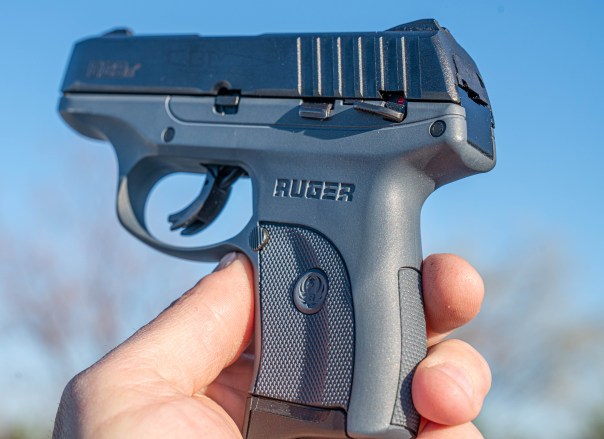
Ruger EC9 9mm pistol

Though I have been lucky to handle untold quantities of pistols over the years, I’d never consider myself an expert on the subject. I am a gun nut though, and that is the only qualification I can claim expertise in. I love a good pistol the same as the next guy, and today I’d like to present another new-to-me pistol: The Ruger EC9.

The EC9 with 7 round magazine and extended 10 round magazine

The EC9

I owned a Ruger pistol once, back in the nineties, the P89 was the first pistol I ever owned. It worked great for what I needed at the time, and it met my skill level which was none. Ruger has changed quite a bit since then, as have pistols in general. Entry level pistols akin to my old P89 are everywhere and many of them nowadays are polymer framed, as are many CCW pistols.

The EC9 is one of those, a striker-fired compact CCW type pistol that uses a single-stack magazine to keep it thin and easy to conceal. It utilizes a slender steel slide with rounded edges to avoid snagging on clothing. It features both a manual safety and a trigger safety, the blade type that deactivates the trigger safety when the trigger is properly pressed. The gun uses a seven round magazine.  Ruger also offers a ten round extended magazine with additional grip area added to the bottom as well.

Un-boxing

Upon receiving the EC9, I promptly opened the box eager to see what lay inside. There I found the Cobalt slate blue framed EC9. Shipped with a magazine, chamber-flag, a standard throwaway lock.  As well as a strange orange magazine that appeared to be for training or something. More on that later.
Straight into the palm of my hand went the little pistol, to see how it felt. My initial concern about the gun was it’s size; would it fit in my hand properly? It did feel a bit small, which was no surprise, but it was certainly serviceable.

I gave the pistol a vigorous course of draw and point exercises. Which quickly began to give me the feel for this gun. Drawing the slide back I familiarized myself with the controls of the EC9. I found it to be a pretty stiff little pistol, the recoil spring is quite stout in my opinion.

Controls

The slide release is located in the typical location for the thumb to operate, and behind that there is a safety. Initial inspection of the gun made it quite apparent that Ruger was aiming for the CCW crowd with this model. The trim control surfaces were very subtle to avoid snags.

The magazine release sits at the front edge of the left grip area, and again it is fairly diminutive to avoid inadvertent release of the magazine. The sights are machined into the slide, making them both robust and un-adjustable. I purchased the extra ten round magazine to utilize in this pistol review, mainly because I figured it would help me hold onto it better.

Continue Reading Here…

Pistol controls, front to back: disassembly opening, slide release, and two position safety at the rear.

GOIN’ HOT ON INITIAL RANGE THOUGHTS

With a bucket of 115-grain FMJ ammo in hand, I headed out to the desert to see how this pistol runs. After loading the magazine, I pointed the pistol downrange at my target and started squeezing. As it often happens, we ran through a lot more ammo than I anticipated in a short amount of time. Which is a good time to point out, since with seven-round magazines you spend a lot of time loading.

The extended 10 round magazine gives more purchase for those with larger hands.

My very first impression as the little Ruger barked and how much more recoil I could feel when compared to my other pistols. Obviously, this is a 9mm, so I’m not talking about a ton of recoil, just noticeably more than what I am used to. That is to be expected though. A smaller pistol is not going to buck recoil like a heavier full-size pistol will.

Shop all the Ruger EC9 models at Palmetto State Armory

The trigger-pull seemed a smidge longer than I would have liked, but again this model is aimed at concealed carry users. The reset was also longer than I would have liked, requiring a good sweep both fore and aft to keep this little lead pump humming. I’m not a huge fan of trigger safeties, but I did find that this one was hardly noticeable.

MORE ROUNDS AND A FRESH PERSPECTIVE

We continued to bang through more ammo than we should have with the EC9s, and it didn’t take long for me to start forming a few opinions on it. But before I did, I wanted to get some additional hands on the gun. Particularly my wife’s hands. She has much more petite hands, and I wanted to see how the pistol met her stature. Just as importantly, I wanted to see how she felt about the gun. Guns are still a bit new to her, but nevertheless, I was interested in her beginner’s perspective.

She took no time in getting used to the grip of the EC9s, and she was slapping targets after some modest instruction. We did discover some challenges for smaller shooters. The grip and pull required to draw the slide was a bit of a challenge for her, as I mentioned above the gun is quite stiff. But even with her smaller hands, she was able to grip the pistol properly and run the gun effectively.

Firearms Depot also has a full selection of Ruger EC9 pistols 

WHAT I LIKE ABOUT THE EC9S

I’ll give you my pros first, of which I think there are plenty. After shooting a moderate amount of ammunition through this little gun, I was impressed with its reliability. Through all the rounds fired, I don’t think there were more than a few stoppages. All of which I am quite confident were user induced. The little Ruger just seems to shoot.

I am certainly no pistol marksman, but I found it was pretty easy to hit what I was aiming at. The same went for my wife, and what I think she perhaps enjoyed most was hitting what she aimed at.

With a price point around $280 over the counter, this little gun is easily attained. I was worried its price point would dictate much of the quality, but the handsome collection of color options and other features seem to make it worthwhile. The larger 10-round magazine made the gun much easier for me to shoot, while my better half was happy with either magazine length.

SOME STONES TO THROW

There are a few cons that I would point out, but I am ready to admit that many of them are fairly subjective. First of all, I’d address the stiffness of the pistol, it’s not very big, so there isn’t a lot to hold onto and purchase. The strong pull of the recoil spring also made it very difficult to operate the slide release, to the point that I nearly quit using it entirely and simply pulled the slide to release. Many will say that’s better anyway, so it may be a moot point for you.

I don’t really use safeties, especially on carry guns. But this safety actually took a second to figure out, the natural motion for me was to swipe at it with my thumb a la 1911. But the safety actually pivots from the front, so I had to make a conscious motion to push and pull at the rear of the safety. Not a big deal, and it’s something I could simply learn if needs be.

I spoke about the orange dummy magazine that came with the gun. Its sole purpose is to aid in disassembling the pistol. You use the magazine as part of the safe deactivation and takedown. Again, probably not a huge deal, but something worth mentioning.

I already mentioned I would have liked a shorter and lighter trigger. But I am also perfectly willing to concede that concealed carry guns are probably better off with longer and even heavier pulls. My last two gripes are perhaps the most subjective and probably due to my hand construction.

I found the mag release to be just a tad awkward to reach with my thumb. It took a very deliberate motion to release the magazine. Again, this may be by design, so you don’t drop your mag in a gunfight or while leaning against the counter at the convenience store.

Lastly, I would really prefer to have more than 10 rounds available in a carry pistol, but I also understand there are compromises.

CONCLUSION

I frequently carry a full-size pistol. Compared to that, this little pistol is a fresh breath of air and a much smaller pain in the waist. The single-stack design of the pistol and its compact size seem to square up the grip area some. This felt to me just a little less comfortable than I’d like, but these are just one person’s opinions.

All things considered, I think the EC9s is a decent choice. I like the gun more than I expected to. The price point makes it an extremely easy pistol to get into carrying. The various safeties and its small size also make it an easy choice for newcomers to the concealed carry gang. I think it punches at its price point. But you won’t want to compare it with something like a Sig P239.

Now that you’ve heard my opinion, go check one of these out. If you drive a diesel, it may cost you more to get to the gun shop than to pick up a Ruger EC9s.

-CBM

If you like this review, check out our other pistol reviews